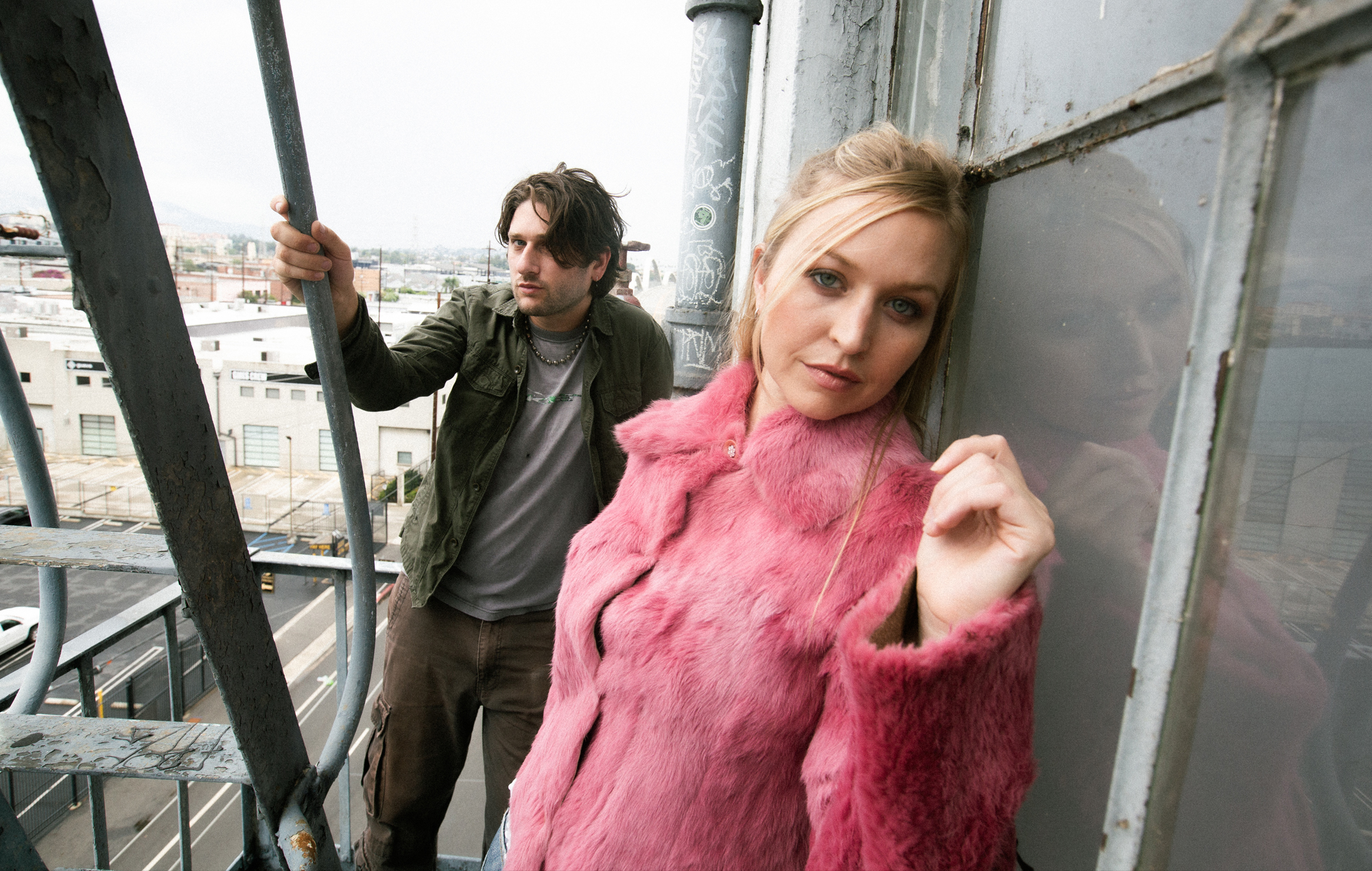
Justine Dorsey and Graham Epstein first crossed paths on a dating app, but their initial connection soon turned into a musical partnership under the name After. That collaboration took concrete shape in July with the release of their debut full-length record, Fell Asleep In The Sun. Now, the American duo have extended the mood of that project with a dedicated companion playlist, Music For Falling Asleep In The Sun, available on Spotify and Apple Music. Built around the same daytime premise as their record, the mix places their own work directly into the quiet, restorative territory they originally sought to explore.
The selections Dorsey and Epstein chose outline the contemplative tone that informs their debut. The playlist brings together pieces by ambient artist Julianna Barwick, electronic composer Jon Hopkins, French producer Malibu, and the late Japanese composer Ryuichi Sakamoto. It is a sequence designed to slow things down, offering an unhurried listening experience that complements the melodic, tranquil qualities at the center of their own songwriting.
Musically, Fell Asleep In The Sun relies on nostalgic trip-pop textures that deliberately recall the late nineties and the turn of the millennium. It is a choice that has drawn an unexpected demographic to their live shows, where Dorsey has observed crowds that are remarkably young. According to Dorsey, these listeners view that particular cultural period through a distinctive lens, regarding it as something almost mythical. She describes that attraction as the dream and promise of Y2K. For a generation born into a difficult, chaotic environment, the softer melodic warmth of the duo provides a comforting counterweight, giving them something gentle to hold onto.
While the music itself leans into peaceful, sunlit textures, its creative foundation came from a far more intense visual source. Dorsey and Epstein found inspiration in super maximalist pop culture artifacts from the same era that shapes their sound, immersing themselves in dense, visually striking media. One major touchstone was The Cell, the 2000 cult science fiction film that served as the debut feature for director Tarsem Singh, whom film critic Roger Ebert once praised as a visual virtuoso. Another direct influence was MirrorMask, the 2005 surreal dark fantasy film directed by English artist and illustrator Dave McKean.
For Dorsey, taking in striking visual work is an essential ingredient in how After writes. She explains that building and holding an internal repository of unconscious images, fragments, and ideas directly shapes the music. Instead of forcing immediate results, the duo let those collected impressions settle, trusting that the accumulated elements will surface later in mysterious, unexpected ways during the creative process. That blend of dense, maximalist imagery and gentle, restorative sound defines both their debut LP and the daytime listening mix that now accompanies it.