Arena routing is usually an exercise in pragmatic arithmetic. Promoters, booking agents, and hall operators weigh ticket demand, schedule logistics, the physical scale of stage production, and financial guarantees. When that commercial machinery functions normally, an act with an audience secures the date. That standard model breaks down, however, when venue management steps in to reject a performer over personal commentary. Following reports that several major arenas declined to book Macklemore after he voiced support for Palestine, the live music sector finds itself confronting that exact scenario.
The response from the wider creative sector was collective. Rather than leaving the rapper to contest the venue decisions alone, dozens of musicians, actors, and public figures organized and signed an open letter challenging the reported booking bans. The signatories argue that locking a headliner out of concert venues because of geopolitical speech threatens the foundation of live performance, setting a precedent that could easily reach other performers who speak out on controversial issues.
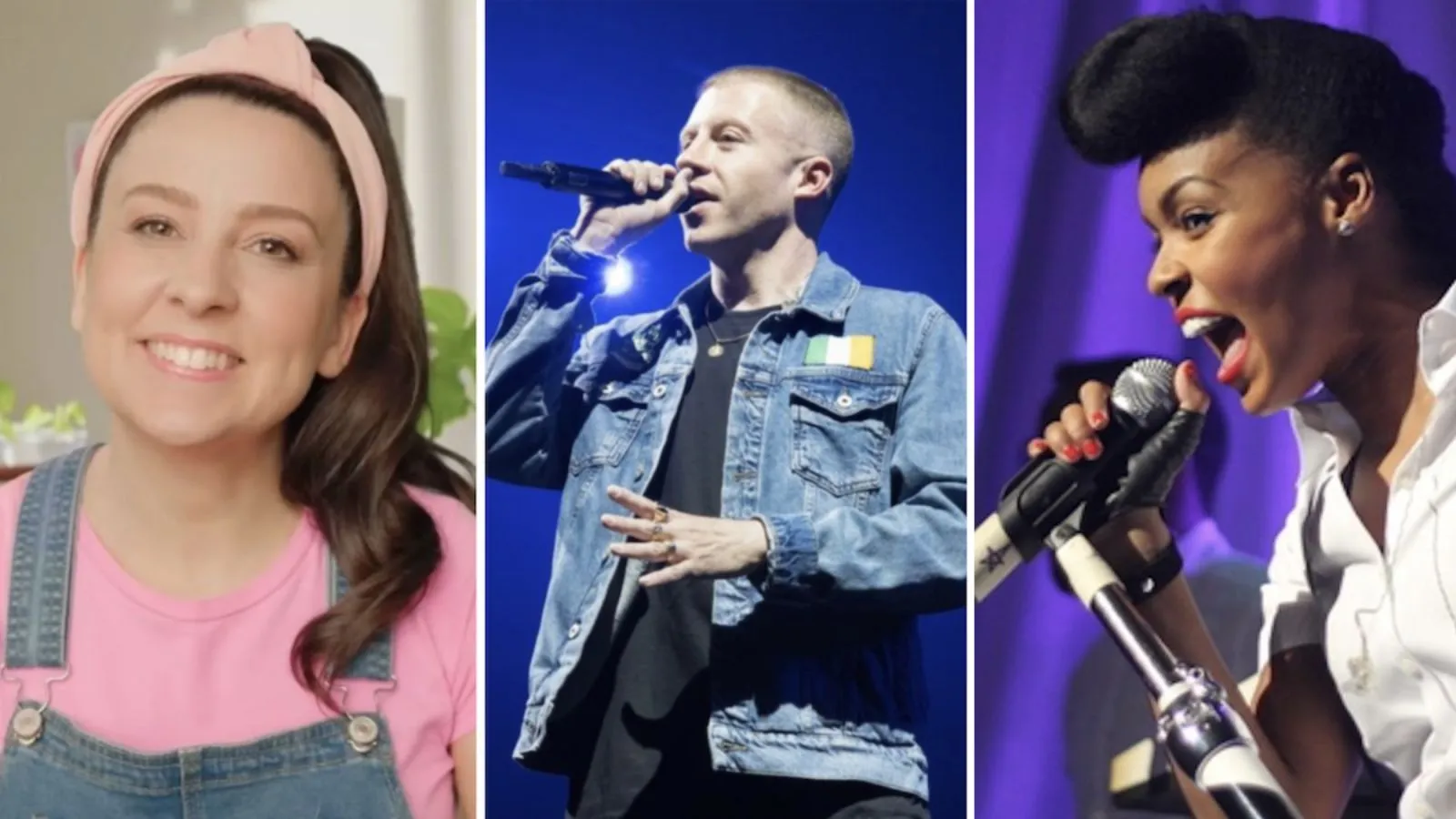
The roster of people who put their names to the letter reflects an unusual coalition spanning disparate corners of the entertainment industry. From the music world, signatures came from Janelle Monáe, Belfast rap group Kneecap, Norwegian songwriter AURORA, rock band Portugal. The Man, pop artist MORGXN, and singer and instrumentalist Allison Russell. The petition also drew substantial backing from screen actors Jane Fonda and Mark Ruffalo, alongside children's educator Ms. Rachel and at least nineteen other public figures.
The contrast among those names underscores the breadth of the pushback. Having veteran Hollywood actors like Fonda and Ruffalo join festival regulars like Kneecap and Portugal. The Man demonstrates that the dispute is not being viewed as a niche grievance within hip hop or an isolated contractual disagreement. Even the participation of Ms. Rachel, an educator working primarily with young children rather than political audiences, shows that the defense of artistic expression has crossed conventional demographic and genre lines.
For any working musician, playing live serves as the primary route to connecting with an audience and sustaining an independent livelihood. If major venues establish a habit of screening acts based on their political positions, the wider live ecosystem risks tilting toward safe, sanitized programming that protects commercial buildings from controversy at the expense of outspoken voices.
Large arenas may be run as commercial enterprises, but they also function as the physical cultural centers of modern cities. When the gatekeepers of those rooms decide which artists are permitted to step up to the microphone based on political viewpoints, the conversation extends far beyond the details of a single tour. By uniting in defense of Macklemore, the artists signing this letter are demanding that performance spaces remain open to individuals who choose to take a public stand.