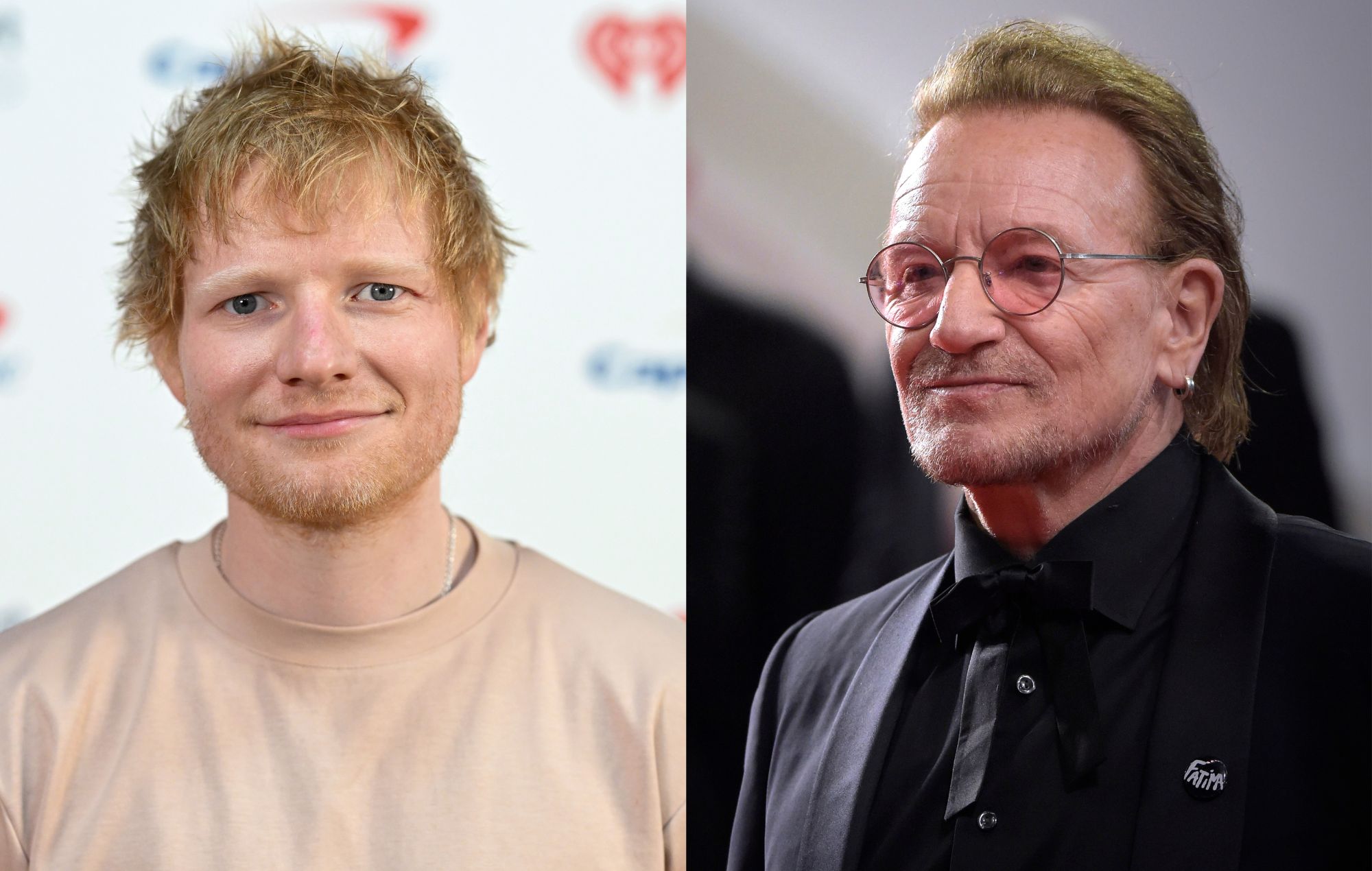
When Ed Sheeran arrived to track his parts for U2's 2026 song Yours Eternally, he came with a clear boundary already established. According to Bono, the English singer asked directly whether the band intended to drag him into politics before committing anything to tape. The cut, issued on U2's surprise EP Days of Ash, deals with heavy subject matter. Written from the perspective of a frontline soldier defending Ukraine against Russian invasion, it features Taras Topalia, a Ukrainian musician who joined the military to fight. The release was also accompanied by a documentary from Ukrainian filmmaker Ilya Mikhaylus, who documented four years of full-scale resistance and the frontline reality facing members of the Khartiya Corps.
Even with that background clarified, Sheeran stood firm. Bono explained that the soldier whose story helped shape the track happened to be an admirer of Sheeran's work, but the singer held to his position, explaining that he preferred to keep his own creative output free from such entanglements. Bono took the response in stride, arguing that performers should never be pushed into public declarations. Citing an observation once offered by producer Brian Eno, Bono compared pop artists to small fish swept along by enormous currents of religion and political conflict.
Larry Mullen Jr. shared that sentiment, noting that every musician retains the sovereign right to determine how far they wish to step into public arguments, and that peers have no place judging those boundaries. At the same time, the drummer expressed serious worry over the power that venue owners and promoters are beginning to exert over what gets said in public spaces. Mullen pushed back against billionaires policing performance content, pointing out that if those commercial pressures had governed the industry in the past, U2 would have been put out of business the moment they released Sunday, Bloody Sunday.
Mullen's remarks carried an unmistakable edge given the controversy that recently disrupted Sheeran's own Loop tour. That run unraveled after opening act Macklemore delivered an on-stage speech calling for a free Palestine. The comments brought an immediate public rebuke from Gillette Stadium and New England Patriots owner Robert Kraft, who characterized the speech as deeply offensive and hurtful to the Jewish community. Demands for the rapper to be dropped from the tour soon followed from singer Pink and the Israeli American Council.
Macklemore was pulled from the schedule, which triggered an immediate rebellion across the rest of the touring party. In solidarity with the rapper, Sheeran's entire backing band alongside his remaining support acts, Finneas and Aaron Rowe, walked away from the tour. Sheeran subsequently took the stage in Philadelphia to address the disruption directly, apologizing to his audience for making mistakes. In a later statement, Sheeran stated that he was appalled by the conflict between Israel and Palestine and viewed the suffering on both sides as an absolute tragedy, while making clear that he was not complicit in the dispute.
Sheeran has maintained that declining to speak publicly does not point to a lack of empathy or an absence of personal viewpoints. His view is that audiences do not buy concert tickets expecting a political forum, treating his live shows instead as spaces of diplomacy and sanctuary where communication stays open. Still, the contrast between his studio caution and the walkouts on his tour proves how difficult that middle ground can be to hold when venue owners and fellow musicians decide to draw lines of their own.