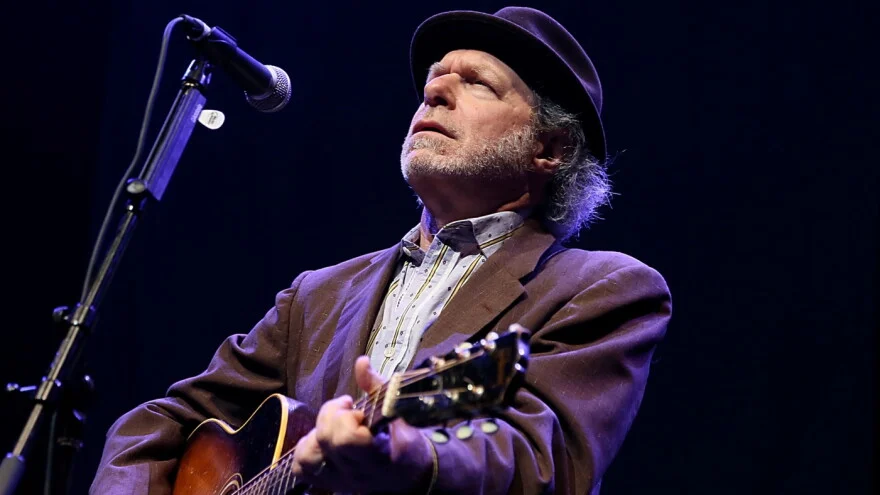
Buddy Miller has returned to the center of his own story. On September 11, the Nashville songwriter, guitarist and producer released Buddy Miller, his first solo album in 15 years and a record that brings together many of the musical traditions that have shaped his career.
The album arrives after a long period in which Miller remained highly active as a collaborator and musician, even while releasing comparatively little material under his own name. That distinction is important. The absence of solo albums did not mean Miller disappeared from the music world. His influence continued to run through country, Americana and roots music, both through his work with other artists and through the musicians who have drawn from his songwriting and production.
Buddy Miller changes that balance. Rather than presenting a dramatic reinvention, the self-titled album sounds like a return to the musical language Miller has spent decades developing.
Country remains at its core, but the record reaches beyond the genre's conventional boundaries. Gospel harmonies, soul, rock and traditional roots music all have a place in the arrangements, creating a sound that feels connected to Nashville without being restricted by it.
That breadth has always been one of Miller's defining characteristics. He has worked comfortably in spaces where country music overlaps with rock and Americana, and his career has been built around relationships with musicians who share that willingness to cross boundaries.
The long wait makes the new album particularly significant. Miller's previous solo release, Majestic Silver Strings, arrived in 2011. Fifteen years is an unusually long gap between solo records, particularly for an artist who has remained creatively active throughout that period.
Instead of attempting to make up for the lost time with an oversized statement, Miller has chosen a more grounded approach. The songs emphasize musicianship and songwriting, giving the performances room to develop naturally rather than forcing the record toward contemporary pop conventions.
That approach feels appropriate for an artist whose reputation has never depended on chasing trends. Miller's importance to American roots music has been built gradually, through songs, collaborations and performances rather than through a constant stream of high-profile releases.
The album also benefits from the community around him. Miller has spent much of his career working alongside some of the most respected names in country and Americana, and that history is reflected in the record's collaborative spirit.
The presence of artists from different generations also reinforces the album's position between tradition and the present. Miller is deeply connected to Nashville's songwriting history, but his music has never been simply archival. The songs continue to draw from the same traditions while allowing the musicians to interpret them in their own way.
For listeners discovering Miller through his solo work for the first time, the album offers an unusually useful introduction. It captures the qualities that have made him such an important figure without requiring familiarity with every project he has been involved with over the years.
For longtime listeners, the appeal is different. After 15 years, hearing Miller lead another full-length record under his own name carries the weight of a return without needing to be treated as a comeback spectacle.
The album's self-titled approach is telling. There is no elaborate concept separating the new record from the artist. Buddy Miller is simply presenting a collection of songs under his own name, allowing the music rather than a larger narrative to define the release.
That restraint works in his favor. In a music industry increasingly focused on constant releases and short attention cycles, a record that arrives after a decade and a half can feel unusually deliberate.
Miller's career also provides context for why the album matters beyond its release date. He has been an important part of the Nashville and Americana communities for decades, contributing as a songwriter, guitarist, producer and collaborator. His work has helped connect traditional country songwriting with the broader roots movement that has developed around it.
Buddy Miller continues that tradition while sounding like a record made in the present. The production does not attempt to recreate a particular decade, and the performances are not presented as museum pieces. Instead, the album treats country and roots music as living forms that can still accommodate new ideas.
The result is a release built more around depth than immediacy. It rewards attention to the playing, the voices and the songwriting, while allowing the different influences to sit naturally alongside one another.
After 15 years away from solo albums, Buddy Miller has chosen a fitting way to return: not by trying to prove anything, but by making a record that sounds unmistakably connected to the music he has spent his life creating.
For an artist whose career has been defined by collaboration, craftsmanship and a deep respect for American roots music, Buddy Miller feels less like a return from somewhere else than a continuation of a story that never really stopped.