
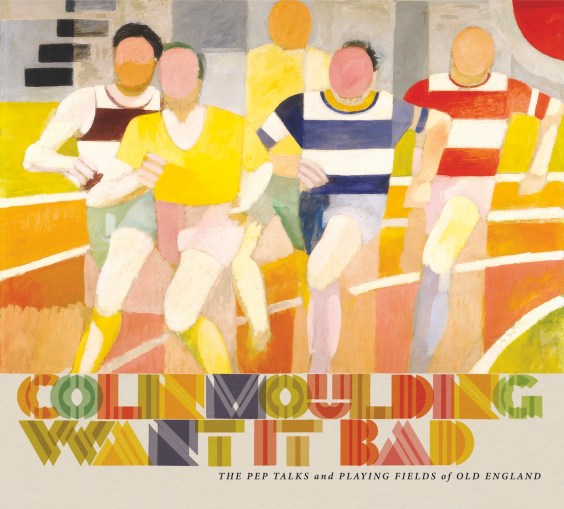
Colin Moulding has spent more than fifty years making music, yet he has almost never put his own name at the top of a record sleeve. Since his earliest recording days in the early 1970s, his voice, bass playing, and songs have reached listeners almost entirely through the machinery of a band. The release of Want It Bad (The Pep Talks And Playing Fields Of Old England) breaks that long habit in notable fashion, arriving as only the second standalone solo release of his entire career.
To most people, Moulding will always be linked to XTC. Formed in the UK in 1972, the group built a lasting reputation on a distinct blend of new wave energy and psychedelic pop, guided in large part by the idiosyncratic edge of frontman Andy Partridge. In that setting, Moulding served as the steady anchor. He provided foundational basslines that gave the songs their rhythmic weight, stepped up to handle lead vocals on occasion, and consistently brought in material that balanced Partridge's restless style with an undeniable gift for melodic clarity.
That balance was crucial to the band's identity. While contributing writers in bands with strong frontmen often end up sidelined, Moulding wrote some of the very tracks that introduced XTC to the wider public. Songs like Making Plans For Nigel and Generals And Majors were not just album cuts, but central touchstones for the group, propelled by sharp hooks and bright, immediate pop instincts. Even as the band shifted through different stylistic phases, those tracks anchored their reputation on the radio and in the public imagination.
What makes his discography unusual, however, is what happened outside the primary group. Rather than using his success to establish an independent catalog, Moulding routinely turned to other collective projects. He took part in the vintage psychedelia of The Dukes Of Stratosphear, and much later joined forces under the TC&I banner. In each case, a project title provided an umbrella. Operating under a collective name spreads the focus across a shared dynamic, giving the participants room to experiment without making the result an explicitly personal confession.
Stepping out alone removes that safety net entirely. On Want It Bad (The Pep Talks And Playing Fields Of Old England), there are no bandmates to split the credit or soften the critique. Every creative choice, from the arrangement of the instruments to the phrasing of the lyrics, points straight back to Moulding himself. For an artist who first entered the studio in the early 1970s and rarely strayed from group billing, a second solo release is an exceptional event. It places one of British pop's most melodic, understated songwriters directly under his own spotlight, with nothing between his music and the listener.