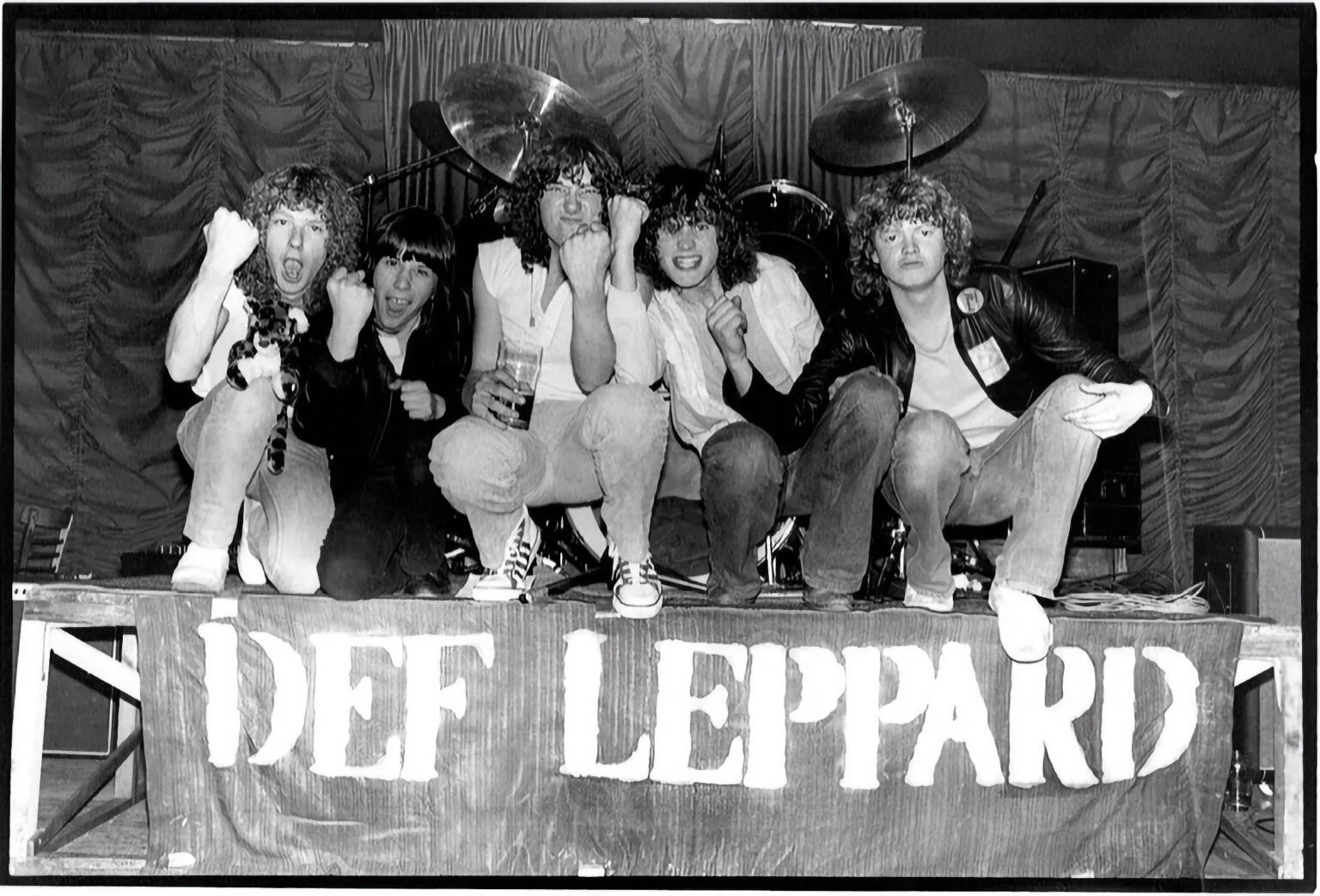
The film is being directed by Jeff Feuerzeig, whose previous work includes the acclaimed music documentary The Devil and Daniel Johnston. Made in close collaboration with Def Leppard, the project promises previously unseen footage and extensive access to the band's members, giving the documentary an opportunity to examine both the success and the difficult periods that shaped the group.
The story begins in Sheffield, where Def Leppard emerged in the late 1970s before becoming one of the defining rock bands of the 1980s. Their breakthrough came with albums including Pyromania and Hysteria, records that transformed the group from a British heavy metal act into a global stadium attraction.
Hysteria in particular became a phenomenon. Released in 1987, the album produced a remarkable run of hit singles and eventually sold millions of copies around the world. Songs such as Pour Some Sugar on Me, Love Bites and Animal helped establish Def Leppard as one of the biggest bands of the decade.
But the band's history is also marked by tragedies that could have ended their career.
In 1984, drummer Rick Allen was involved in a serious car accident that resulted in the loss of his left arm. Rather than leaving the band, Allen worked with Def Leppard and engineers to develop a custom electronic drum kit that allowed him to continue performing.
His return became one of the most remarkable stories in rock history. Allen eventually rejoined the band onstage, and Def Leppard continued working toward what would become their biggest period of commercial success.
The band later faced another devastating loss when guitarist Steve Clark died in 1991. Clark had been an important part of Def Leppard's songwriting and guitar sound, particularly during the period that produced Pyromania and Hysteria.
Instead of ending the group, his death became another turning point. Def Leppard continued recording and touring, eventually welcoming Vivian Campbell as Clark's replacement.
Those events form an important part of Long Live Def Leppard, but the film is not being positioned simply as a catalogue of tragedy. Director Jeff Feuerzeig has described the project as an underdog story, focusing on the relationships and determination that allowed the band to continue after circumstances that could have destroyed it.
That perspective could give the documentary a different tone from the conventional rock biography. Def Leppard's career contains the familiar ingredients of a major rock story, including enormous records, stadium tours and personal struggles, but their longevity is arguably the most unusual part of the story.
The band has remained active for more than four decades. Def Leppard were inducted into the Rock & Roll Hall of Fame in 2019 and have continued to perform for large audiences around the world. More recently, they completed a sold-out Las Vegas residency at Caesars Palace.
The documentary arrives while the band remains an active touring act rather than a group looking back from retirement. That distinction could make the film especially relevant to younger listeners who know the band's biggest songs but may not be familiar with the history behind them.
For longtime fans, meanwhile, the promise of unseen footage could provide a reason to see a story they already know from a different perspective. The participation of Joe Elliott, Phil Collen, Vivian Campbell, Rick Allen and Rick Savage also gives the film access to the members who have carried Def Leppard through its longest period.
The project is being released theatrically in North America through Crosswalk, the event cinema division of Bleecker Street. The company has increasingly moved into music-focused theatrical projects, making Def Leppard another major rock act to receive a cinema release rather than a documentary designed exclusively for television or streaming.
The theatrical approach reflects the scale of the band's history. Def Leppard have sold more than 110 million albums worldwide and remain one of the most successful British rock groups of their generation.
The film also arrives at an interesting point for the band creatively. Def Leppard have continued working on new music, with Joe Elliott previously discussing material for a forthcoming album. That means the documentary will not necessarily represent the end of the story being told. It may instead become another chapter in an active career.
For a band whose history includes both extraordinary commercial success and moments of genuine personal loss, there is plenty for the filmmakers to explore. The challenge will be balancing the mythology surrounding Def Leppard with the human story underneath it.
Long Live Def Leppard is scheduled for theaters in early 2027. No specific release date has been announced yet, but the film already represents a major new addition to the growing list of music documentaries receiving theatrical treatment.
More than 40 years after Def Leppard began their journey in Sheffield, the band's story is still developing. This time, it will be told on the big screen, with the musicians themselves helping to open the archive and revisit the moments that made Def Leppard one of rock's most enduring bands.