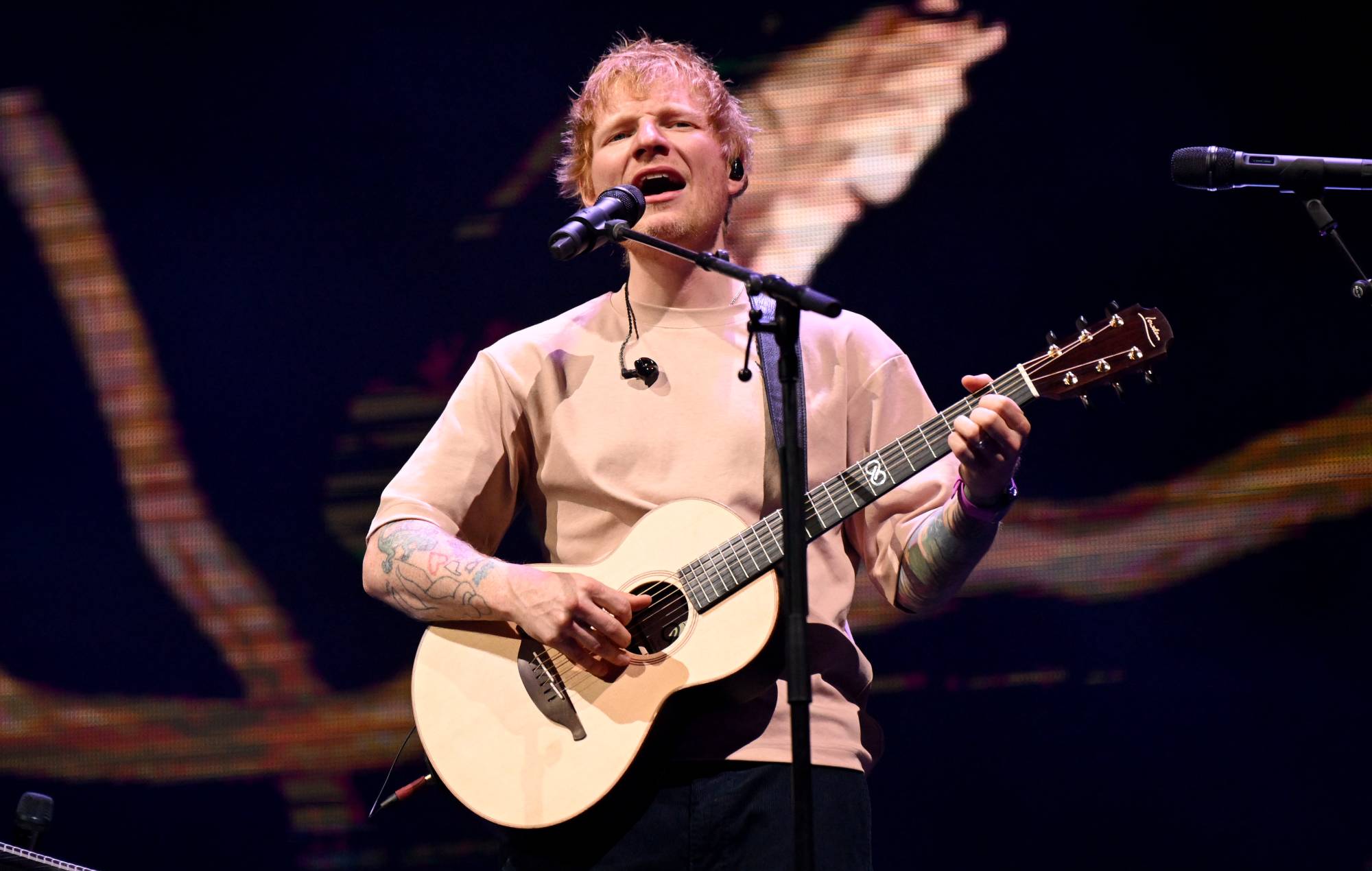
Standard stadium protocol usually concerns itself with oversized bags, professional camera rigs, or glass bottles. When Ed Sheeran brought his Loop world tour to Santiago, however, gate security took issue with something far more routine. Two fans arriving for the Saturday, November 21 show at Estadio Bicentenario de La Florida found themselves barred from entering because they were wearing the colours of Club Deportivo Palestino, a domestic football side founded by Palestinian immigrants in 1920.
The dispute at the turnstiles went on long enough for both ticket holders to miss the opening three songs of Sheeran's set. The fans pointed out that the published terms and conditions for the show contained no ban on football shirts or sportswear, arguing that their clothing posed no safety hazard and simply reflected their identity. While venue staff eventually relented and let them through, the pair described the holdup as arbitrary discrimination.
Club Deportivo Palestino took a similar view once word reached them. In a public statement, the team voiced deep indignation at the treatment of their supporters, labeling the security blockade an unacceptable discriminatory act. Officials pointed out that their kit represents more than a century of cultural history in Chile, adding that no spectator ought to be excluded from an entertainment venue for putting it on. The club demanded an official explanation from local promoter DG Medios, sought clarity from Sheeran's touring camp, and offered to help the affected fans gather evidence and secure legal representation.
The club's shirts had already been in the spotlight in Santiago live music circles just seven days earlier. Hayley Williams performed in the city wearing a Palestino jersey, using that platform to speak out against right wing Chilean political figure José Antonio Kast. Williams has frequently aligned herself with dissent surrounding Sheeran's current global itinerary.
That broader friction started two months back on the North American leg of the Loop tour, when Macklemore was dismissed from his opening slot after leading crowds in chants calling for a Free Palestine. Sheeran later claimed he played no role in the sacking, stating that his promoter, Messina Touring Group, took action because several arenas had threatened to pull the plug on scheduled concerts if the rapper stayed on the bill. The decision sparked an immediate rebellion within the tour camp. Sheeran's remaining support acts and his entire live backing band walked out in solidarity with Macklemore. Williams signaled her backing for the musicians who quit by spinning their tracks over venue sound systems before her own sets.
Sheeran tried to steady the situation on September 19 from the stage in Philadelphia, acknowledging missteps in how the controversy had been handled. He told the audience that conditions in Gaza were catastrophic, unjustifiable, and disproportionate, while expressing discomfort with the policing of artistic expression and stating that his concerts must remain places where everyone feels welcome. The row quickly drew broader industry attention, including from U2, who warned earlier this month that arena operators and concert promoters must not be allowed the authority to censor performers.
Macklemore chose to move forward outside that venue network. After noting that nine American arenas turned down his requests to host benefit concerts, the rapper took his show across the Atlantic, selling out benefit dates in Dublin, Paris, and London alongside guests such as Greta Thunberg, Paloma Faith, and Nemahsis. He declared that independent musicians would simply construct their own spaces if the established circuits proved hostile. In Santiago, however, the contest over political speech did not happen behind a microphone. Instead, it played out at the gates, where concertgoers were left arguing with guards over the jersey on their back.