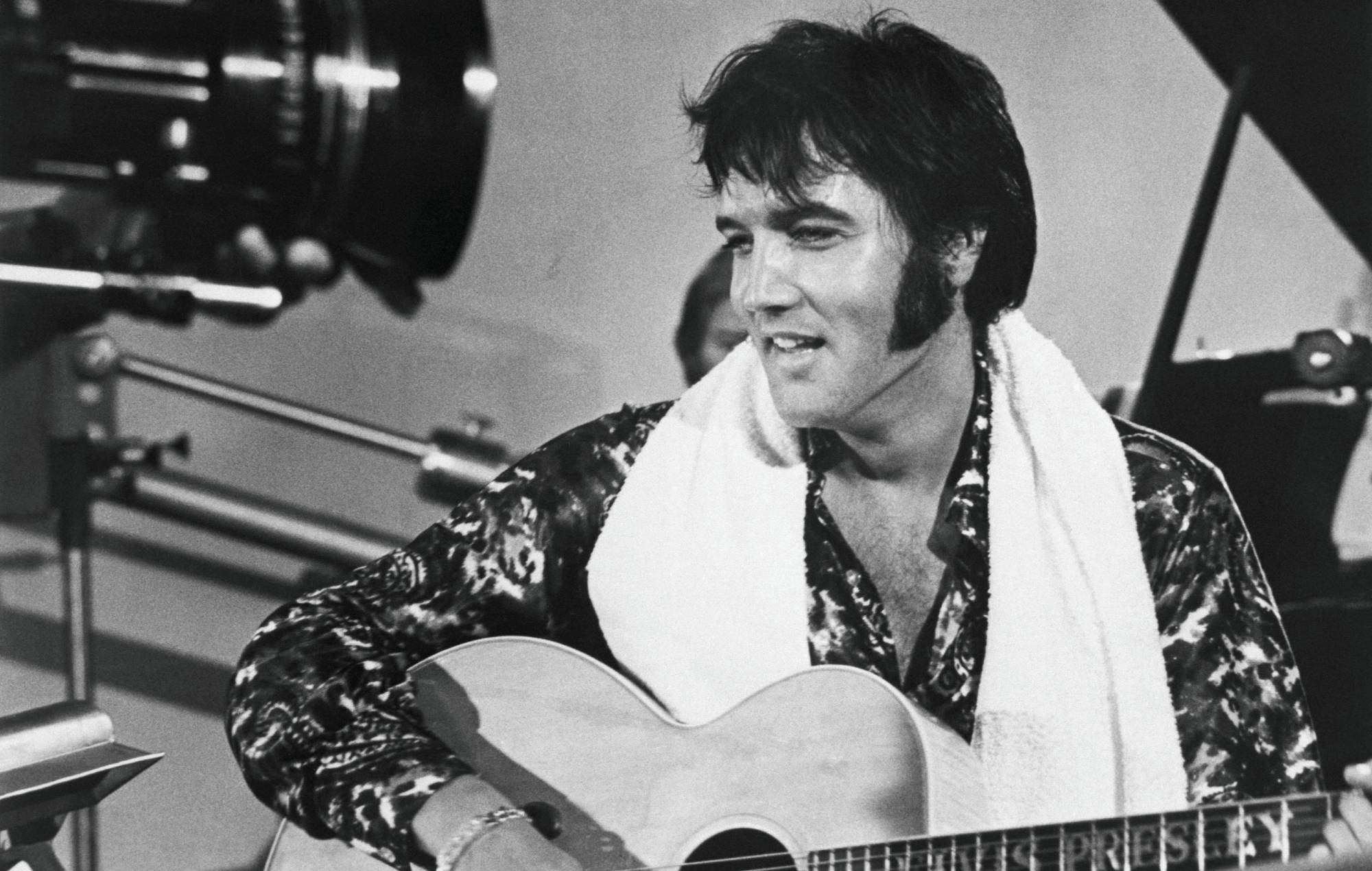
The catalog of Elvis Presley is the latest battleground between major music publishers and artificial intelligence developers. On Friday, October 23, the management arm overseeing Presley's commercial legacy joined forces with his music publishers to file a copyright infringement lawsuit against tech firm Anthropic. At issue is whether artificial intelligence systems can absorb protected songbooks into their training databases without asking for a license, let alone paying for one.
The legal action was submitted by a subsidiary of Authentic Brands Group, which oversees Presley's name, image, and likeness, working in concert with the publishing entities that administer his recorded material. Their legal complaint focuses on Claude, the conversational assistant built by Anthropic. According to the court documents, Anthropic scraped and processed 274 compositions connected to Presley to teach its software how to produce text. The list of works includes foundational rock and roll tracks like All Shook Up, Don't Be Cruel, and Return To Sender, alongside enduring titles such as Can't Help Falling In Love, A Little Less Conversation, and (You're The) Devil In Disguise.
The mechanics of the complaint come down to how these machine learning tools are assembled. Developers rely on massive troves of written work, including prose and song lyrics, so their programs can analyze linguistic patterns and generate text. The Presley rightsholders argue that Anthropic took these protected compositions without approaching the publishers, quietly folding decades of celebrated songwriting into a commercial product for free.
The lawsuit also takes direct aim at the safety measures Anthropic claims to use. While the company says it has put guardrails in place to stop Claude from outputting copyrighted lyrics, the filing asserts that these filters are simple to bypass. As evidence, the plaintiffs note that asking the chatbot to rewrite a track for a contemporary audience still produces text that mirrors Presley's original lyrics almost word for word. Because of these alleged violations, the estate and publishers are seeking statutory damages of up to $150,000 for each song, an amount that reaches approximately $41.1 million across the 274 titles.
Leading the legal push for the plaintiffs is attorney Richard Busch, an experienced litigator in music copyright conflicts. Busch previously represented the family of Marvin Gaye in their successful case against Robin Thicke and Pharrell Williams, where a jury found that the 2013 single Blurred Lines infringed upon Gaye's 1977 recording Got To Give It Up. In this new action, Busch said the plaintiffs filed the lawsuit to enforce their exclusive rights against a business that built its entire framework on copyright infringement at an unprecedented scale.
While Anthropic has not issued a public statement on the filing, the tech firm has routinely maintained that using copyrighted work to train machine learning models qualifies as fair use under United States copyright law. That defense is facing pressure from across the music business. In October 2023, Universal Music Publishing Group, Concord Music Group, and ABKCO filed a joint lawsuit against Anthropic over the unauthorized output of lyrics written by artists like Katy Perry, Gloria Gaynor, and The Rolling Stones. In August, Sony Music Publishing and Warner Chappell followed with an action of their own, citing lyrics and sheet music from Taylor Swift, Michael Jackson, and The Beatles.
Musicians are contesting similar ground elsewhere. In September, songwriter Jason Isbell joined fellow artists in legal proceedings against Suno, an audio platform accused of letting users copy the musical identities of performers without permission. Across the Atlantic, British figures including Paul McCartney, Elton John, and Dua Lipa have stepped forward to demand stronger statutory protections for working creators. For the custodians of Presley's catalog, the lawsuit marks a clear refusal to let historic songwriting be repurposed as free training material.