Everything Everything have never been particularly comfortable standing still, but their next move looks squarely backward in order to sprint forward. The British quartet have confirmed their eighth studio release, Poison Pop, a record that puts aside the measured, allegorical distance of their recent work in favor of a faster and much louder approach. Arriving as a direct reaction to 2024's Mountainhead, the new collection swaps out cautious metaphors and intricate studio layers for high velocity guitars, taking immediate aim at the fatigue of modern online existence.
The sharp change in direction owes a great deal to the calendar. While Mountainhead leaned heavily on synthesizers, complex arrangements, and a carefully guarded conceptual narrative, Poison Pop pivots hard back toward the group's frantic guitar foundations. That impulse surfaced during rehearsals and tour dates last year, when the band marked the tenth anniversary of their third album, Get To Heaven. Stepping on stage to play those ferocious, politically charged tracks every evening reminded the musicians of their capacity for sheer velocity. Frontman Jonathan Higgs began reflecting on the raw aggression of that period, wondering why they should hold back any longer.
That realization carried directly into the writing sessions. Revisiting a decade-old album pushed the four-piece into the confrontational headspace needed to craft something intentionally abrasive. Instead of constructing an elaborate fictional world or softening their grievances behind layers of metaphor, the band chose to make an album that lands like an unavoidable slap in the face. The intention was to keep the friction right on the surface, refusing to offer an intellectual buffer between the listeners and the music.
Reaching that degree of focus required an unusually patient filtering process. Everything Everything usually throw themselves into writing new tracks almost as soon as an album is completed, but they handled the two years following Mountainhead with deliberate restraint. Higgs and guitarist Alex Robertshaw worked through an enormous backlog of ideas, eventually tossing out between 80 and 90 songs. Once they had trimmed the pile down to roughly 20 contenders, the two writers stepped aside. Rather than sequencing the record themselves, they handed the remaining tracks over to the rest of the band to choose the final running order, relying on their bandmates as an external filter to ensure only the sharpest material survived.
Lyrically, the album focuses on the steady decay of digital culture. The material examines the endless cycle of social media outrage, the rise of synthetic media, and the swift creep of automated material into artistic spaces. Higgs avoids playing the role of an ivory-tower commentator handing down moral judgments, choosing instead to replicate the disorienting, relentless static of everyday discourse. The songs capture the rising anxiety of vanishing safety nets and rampant cultural friction, reflecting a fractured climate where conflicting viewpoints collide at maximum speed.
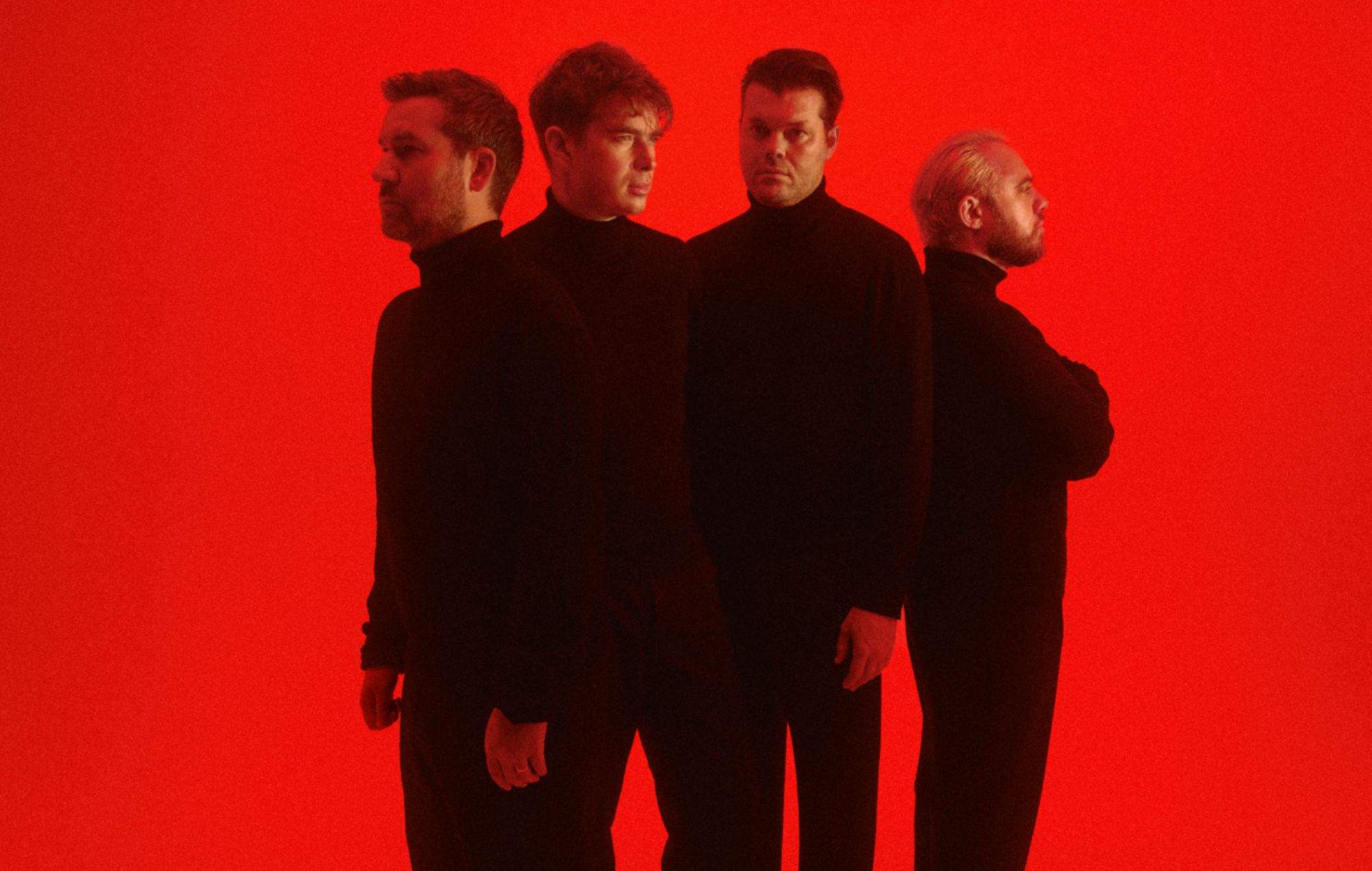
The visual presentation around the release follows the same stark sensibility, developed by the band alongside Raygun London, with photography by Bas Van Est and typography by ChaChaanTeng. With the title track already out, Poison Pop presents itself as a deliberate refusal of algorithmic passivity, trading polished comfort for chaotic speed and human noise.