Festival bookings in contemporary live music are usually governed by contractual guarantees, strict exclusivity clauses, and corporate sponsorship demands. Norman Cook has spent decades working under an entirely different arrangement at Worthy Farm. The veteran electronic producer and DJ, known across the globe as Fatboy Slim, has quietly racked up more than a century of appearances at Glastonbury without ever taking home a performance fee.
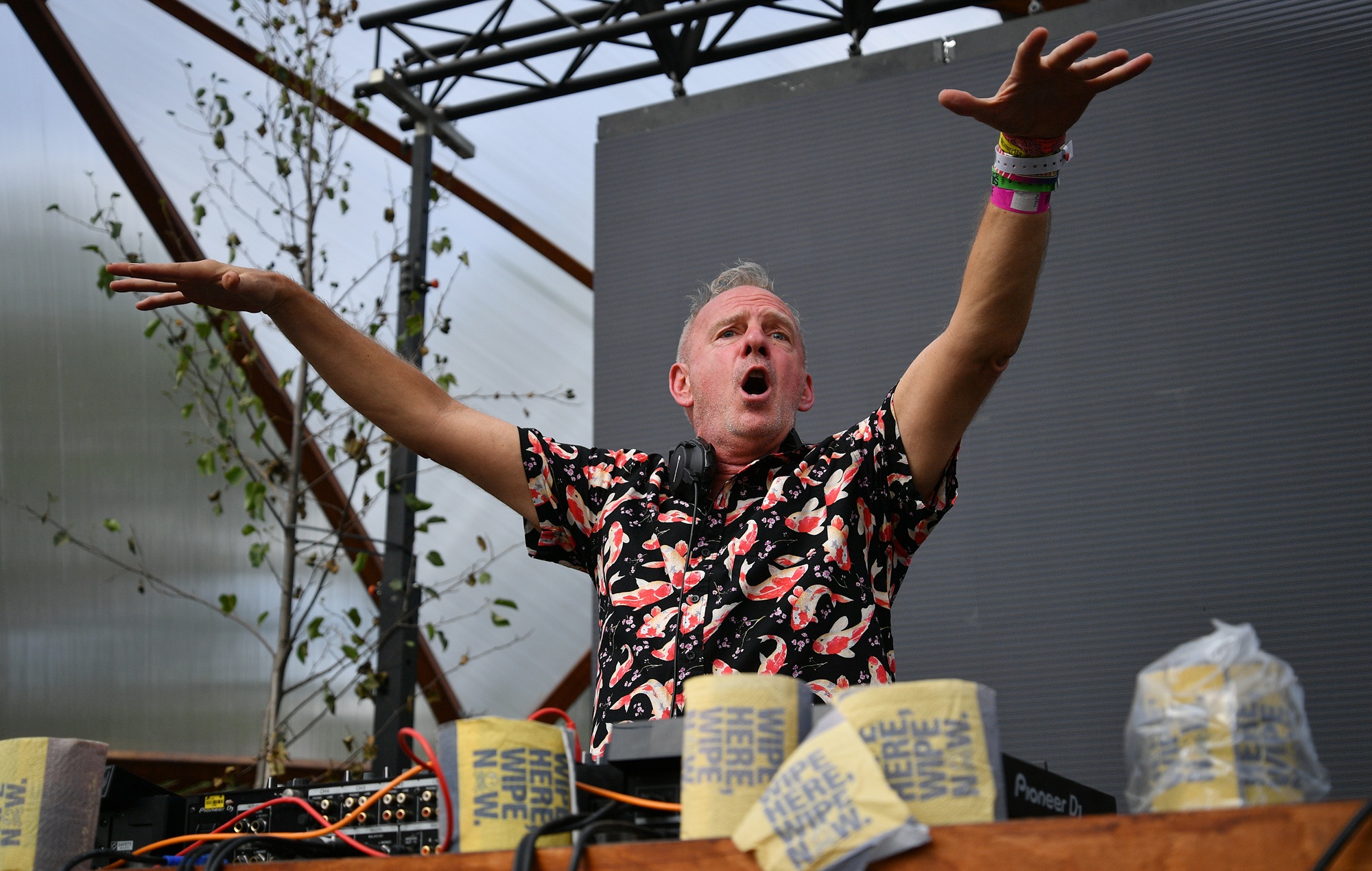
The understanding between Cook and the festival founders, Michael and Emily Eavis, relies on goodwill and open access rather than formal paperwork. Cook does not draw a paycheck for his appearances, but he also never pays for admission. In exchange, the Eavis family grants him free movement across the site, leaving him free to pop up wherever he chooses. On many occasions, Cook is not listed on the printed programme at all. He walks the fields like any other ticket holder, taking in the sights until an open pair of turntables or an impromptu party offers an excuse to jump behind the decks.
That informal freedom explains how his total set tally crossed into triple figures. A standard rock band will arrive on site with a crew, run through a single scheduled performance, load out their equipment, and depart for the next tour stop. Being a solo DJ allows Cook to operate with far greater agility. Over a single weekend, he can bounce from massive headline bills on the Other Stage or The Park down into the small hours of the dance village. In recent years, his Somerset itinerary has regularly combined high-profile shows with low-key sessions at venues like the Rabbit Hole, as well as the Lonely Hearts Club stage tucked inside the Silver Hayes dance area.
Cook was navigating Worthy Farm long before his dance records topped international charts. His first appearance on the farm dates back to 1986, when he arrived not with samplers and record crates, but with a bass guitar around his neck as a member of The Housemartins. That debut performance permanently altered how the Hull group viewed the festival. Even so, neither Cook nor frontman Paul Heaton returned to that particular platform for nearly four decades. The circle finally closed in 2024 when Heaton invited his former bassist back onto the Pyramid Stage. Cook picked up his old instrument to perform their signature hit, Happy Hour, marking their return to that specific stage thirty-eight years after their original set.
The lack of outsized performance fees for acts like Cook is central to how Glastonbury operates. Rather than exhausting its budget on bidding wars for talent, the festival directs its surplus revenue back into charitable causes and local public services. In early 2025, the organization confirmed a series of major distributions from its operating profits. These included two million pounds given directly to the NHS Somerset charity, alongside more than one hundred thousand pounds split between Bristol hospitals and nationwide nursing staff. A further one point two seven million pounds was sent to international relief organisations, including Oxfam, War Child, and the British Red Cross.
For Cook, the refusal to chase commercial margins is precisely why Worthy Farm remains special. He has consistently praised Michael and Emily Eavis for guarding the event against corporate sponsorship, keeping the festival free of commercial signage that could dilute the atmosphere. While speculation regularly consumes the music industry over who will headline the Pyramid Stage each June, Cook represents an alternative tradition. His ongoing presence shows that for some artists, community and artistic freedom still matter far more than a standard appearance fee.