A standard appearance on late-night television follows a rigid script. A band walks onto the stage, punches through whatever single happens to be leading their current promotional push, and heads for the door before the commercial break wraps up. Multi-night residencies change that equation entirely. When a group sets up camp as the house musical guest across an entire week, the routine promotional playbook quickly exhausts its immediate utility. There are only so many times a band can play the same radio track before boredom sets in for both the musicians and the audience, which makes room for unexpected detours into the deeper corners of an archive.
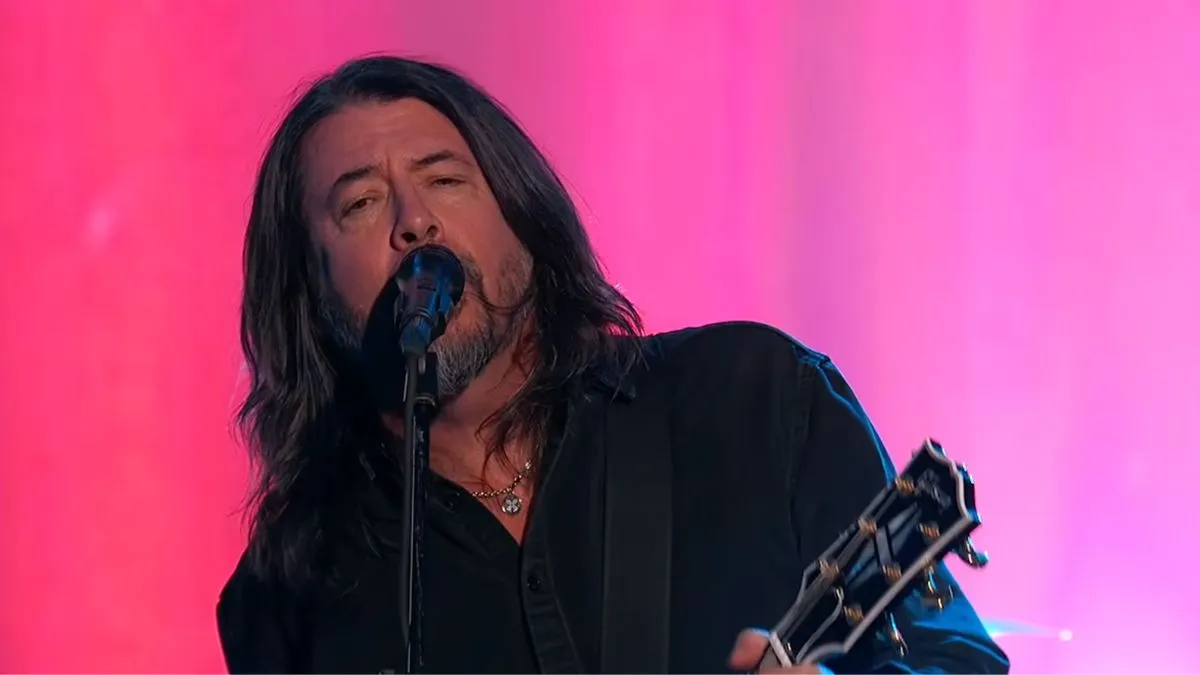
Foo Fighters found themselves in that exact position on Thursday evening as they wrapped up their week on Jimmy Kimmel Live! Rather than closing the residency by rolling out another heavily rotated anthem from their standard setlist, they decided to pull out a vintage curiosity. To cap the run, the group resurrected their version of Gerry Rafferty's 1978 hit, Baker Street. It was an affectionate gesture toward seventies songwriting, and an even clearer signal to long-term listeners who take pride in tracking the secondary avenues of the band's recorded history.
The performance revived a recording that has held a distinct position in the band's catalog since the late nineties. Foo Fighters initially recorded and released their take on Baker Street back in 1998, tucked away as an extra track on the UK CD single for My Hero. During that era of physical media, international CD singles functioned almost like secret vaults for listeners willing to hunt them down. Labels and artists routinely filled out those multi-track discs with non-album experiments, unpolished jam sessions, and idiosyncratic cover versions that had no natural home on a proper studio album.
For fans outside the United Kingdom, finding that specific release was not a matter of clicking a button. In the late nineties, accessing imported European CD singles required combing through the import racks at local independent record stores or arranging trades through collector networks. Because the cover existed purely in that physical, region-locked format for a long stretch of time, it earned a dedicated cult reputation. Listeners who tracked it down were treated to a genuine stylistic overhaul, listening as the band dismantled the polished, saxophone-heavy soft rock of Rafferty's original radio staple and reconstructed it within their own alternative rock framework.
Seeing that track resurface on a network television stage decades later highlights what makes an extended television residency worthwhile. It allows an established act to abandon the usual marketing machinery and treat the broadcast like a rehearsal space or an informal showcase. Reaching back to a 1998 UK B-side on a Thursday night proves that songs originally buried on physical import discs do not always stay in the past. Given the right stage and enough time to wander away from the hits, even the most obscure archive tracks can find their way back under the lights.