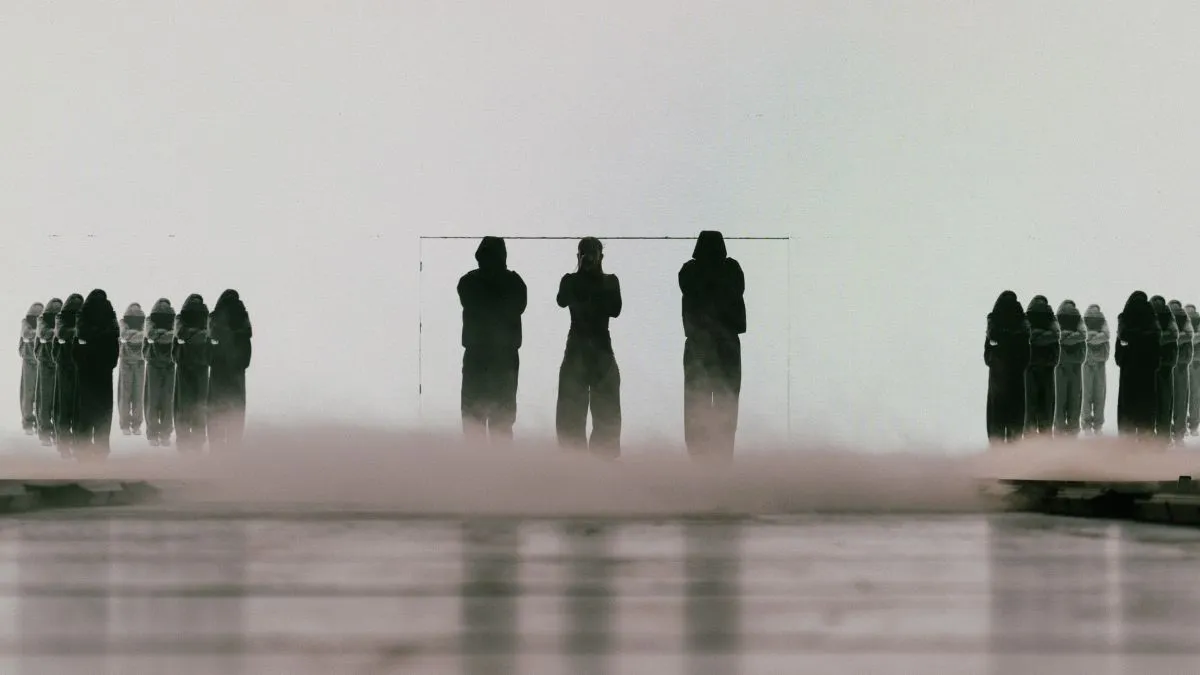
Grimes has never approached emerging technology as an outsider looking in, so her screen debut arriving inside a synthetic feature feels almost inevitable. On December 4, cinemas will screen Gods Don’t Give Gifts, a science fiction anthology generated entirely through artificial intelligence. Rather than turning in a soundtrack cut or a brief cameo, she has handed over her voice and digital likeness for a central role. The project marks the first time a production generated entirely by machine systems has lined up a standard theatrical run, putting algorithmic filmmaking directly to the test in commercial theaters.
The anthology brings together four distinct narratives, produced through a partnership between the artificial intelligence studio Fable and Zack London, known online as Gossip Goblin. Grimes plays Zayinth Alda, a dispossessed noble living on a fictional planet called Niiro Cradle. Across the story, bodily forms are treated as tradeable goods, while human consciousness is separated, packaged, and bought. The plot traces the disturbing consequences of trying to outrun biological limits, placing the musician directly within the sort of speculative dystopia she has spent years discussing.
Edward Saatchi, who produced the picture, framed the experiment as an intentional break from mainstream animation. Instead of chasing the polished aesthetic favored by companies like DreamWorks or Pixar, the team aimed to craft an unfamiliar visual vocabulary. Saatchi sees the combination of Grimes delivering a vocal performance and an unconventional digital character model as an early glimpse of what narrative animation can look like when creators abandon the design habits of heritage studios.
Taking on the role fits naturally alongside the work she has already conducted around algorithmic music. Grimes previously built and shared software modeled on her own singing voice, releasing more than two hundred artificial intelligence files for creators to remix and release without licensing fees. Her reasoning at the time was straightforward. She argued that putting sophisticated production tools into common hands removes technical gatekeeping, making it far simpler to spot genuine ingenuity. She also emphasized that the ethical and practical choices artists make around these programs today will shape broader cultural attitudes for decades.
That same conceptual interest will guide her next full studio record, Psy Opera, scheduled for release on January 22, 2027. Despite the subject matter focusing on the social fallout of automated intelligence, Grimes worked without generative tools while writing and recording the album. The choice frames the music as a human reflection on technology rather than an artifact of it.
While discussing that record, she cautioned against regarding automated systems as all powerful or sacred. Because people designed the tools in the first place, treating machine calculation as an untouchable authority only erodes human responsibility, dignity, and artistic agency. Yet her perspective is not entirely cynical. Facing the sheer vulnerability of human life, she has wondered whether learning to cooperate with advanced computational systems might eventually offer people an unexpected safeguard, keeping biological existence going long after our planet is no longer livable.