
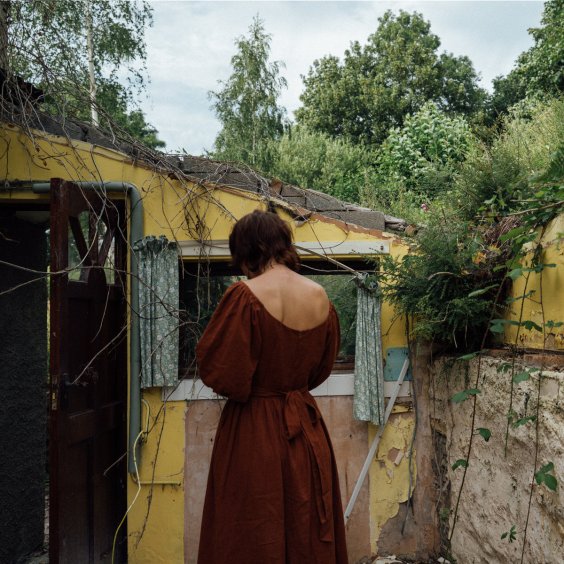
Johanna Warren has rarely offered easy comfort to her audience. Throughout her catalog, the songwriter has built a reputation on heavy, resonant ballads that treat emotional collapse with unflinching directness. Her latest single, Islamorada, extends that commitment, demonstrating how much command she can draw from plain vulnerability. Coming closely behind brave & capable, which arrived in May, the new track marks her second release in recent months and confirms an intense, primal focus at the center of her recent writing.
What gives Islamorada its power is an unwillingness to dilute difficult feelings. While grief in popular song is often cushioned by safe melodic cliches or kept at a safe distance, Warren leans straight into exposure. The track is built around an open plea, capturing the tension of someone asking for help without guarantee. Instead of collapsing into weak sentimentality, the song reframes that exposure, transforming what could easily sound like pure desperation into a reservoir of quiet strength.
That emotional weight has been a recurring current in Warren catalog. Her 2020 release, Twisted, remains a prime example of how far she can push emotional turbulence, using a notoriously biting perspective and rough, gnarly textures to map out internal fracture. Islamorada takes on heartache through a completely different method. Rather than relying on jagged edges to convey distress, the new single lets the exposed act of pleading carry the entire weight. The devastation is just as real, but it is delivered through quiet surrender rather than friction.
Her physical journey from Florida to her current home in Wales offers an intriguing backdrop, yet Warren shows little interest in landscape poetry. When musicians cross oceans, their work often mirrors the change in geography, adopting the mood or space of their new environment. Warren resists that convention. Her gaze remains locked on interior matters, mapping the psychological toll of romantic breakdown and personal crisis. By keeping external scenery out of the frame, she ensures that the listener attention stays fixed on her vocal presence and the raw mechanics of her songwriting.
Putting out Islamorada in such close proximity to brave & capable suggests an artist working in a productive, confident stride. These consecutive releases find Warren testing the boundaries of the traditional ballad, probing how far the form can bend under emotional urgency without fracturing. For listeners who appreciate music that refuses to turn away from deep sorrow, Islamorada makes a compelling case. It shows that admitting powerlessness and voicing an unadorned plea can be the most authoritative gesture an artist can make.