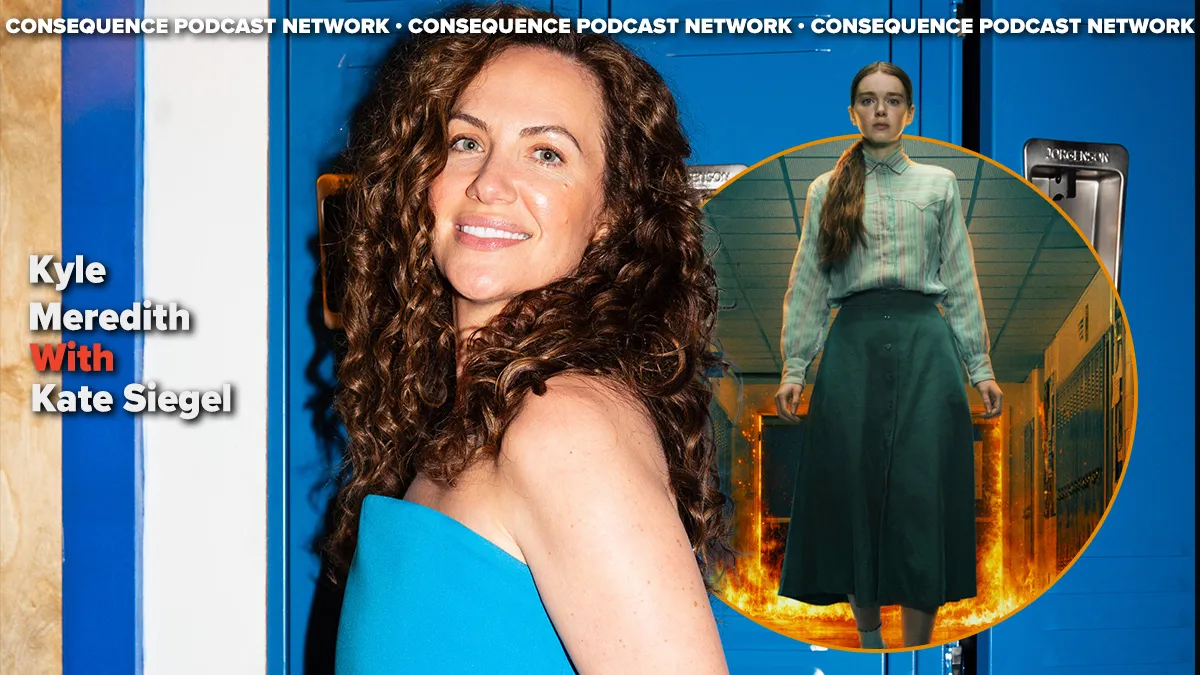
A horror film rarely succeeds by staying uniformly bleak. When fear remains relentless from the opening scene, an audience quickly grows numb, and the stakes begin to lose their sharpness. Actor and director Kate Siegel pointed out this exact balance during a recent podcast appearance, laying out why dread only lands with full force if a story first establishes genuine comfort. Siegel, known for her performances in The Haunting of Hill House and Midnight Mass, has spent years working through heavy psychological tension. Now moving behind the camera, she has turned that experience into a clear perspective on how mood and sound function on screen.
A major element of that dynamic rests in the music, which Siegel highlighted through the soundtrack to Carrie. Film scores in horror carry a specific responsibility, shaping how audiences process vulnerability and often coaxing them into feeling safe right before pulling that security away. In examining Carrie, Siegel pointed out how closely cinematic tone depends on audio to bridge the space between fragile hope and sudden terror. The music dictates emotional expectations, quietly engineering the contrast that makes an eventual turn devastating rather than merely loud.
That philosophy directly shaped Siegel's approach when directing the third episode of her latest collaboration with Mike Flanagan. Instead of rushing straight into grim unease, she made it a priority to build a real sense of happiness first. Setting up warmth and lightness acts as a vital narrative tool in horror, because tragedy requires a baseline of normalcy to carry weight. Viewers need to see something good before it is threatened, and creating that temporary safety gives the inevitable descent its emotional consequence.
The conversation also touched on her feature directorial debut, Method, alongside surreal creative choices such as floating cars. Stepping into directing gives longtime actors a distinct understanding of tone. Having performed in emotionally demanding sequences for years, Siegel brings an instinctive sense of pacing to the monitor, knowing precisely when to let an unusual visual sit, when to give a scene room to breathe, and when to let the sound do the heavy lifting.
For anyone interested in the technical craft of horror, Siegel's reflections show how much the genre relies on careful restraint and auditory manipulation to create genuine fright. The complete conversation is available to stream on Apple Podcasts, Spotify, and Amazon Podcasts.