When Linkin Park stepped back into the public eye in 2024 with their record From Zero, the stakes were unusually high. It had been seven years since the death of Chester Bennington in 2017, an absence that put the band on an extended pause. Rather than quietly testing the waters, the group returned with fresh personnel, an arena run, and a visual record of the entire process. That transition has now been packaged into a feature-length documentary called Unshatter, arriving in cinemas on Wednesday, September 30.
The project sits under the direction of turntable player and visual artist Joe Hahn, who has spent decades steering the band's aesthetic through seminal videos like In The End and Numb. Hahn began gathering material the moment the group decided on an actual comeback, though crafting those raw moments into a cohesive film took a few years. Central to the documentary is a full-scale concert captured in São Paulo, balanced against quieter fly-on-the-wall scenes tracing the preparation for their public relaunch. The crew paid special attention to the release day of From Zero itself, making sure cameras documented the exact moment the record finally reached the public after such a long stretch of quiet labor.
Stepping back out into the open was not met with complete ease. Hahn acknowledged that inside the camp, questions circulated about whether anyone still remembered or cared. Mainstream musical attention had migrated during their seven-year downtime, leaning heavily into house music and K-pop while rock music slipped back from the cultural forefront. Realizing they were stepping into an unfamiliar commercial climate, the band refused to tiptoe. According to Hahn, the members decided to either deliver the loudest, most ambitious statement possible or drop the concept altogether. They knew this window offered their only realistic shot at reintroducing themselves, and they chose to take the plunge while simply trying to have fun with the process.
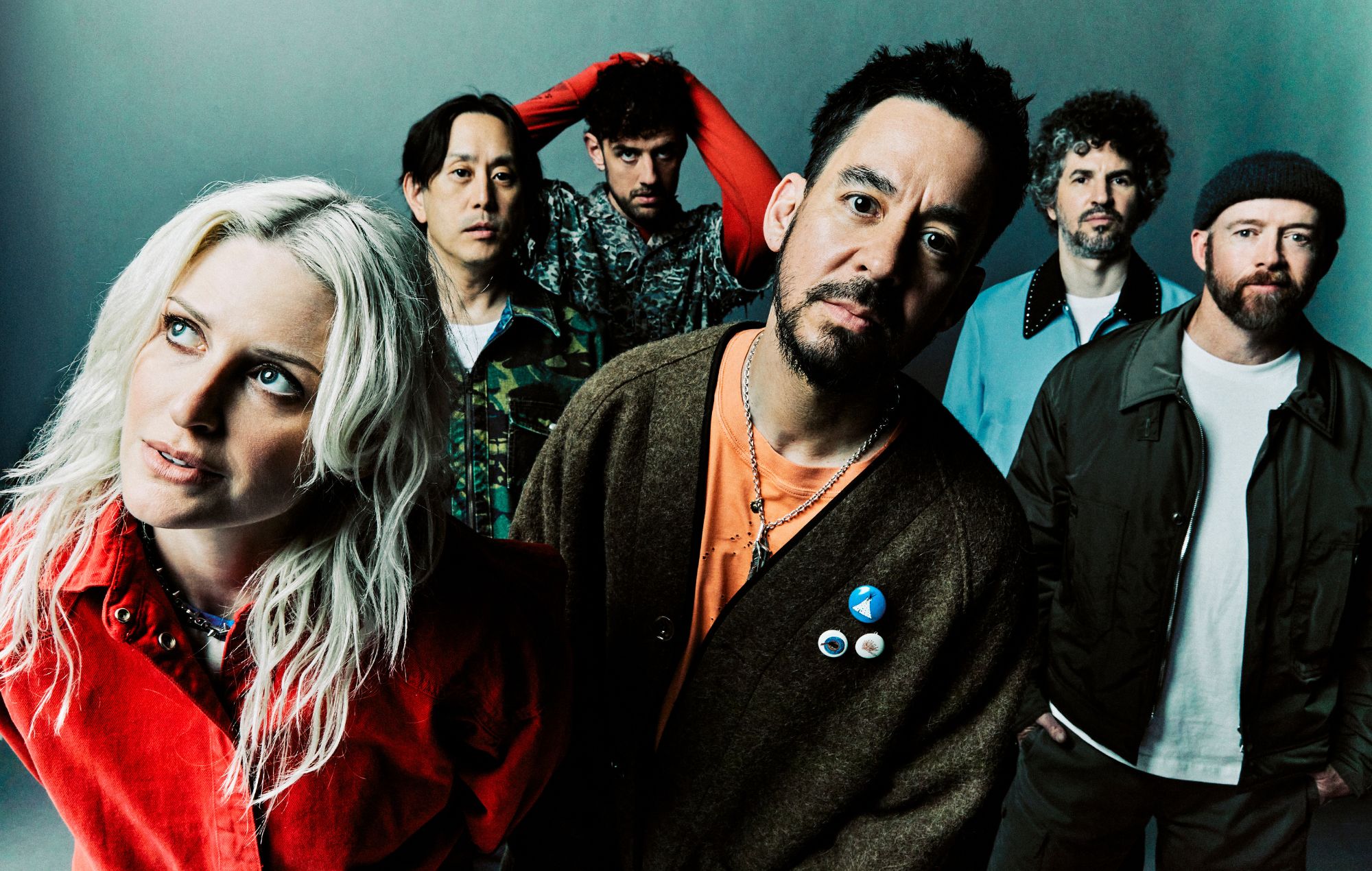
Much of Unshatter focuses on the interpersonal mechanics behind that gamble, particularly the incorporation of singer Emily Armstrong and drummer Colin Brittain into the fold. The film documents how the newcomers settled alongside the surviving members, balancing longtime personal bonds with completely new musical chemistry. Hahn noted that once everyone aligned behind a collective intention, an unmistakable confidence followed. He pointed out that when the unit shares that exact focus, the group begins to feel unstoppable, allowing them to ignore early skepticism and push forward on their own terms.
Out on the road, the makeup of the crowd surprised the band as much as the response itself. Rather than finding an audience made up entirely of people clinging to nostalgia, the band encountered a noticeable influx of fresh listeners. During recent performances, rhythm guitarist and co-vocalist Mike Shinoda has routinely stopped the show to run an informal census, asking who in the building has seen Linkin Park in the past and who is attending their very first gig. Hahn noted that the volume of people raising their hands for their inaugural show has been remarkably large. At the same time, older attendees who followed the group in earlier decades are turning up with their children, turning the concerts into a cross-generational event.
The documentary does not serve as a tidy ending point for this revival. Hahn has already noted that the band members are back inside the recording studio, actively tracking more new songs. Instead of resting on the accomplishment of an arena tour and a feature film, the group seems determined to build on the ground they just reclaimed. For musicians who spent years questioning whether an audience remained on the other side of their silence, the next chapter is already being written.