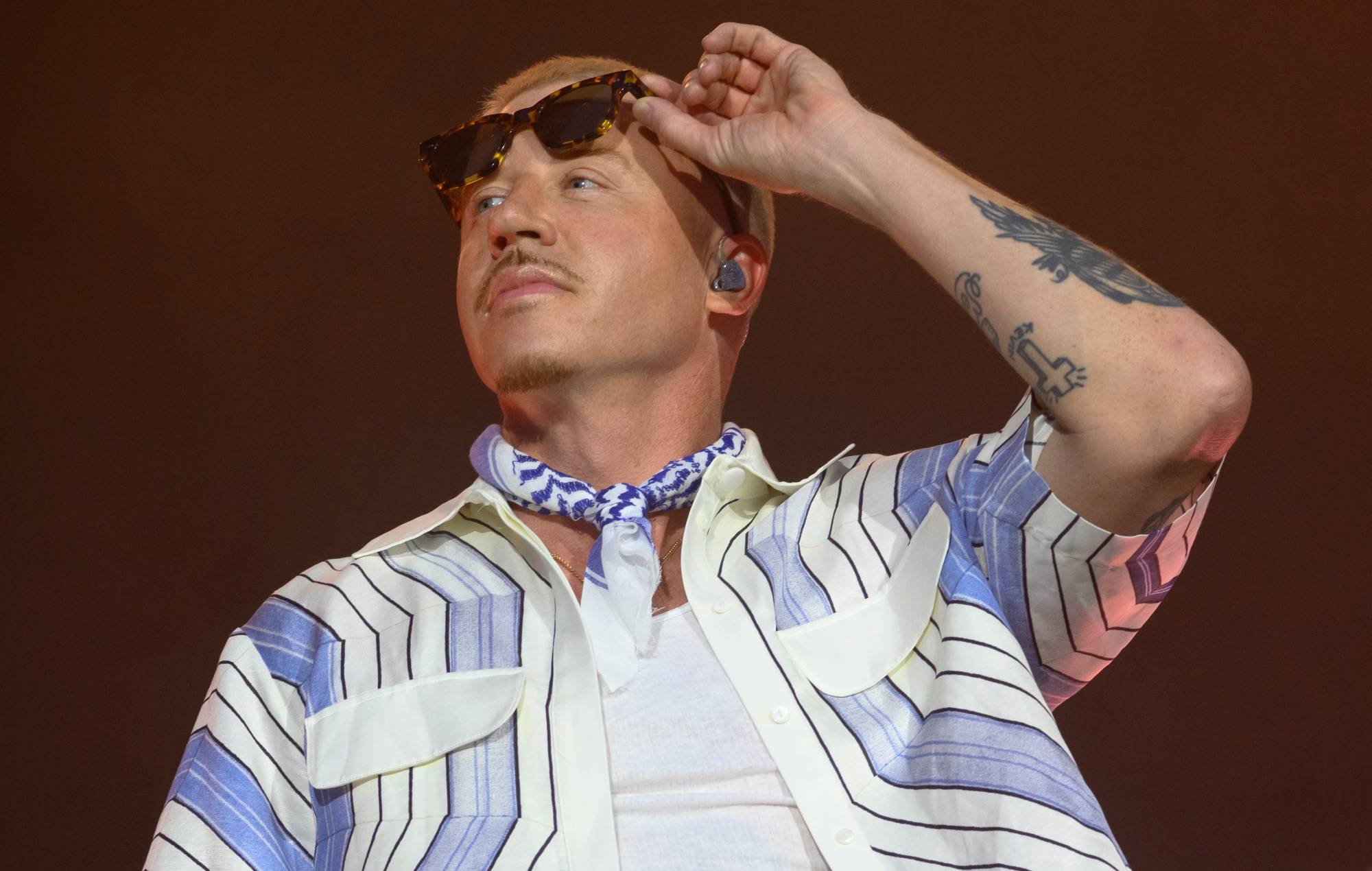
Booking an arena run usually comes down to simple calendar logistics and ticket sales. For Macklemore, trying to organize a string of large benefit concerts across the country proved to be something else entirely. The Seattle rapper announced on social media that nine prominent arenas in the United States refused to host his planned tour in support of Palestinians. According to his account, venue operators removed holds on open dates as soon as they learned what the concerts were raising money for, turning routine routing conversations into a public dispute over corporate gatekeeping.
The proposed shows were intended to follow a trio of sold-out benefit dates he played last month in London, Paris, and Dublin. Discussions for the American leg began around the middle of September, and several venues originally held open dates through the closing months of the year. That progress halted quickly. In a lengthy statement shared online, Macklemore said every building in the routing package pulled out once the charitable goal was stated clearly. In more than two decades of touring, he noted, he had never run into an obstacle this coordinated.
The venues he named cover some of the most lucrative live markets in the country. In the New York area, he identified Madison Square Garden, Barclays Center in Brooklyn, UBS Arena on Long Island, and the Prudential Center in Newark. On the West Coast, the list included Climate Pledge Arena in Seattle, Chase Center in San Francisco, and three major facilities in greater Los Angeles: Crypto.com Arena, the Kia Forum, and the Intuit Dome. By naming each building directly rather than speaking in vague generalities, he dragged an otherwise private booking disagreement into full view.
Venue operators have resisted the claim that political censorship drove their decisions. A spokesperson for Madison Square Garden Entertainment pushed back directly, denying that ideology played any role in their scheduling. Instead, the venue pointed to a congested calendar, alongside a blunt assessment of Macklemore's current commercial standing. The spokesperson stated that the rapper no longer commands the audience size required to justify an arena booking of that scale. It is a familiar line of defense in the touring business, framing a contentious cancellation around commercial reality rather than political resistance.
Macklemore, however, insists the rejections fit into a broader pattern of silencing artists who express solidarity with Palestinians. Looking back at the last three years, he admitted he regretted keeping quiet about earlier pushback he encountered behind closed doors, explaining that he had avoided speaking out because he did not want to shift public attention toward his own industry problems. He pointed directly at the billionaire owners who control prominent sports and entertainment facilities. In his view, that concentrated wealth gives a handful of executives the power to dictate which causes are permitted inside spaces that function as civic arenas, adding that the words Free Palestine threaten existing power structures rather than physical safety.
This is not his first public clash with venue operators during the autumn touring season. Back in September, he was dropped from Ed Sheeran's stadium run following onstage remarks in support of Palestinians at MetLife Stadium in New Jersey. That appearance drew criticism from Robert Kraft, the billionaire owner of Gillette Stadium, showing how quickly political speech from a stage can create friction with facility owners and touring partners alike.
Rather than shelving the benefit idea, Macklemore says his team intends to work outside typical arena channels. The plan now is to organize future benefit gatherings alongside other musicians and community organizers, likely moving the performances outdoors where private venue management cannot pull the plug on a stage. If major commercial rooms remain closed to his cause, stepping outside the turnstiles may be the only way left to reach an audience.