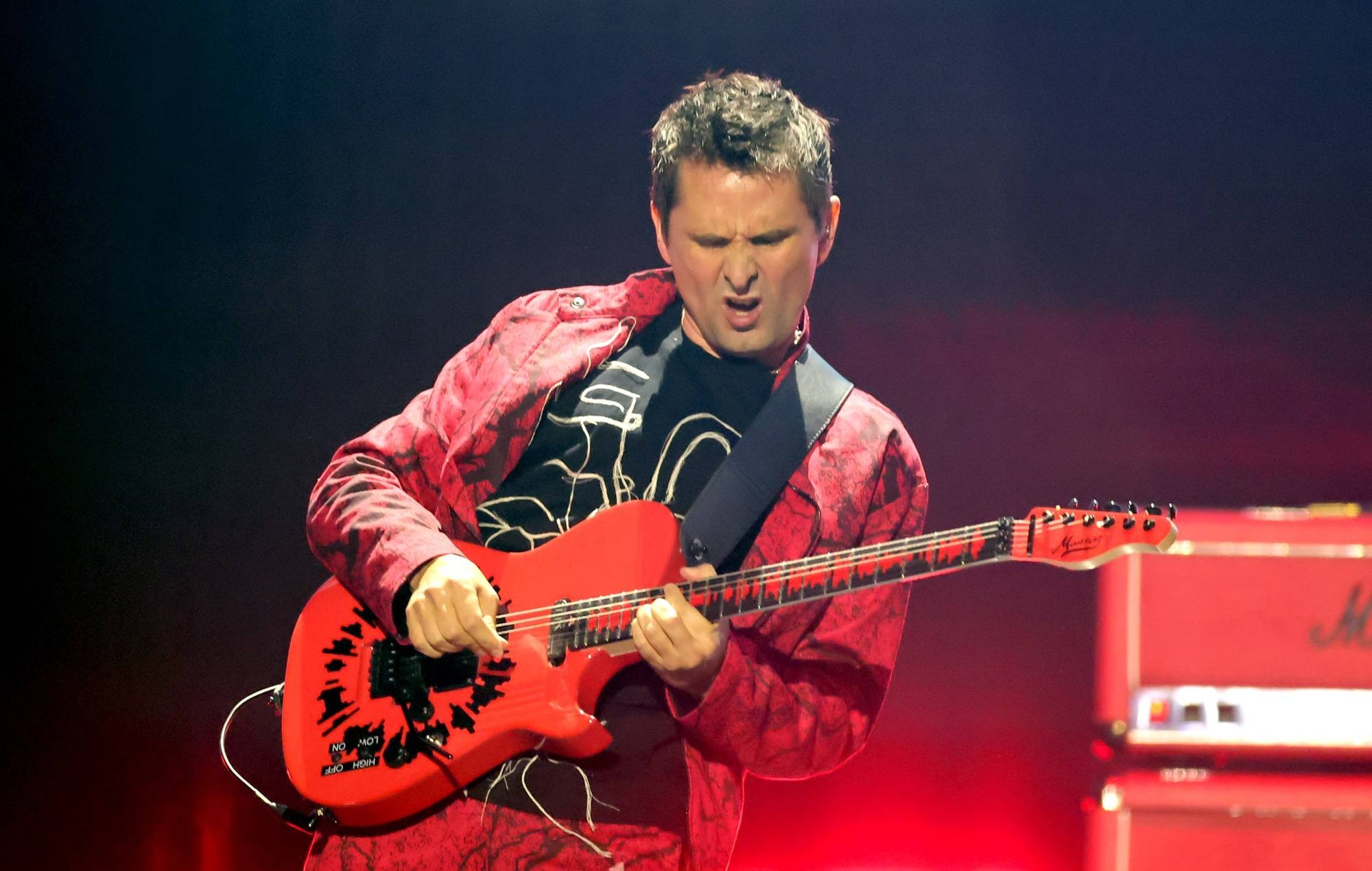
Few musicians have spent as much time strapping technical novelties to their instruments as Matt Bellamy, but his latest technical curiosity points toward software rather than hardware. The Muse frontman is exploring the idea of an electric guitar controlled by artificial intelligence. Rather than letting an algorithm generate material, Bellamy wants an instrument that responds directly to spoken prompts. He imagines an interface where a guitarist can simply tell the instrument what sound profile to produce, cutting past the complex chains of manual adjustments and patch programming that usually slow down work in the studio.
The idea comes out of his practical experience behind the mixing console. Working through banks of hardware synthesizers can eat up entire afternoons just to dial in one specific patch. By Bellamy's reckoning, prompt-based synthesis offers a far more direct way to get there. The software can immediately translate spoken intent into a workable configuration, even if the actual sound fidelity of existing tools is not quite where it needs to be yet. For Bellamy, the real appeal is using a digital instruction to trigger an analogue reaction, though he admits the engineering required to house that capability inside a working guitar is still some distance away.
While that concept remains on the workbench, Muse are already running live experiments with automated stage personnel. At their recent two-night stand at London's O2 Arena, the band revealed a stage production called The Wow! Signal. Central to the setup was a robotic figure stationed at a sound desk, which was far from decorative. Across the evening, the mechanical figure operated controls at the console, supplied backing vocals on a reworked arrangement of Kill Or Be Killed, handled the JFK interlude, and delivered the drill sergeant speech that introduces Psycho. The residency also hosted the stage premiere of Hush, the band's collaboration with Ellie Goulding, where Goulding appeared on the arena screens looking straight into the camera, singing along on video while Bellamy performed alongside the playback vocals.
The appearance of robotics in an arena show might suggest an appetite for complete automation, but Bellamy sees things moving in the opposite direction for live culture. Watching his own children navigate their digital feeds, he has spotted a clear generational fatigue with media built on artificial generation and algorithmic filtering. Because younger listeners are inundated with synthetic content online, Bellamy expects a stronger swing back toward tangible, physical art. When an audience buys a ticket to see people play instruments together in a room, they know the performance cannot be faked or manufactured after the fact, which makes real stage craft considerably more valuable than it was when digital culture felt novel.
That same craving for grounded reality has also fed into Muse's recent creative work. Bellamy experienced a difficult year that broke apart his regular routines, cutting short a fifteen-year stretch of domestic stability where writing music had started to feel like a comfortable habit rather than an urgent necessity. Having to navigate personal upheaval pulled him back into the raw emotional connection he remembered from writing as a teenager, turning the new material into a vital anchor and fueling a creative renewal late in the band's career.
Muse are currently taking those songs and their automated stage production across the continent. Following their stop at The O2, the European arena run moves to Milan, with subsequent dates scheduled for Düsseldorf, La Defense, Amsterdam, Zürich, and Montpellier. After that initial stretch, the band will pick up the arena tour again in January 2027 with shows in Lisbon, Floirac, Madrid, and Valencia. From there, they will head into a series of major summer outdoor appearances that includes Cardiff, Roundhay in Leeds, and BST Hyde Park in London.