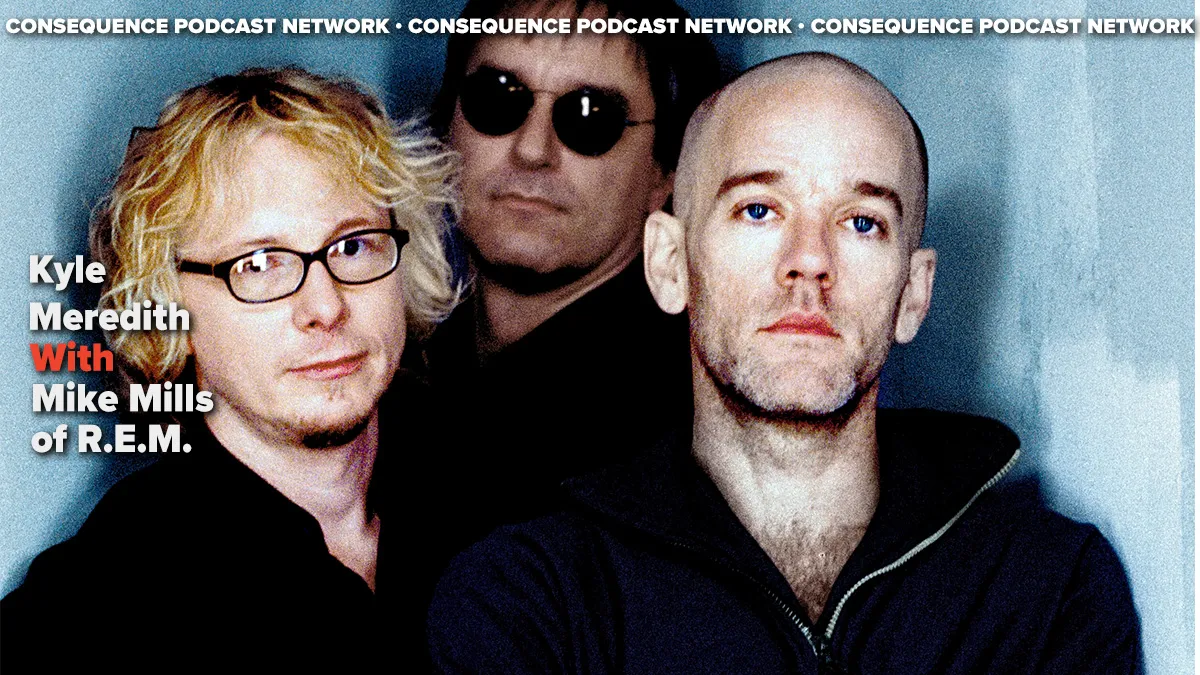
Few records in the R.E.M. catalog have drawn as much lingering scrutiny as Reveal. Arriving in 2001, the album caught the band in the middle of a protracted identity shift, trying to find their footing after a series of destabilizing changes. A quarter of a century later, bassist Mike Mills has revisited that period, making a case for the record as an underappreciated entry that deserves a fairer hearing than it initially received.
Speaking on a recent podcast appearance, currently streaming on Apple Podcasts, Spotify, and Amazon Podcasts, Mills framed the record through the lens of the unsettled working conditions that defined its creation. The most significant rupture was the absence of drummer Bill Berry. Having locked in with Berry since R.E.M. started, Mills found himself without the instinctive rhythmic partner who had anchored their most prolific era. The loss forced the group to fundamentally rethink how they constructed songs from the ground up, altering the rhythm section's foundation and changing the way studio arrangements took shape.
At the same time, the band was still sorting out how to handle the heavy electronic experiments that had entered their process. The sessions for Reveal became an exercise in balance, pitting drum programming and synthetic textures against traditional organic instruments. As Mills recalled, that search for equilibrium led down several creative side paths, producing a batch of abandoned fragments and songs that got away during the writing and recording stages. Looking back at those unreleased directions twenty-five years down the line sheds light on the internal uncertainty, practical choices, and editorial debates that ultimately determined the finished tracklist.
The conversation also looked forward, touching on Howl Owl Howl and their new album. Connecting those current studio efforts with the anniversary of Reveal illustrates how working musicians continue to evaluate their own past. Rather than writing off difficult, transitional records as creative missteps, Mills views that era as a necessary stage in figuring out how to move ahead.