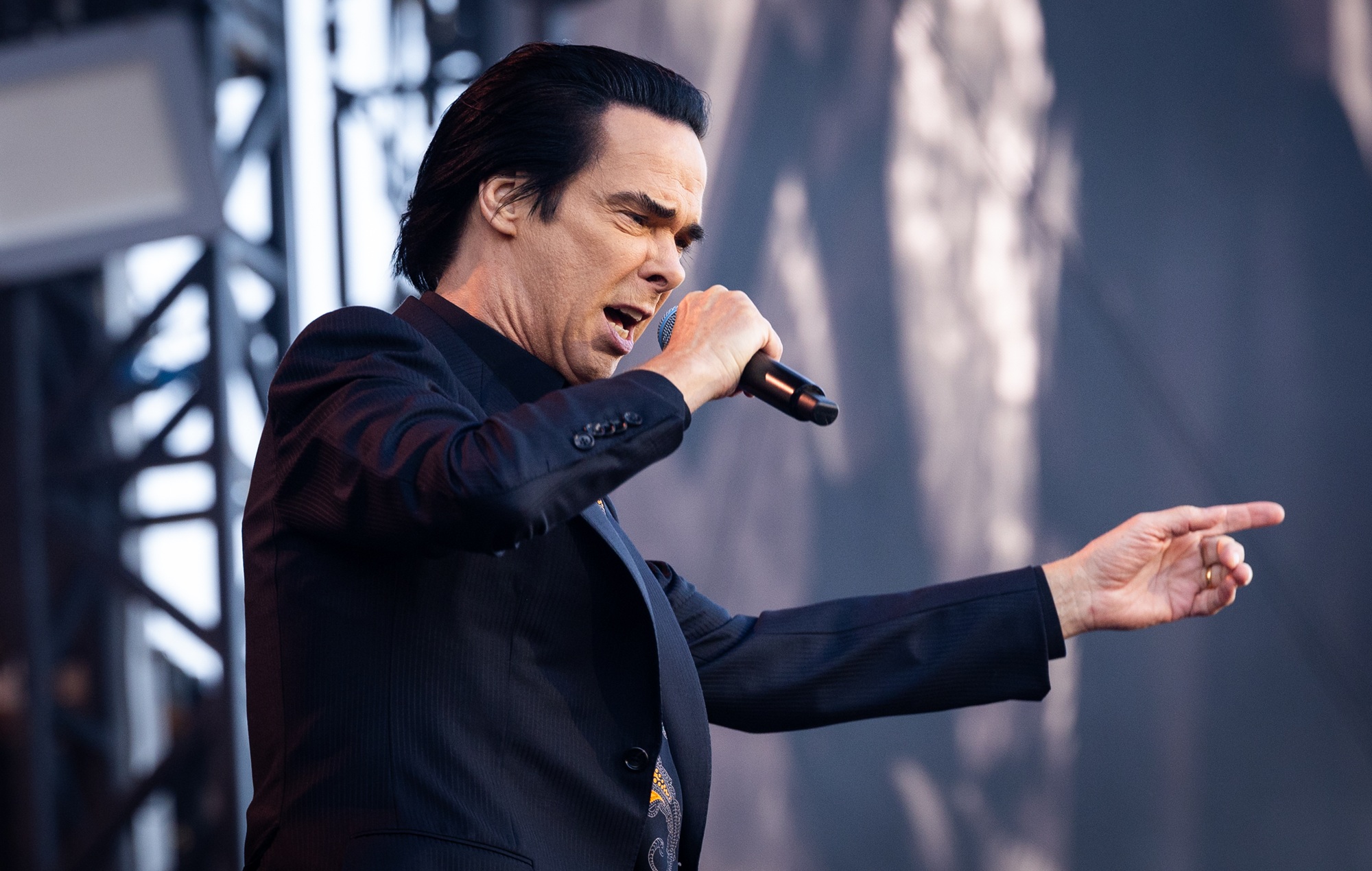
Nick Cave has spent years using his website, The Red Hand Files, as a sounding board for questions about art, faith, and grief. When readers ask him about automated technology, his answers tend to be sharp. In a recent dispatch, Cave turned his attention to automated song generators, framing them not merely as poor imitations or cheap shortcuts, but as early signs of a demonic force at work in modern computing. Writing songs through algorithms, he argued, reduces human striving to empty commodities and pulls creators away from the sacred, threatening to make humanity itself irrelevant.
The discussion began when a reader named Catherine asked the songwriter to clarify his current feelings about artificial intelligence. Cave conceded that the broader rise of automated systems might end in salvation, ruin, or somewhere in the middle ground, yet he refused to extend any tolerance to machine made music. To hand the work of composition over to software is, in his phrasing, to invite a soul destroying humiliation that strips people of their purpose.
Addressing another correspondent, Nuno, Cave tackled the familiar dilemma of separating an artwork from the person behind it. His own view has long held that art and its maker cannot be pulled apart, a bond he described as being like waves emerging out of the sea. By contrast, automated tools allow listeners and systems to discard the creator altogether. In Cave's assessment, these programs treat the actual human being, with all their mess, joy, and emotional damage, as nothing more than disposable waste.
Cave directed his harshest language at Suno, an artificial intelligence music service that he dubbed the Great Cancellator. His critique rested on the total absence of lived reality inside the code. The program has never known love, laughter, grief, or heartbreak, nor has it sat through the kind of aimless boredom that can spark a sudden creative breakthrough. Generating a counterfeit song in fifteen seconds strikes him as a direct insult to every musician who has endured personal struggle to earn their voice. He added a biting observation about modern cultural purges, noting that anyone eager to scrub difficult or controversial individuals from artistic history might well welcome platforms whose ultimate function is to eliminate the living artist completely.
Such hostility toward algorithmic creation is consistent with Cave's record. Over the past few years, he has repeatedly called automated composition an unbelievably disturbing development, warning of the humiliating mark it will leave on the creative professions. When admirers forwarded him lyrics produced by ChatGPT that attempted to imitate his distinctive voice, he threw the results out as bullshit and a grotesque mockery of human life. He voiced real disappointment that thoughtful people could regard writing songs as something so trivial that a cluster of code could recreate it, eventually telling ChatGPT directly to leave the craft alone.
That absolute rejection of audio synthesis sits alongside a slightly more complicated reaction to visual machine learning. Last year, Cave circulated an experimental video directed by Andrew Dominik to mark the fortieth anniversary of the Bad Seeds track Tupelo. A staple of the band's concert repertoire, the song depicts the birth of Elvis Presley during a ferocious storm in Mississippi. Dominik fed historical photographs of Presley through machine learning software, producing unsettling images that moved through themes of crucifixion and resurrection. Cave admitted the piece affected him profoundly, calling it an extraordinary and soulful tribute that softened his resistance and altered his perspective on automated visual tools.
Yet whatever goodwill Dominik's film generated, Cave's boundary between visual animation and songcraft has remained firm. He views the act of writing music as inseparable from the emotional scars and spiritual gravity of mortal life. Listeners will encounter that perspective in its rawest form when Cave embarks on a 2027 tour of North America. Those dates will find him at the piano, presenting stripped down selections from his back catalogue and taking unscripted questions from the crowd, relying entirely on direct, unautomated contact.