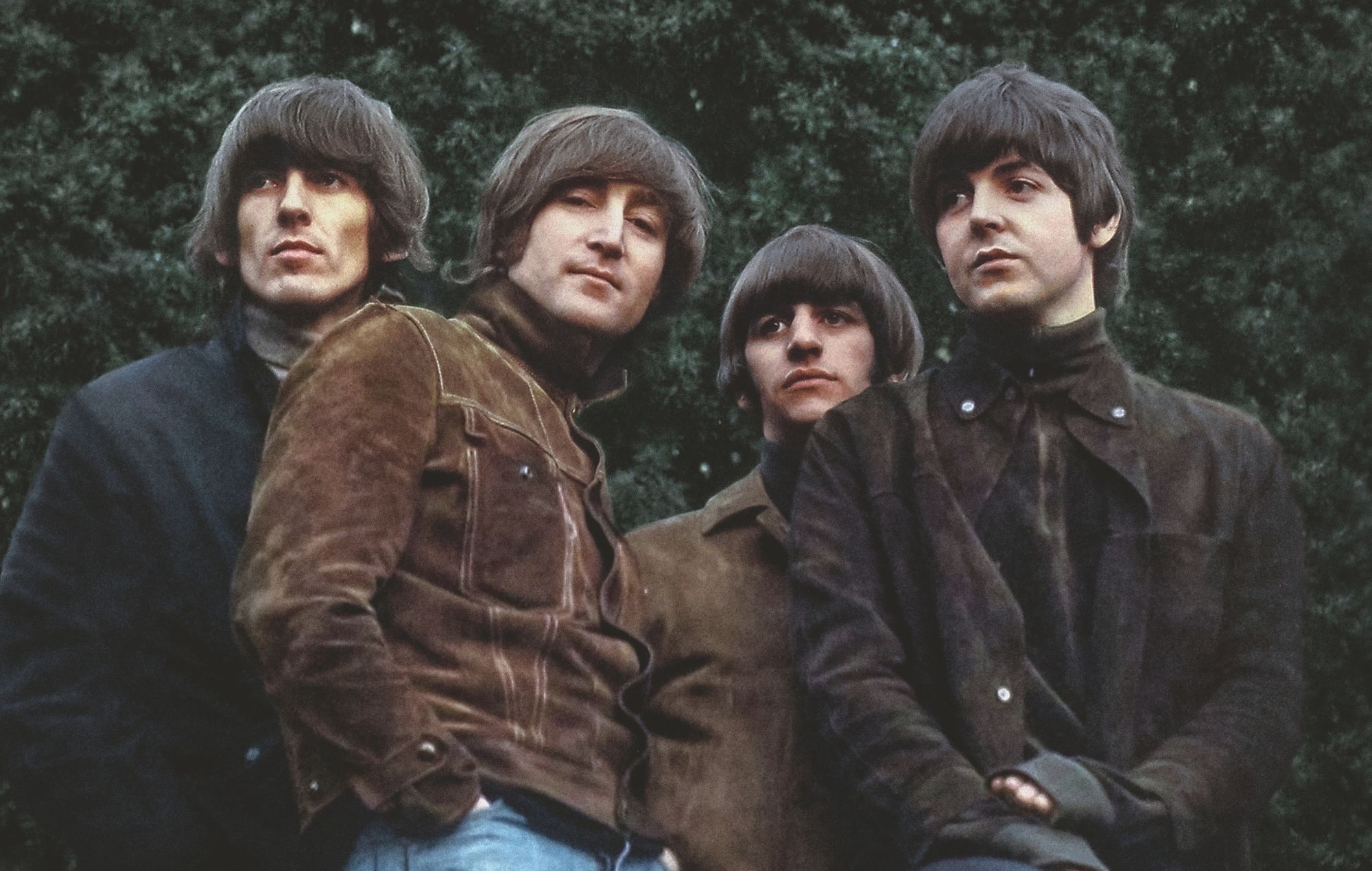
An accidental slant of a cardboard square in 1965 gave pop music one of its most recognizable portraits. Sixty years after its initial appearance, The Beatles' sixth studio record, Rubber Soul, is currently climbing back toward the top of the UK album charts. The immediate catalyst is a newly expanded archival box set, but beyond the restored tracks and session outtakes, the release revisits the visual accident that defined the sleeve, recounted firsthand by Paul McCartney.
The photo session was handled by Robert Freeman, who lived in the same block of flats as John Lennon. To show the band his transparencies, Freeman set up a slide projector, aiming the images onto a white piece of cardboard trimmed to match the dimensions of an LP jacket. While the group was inspecting the shots, the cardboard tilted backward. The shift elongated the image, pulling and stretching the faces of all four members. Rather than straightening the board and moving on, the band immediately liked the altered look. McCartney recalled telling Freeman that printing the warped version would mirror the title Rubber Soul. Freeman agreed, and the distorted test projection became the final record sleeve.
McCartney details the moment in an 88-page hardbound book included in the Super Deluxe Special Edition of the reissue, which also features an introductory foreword assembled from Lennon's words. Across five vinyl LPs or four compact discs, the set contains 68 tracks detailing the album's development. Producers Giles Martin and Sam Okell contributed fresh stereo and Dolby Atmos mixes, which appear alongside the original mono mix and the alternate version issued in the United States by Capitol. The package also gathers home demos and studio session takes for songs including In My Life, Michelle, Nowhere Man, and Norwegian Wood (This Bird Has Flown), as well as the non-album double A-side of Day Tripper and We Can Work It Out.
The reissue lands alongside several other historical initiatives tied to the band. Apple Corps and UMG have partnered on four upcoming biographical feature films directed by Sam Mendes, scheduled to arrive in cinemas simultaneously in April 2028. The quartet of movies will examine the history of the group through four individual vantage points, starring Paul Mescal as McCartney, Harris Dickinson as Lennon, Joseph Quinn as George Harrison, and Barry Keoghan as Ringo Starr. The cast gathered over the summer in London to stage a recreation of the Abbey Road pedestrian crossing. Additionally, 3 Savile Row, the London site of the band's final public concert, is scheduled to open its doors to the public next year as an official visitor attraction.
McCartney has kept up a steady pace of contemporary work amid the archival activity. Earlier this year he released The Boys of Dungeon Lane, his first solo studio recording since 2020's McCartney III, which includes a vocal duet with Starr. An expanded edition of that record arrived this week featuring four extra tracks, following closely on the heels of his guest appearance on a new release from The Rolling Stones. Decades after a sliding piece of cardboard produced an unexpected visual effect, the work sparked by that period continues to resonate on the charts.