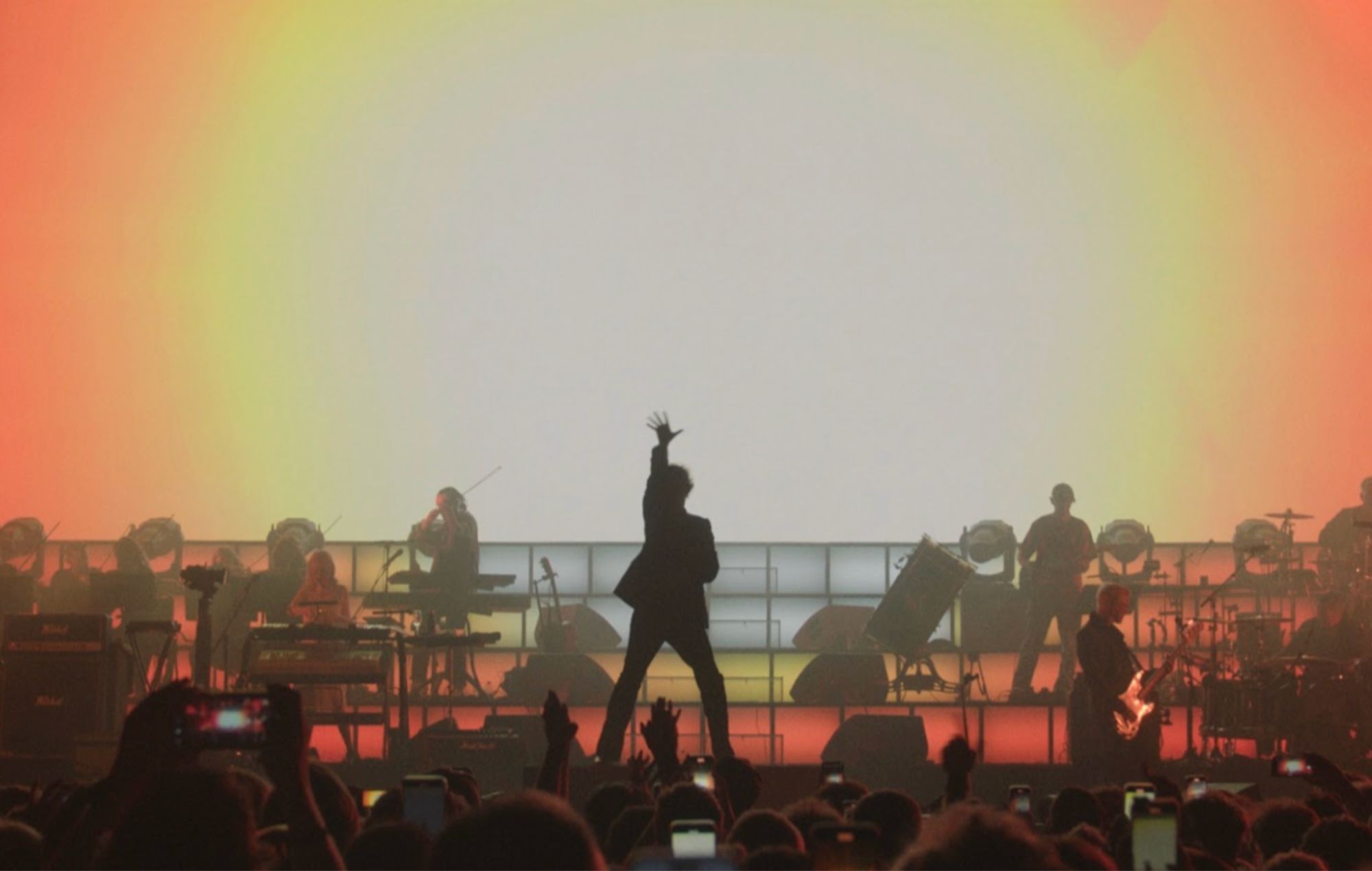
Many groups that have been together for decades struggle to locate the peculiar energy that set them apart in the beginning, yet Pulp have long operated with a sharp sense of their own history. When the Sheffield band returned to the stage last summer for a pair of sold-out shows at London's O2 arena, they brought along director Garth Jennings to chronicle the event. Jennings had worked with the group back in the late nineties, directing the music videos for Help The Aged and A Little Soul, which gave him an established familiarity with how they operate together.
His return to the fold came about naturally in 2022. After catching early murmurs that Pulp were getting ready to play live again, Jennings reached out on his own initiative to see if they wanted someone to film the process. What began as a simple offer behind the lens quickly evolved into a larger role. Jennings came aboard as the creative director for the tour's visual production, and the filming soon grew into What Do You Do For An Encore?, a ninety-minute documentary that pairs the O2 concert footage with band narration and previously unreleased archive tape. The film follows their arc from early days in obscurity up to the tour supporting More, their first studio album in twenty-four years.
The emotional weight of the project rests squarely on the memory of the band's late bassist, Steve Mackey. During the arena performances, the four musicians walked together to the front of the stage, framed only by a simple curtain, to play a stripped-back version of Something Changed from their 1995 album Different Class. For Jennings, this unadorned moment stood out as an especially moving demonstration of their history. It echoed the initial private rehearsal where the bandmates gathered in a living room simply to discover if they could still play music together. Mackey is woven throughout the film through archival footage, documenting his lasting mark on their catalog. Jennings noted that performing those particular tracks ensures Mackey remains an active presence in the band's ongoing life, recalling his warm disposition, his distinctive wardrobe, and his close friendship with Jarvis Cocker.
Jennings was equally interested in examining the specific personal chemistry that keeps the rest of the lineup functioning. In his view, the band succeeds because of the differences between the players rather than a uniform outlook. The friction between their individual personalities and their collective past creates something rare on stage. Jennings pointed to the beginning of the concert, where keyboardist Candida Doyle walks out holding a glass of champagne, establishing a contrast with Nick Banks driving the tempo from behind the drum kit and guitarist Mark Webber absorbed in his own distinct space.
That balance was tested and refined over a long, uneven ascent to public attention. Pulp did not arrive through an easy path to success. Their story includes a very slow beginning, early radio support from John Peel, and disruptions like Cocker falling from a window. To Jennings, those early hardships showed that struggle can work as a creative benefit rather than a stopping point. By facing those obstacles over decades, the group built up the endurance that now carries their live return.