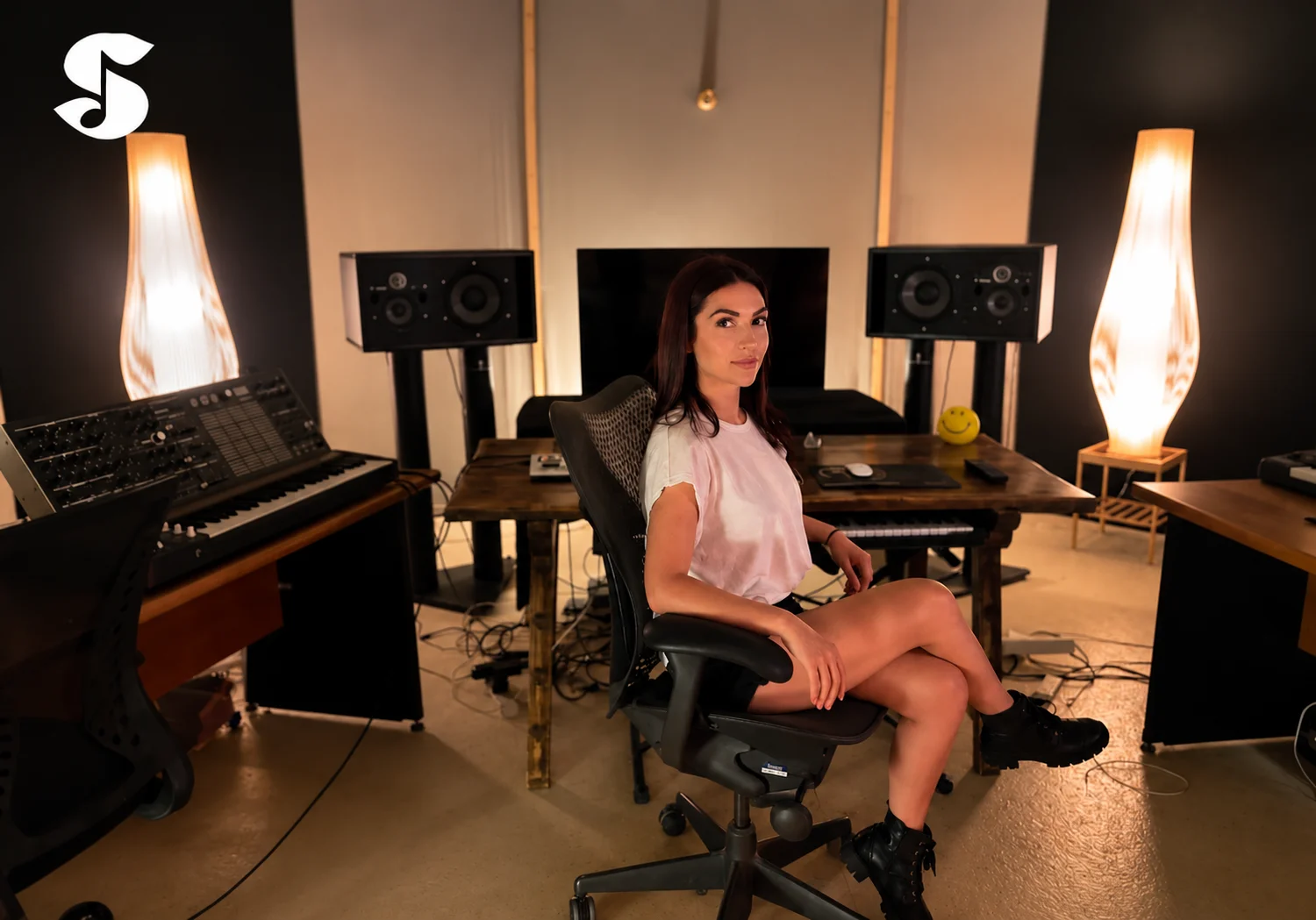
After discovering techno in Amsterdam, she found a connection between the dark, driving energy of electronic music and the emotional intensity she had experienced through opera and metal. Today, she combines driving techno, industrial elements, psychedelic trance grooves, and ethereal live vocals to create a sound that is distinctly her own.
We spoke with Sophia about her musical beginnings, the story behind her recent release La Melodie, her operatic approach to electronic music, winning the DENAR RCRDS sampler contest at ADE, her international performances, and what she has planned next.
THE INTERVIEW
Sophia, you have a background in opera and electronic music. How did your musical journey begin?
Sophia Sigma: I was practically born into music. My father guided me early on at a music conservatory, where I learned the fundamentals through piano, guitar, and violin. I eventually trained as a lyrical opera singer, falling in love with the dramatic beauty of classical arias.
But I also had a lot of rebellious energy. In my 20s, I pivoted completely and spent years fronting metal, symphonic metal, punk, and rock bands. That chapter taught me how to push my voice to its absolute limits.
About ten years ago, I moved to Amsterdam and discovered techno. The second I stepped into the underground scene, it hit me: the dark, driving pulse of electronic music carried the exact same heavy, emotional drama as metal and opera. Every single piece of my past just clicked into place.
How would you describe your sound and what makes it unique?
Sophia Sigma: I keep it dark, groovy, and unapologetically underground. My style is a heavy fusion of driving techno, industrial elements, and psychedelic trance grooves.
What really shapes my identity is the raw clash of my backgrounds. I mix the signature grit of hardware like the Behringer 303 acid line with my own live, ethereal vocals.
I don't just use music to make people dance; I use bold synths and haunting vocal melodies to trigger deep, intense emotions that the crowd might not even know they are holding onto.
What inspired your recent release “La Melodie”?
Sophia Sigma: La Melodie came from wanting to craft something that felt less like a standard club track and more like a sonic spell.
The whole concept sparked from a short preview clip I posted that unexpectedly went viral online. The massive response from the community pushed me to fully flesh it out.
I wanted the repetitive, chanting French vocals to loop in your head like a hypnotic trance, while the heavy bassline drives your body forward. It’s an homage to those late-night hours where you are completely locked into the music and the outside world just fades away.
How does your opera background influence your electronic music?
Sophia Sigma: Opera directly shapes how I arrange and produce music. In a standard electronic track, vocals are often treated as an afterthought—just a short, chopped sample or an entry-level loop.
Because of my classical training, I treat my voice as a core structural instrument. I write complete lyrics and vocal arrangements, building complex layers that mimic a dark, theatrical choir.
It allows me to establish an intense atmosphere of suspense, tension, and emotional release right before a massive techno drop.
What did winning the ADE Sampler Contest mean to you?
Sophia Sigma: Winning the DENAR RCRDS sampler contest at the Amsterdam Dance Event (ADE) was the first major turning point of my electronic career.
I moved from Armenia to Amsterdam specifically to pursue music, leaving everything behind. To enter a production contest in the world's capital for electronic music and walk away with the win felt like massive validation.
It proved to me that my unconventional vision of mixing classical roots with raw underground techno belonged on a global stage.
What has been your favorite moment in your music career so far?
Sophia Sigma: Taking my sound across borders has been incredible. DJing for Ephimera in Tulum, playing in Paris for La Fête de la Musique, and performing in Ibiza and Switzerland have been major milestones.
But if I have to pick one moment, it's the live connection with a crowd.
When I'm behind the decks, playing an original track like Machine Hearts or I Am You, and I see the dancefloor completely shift energy as my live vocals kick in—that raw, shared human experience is unmatched.
What inspired you to become involved with Raw District Amsterdam?
Sophia Sigma: I joined forces with Raw District because they align perfectly with my belief that techno artists are punks at heart.
The Amsterdam scene can sometimes feel saturated, but Raw District protects the genuine, unfiltered roots of underground electronic music. They provide a space that welcomes experimentation, bold synths, and heavy grit without trying to polish it down for commercial radio.
It’s a community where I can be entirely authentic.
What are you working on now, and what can fans expect next?
Sophia Sigma: I am spending a massive amount of time in the studio right now.
My workflow usually starts with finding a core message, dialing in the heavy bass and 303 lines, and then layering my recorded vocals directly over the arrangements.
Fans can expect a steady stream of new releases building on my recent work with labels like KMS Records and Barbur Music.
I'm also preparing an immersive live performance set that completely blurs the line between a traditional techno DJ set and a live operatic vocal performance.
Shindig Music