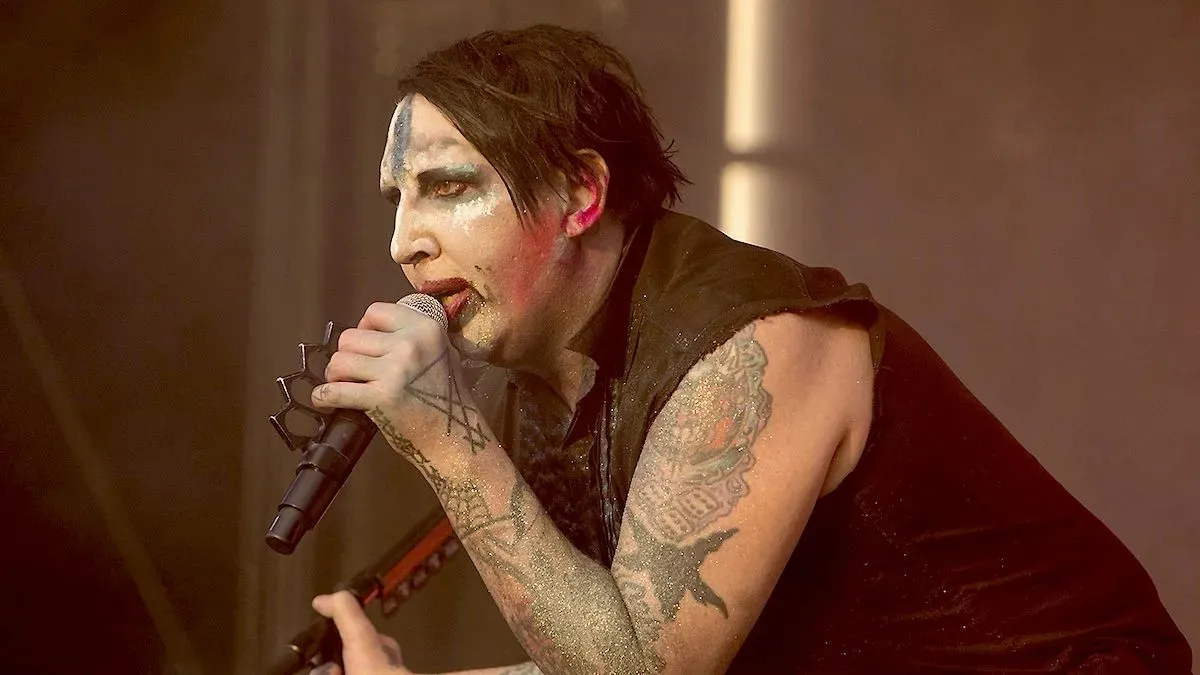
When festival promoters set out to assemble stadium-sized lineups, public accountability often collides with commercial draw. In Brazil, that tension has flared up well in advance of the gates opening. Organizers of The Town, the major multi-day festival held in São Paulo, have confirmed they are going ahead with booking Marilyn Manson for their 2027 gathering. The move immediately revived attention around longstanding abuse allegations facing the singer, putting the event's booking strategy under sharp scrutiny.
Faced with questions over the choice, festival representatives have taken an uncompromising stance rooted in formal jurisprudence. Their defense of Manson's inclusion rests entirely on his legal record, pointing out that he has not been convicted of a crime. By relying on that distinction, the production team has drawn a clear line between the findings of a courtroom and broader public consensus. In the eyes of the festival, the absence of a criminal conviction functions as sufficient clearance to award the performer a high-profile platform in front of tens of thousands of attendees.
Manson is scheduled to appear on September 4, 2027, which serves as the opening day of the festival. He will join veteran metal outfit Slipknot, sharing the live dates that kick off the multi-day gathering. Placing both acts together gives The Town an aggressive anchor for its heavy music roster right out of the gate, guaranteeing that the first day commands significant attention across South America.
Events on this scale operate on ruthless commercial calculations. Massive festival grounds require established, familiar names capable of shifting large blocks of tickets across different crowds. Pairing Manson with Slipknot ensures strong visibility and leans heavily on established fanbases, but it simultaneously measures the tolerance of ticket buyers, sponsors, and observers who may question promoters setting aside unresolved controversy to secure attendance numbers.
The defense offered by The Town underscores an old pattern in the live music business. When allegations do not translate into criminal verdicts, promoters routinely rely on the legal system as a protective shield. That standard treats legal status as the only boundary that matters, allowing organizers to proceed with business as usual. Even so, the gap between what the law resolves and what the public expects remains a source of steady friction for international festivals.
With the opening date set for September 4, 2027, the conversation surrounding The Town will stretch across the years leading up to showtime. How audiences, corporate partners, and fellow artists respond will test whether a clean criminal record is truly enough to insulate a festival from the controversy that follows its headliners.