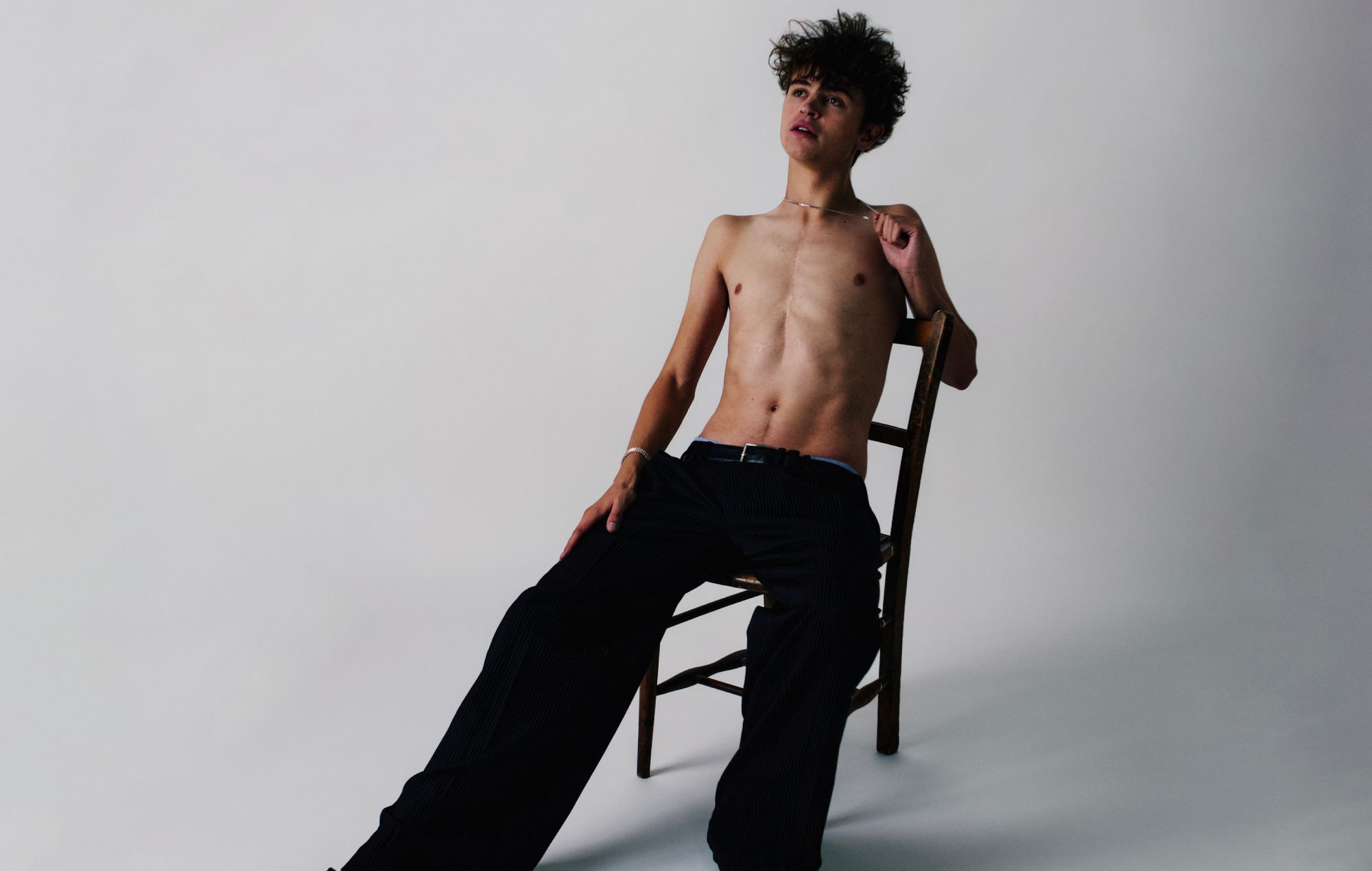
Tom A. Smith has spent years quietly keeping his most profound personal reality away from his music. With the announcement of his debut album, The Golden Gates, the twenty-two-year-old Sunderland songwriter is finally laying it bare. Smith was born with hypoplastic left heart syndrome, a rare congenital defect where the left side of the heart fails to develop properly, leaving it incapable of pumping sufficient oxygenated blood around the body. In practical terms, he has lived his entire life with only one functioning side of his heart.
Surviving such a condition meant enduring five major operations before he even turned four, an ordeal that shaped an intensely demanding childhood for him and his family. The danger, however, is not confined to the past. Smith has made it clear that his present physical state is not a viable long-term solution. Ahead lies genuine uncertainty, with the knowledge that more extreme medical procedures will become unavoidable as he grows older.
Rather than treating that looming horizon as an unspoken dread, Smith made it the core of The Golden Gates. The album is structured across three distinct emotional phases, moving systematically through frustration, love, and acceptance.
That sense of confronting his history extends straight to the visual presentation. The album cover places the surgical scar across his chest front and center. For years, Smith hated the scar, feared it, and hid it away, wary of the vulnerability and the medical future it represented. Making it the first thing anyone sees on his debut record is a deliberate act of reclaiming ownership over his body and his story, intended as a reassuring message to the kid he was at twelve years old.
Getting the songs onto tape took roughly two and a half years, a stretch during which the material shifted through various musical directions before landing on its final shape. The record also marks a notable shift in how Smith operates in the studio. Typically, he works in near-total isolation, writing, producing, and mixing around ninety-five percent of his output completely alone. For The Golden Gates, he chose to broaden his process, enlisting The Futureheads frontman Barry Hyde as co-producer. Hyde has mentored Smith since his teenage years, making him a trusted presence in the room.
That willingness to open up also shaped the lead single, Carry That Weight. The track was co-written with Hugo White of The Maccabees, following an initial studio session that also featured Miles Kane. Smith hit it off with White, decided to stay behind an extra day to work together, and gradually built a friendship that eventually saw him playing live shows alongside The Maccabees. For an artist naturally hesitant about writing songs with unfamiliar faces, establishing that personal bond was crucial.
Smith felt strongly that Carry That Weight could not come out in isolation. Its immediate chorus carries an intensity that gains real clarity when set against his lifelong physical struggle and the question marks hanging over his health. By pairing the single with the truth about his condition, Smith ensures that his debut record is understood on its own terms.