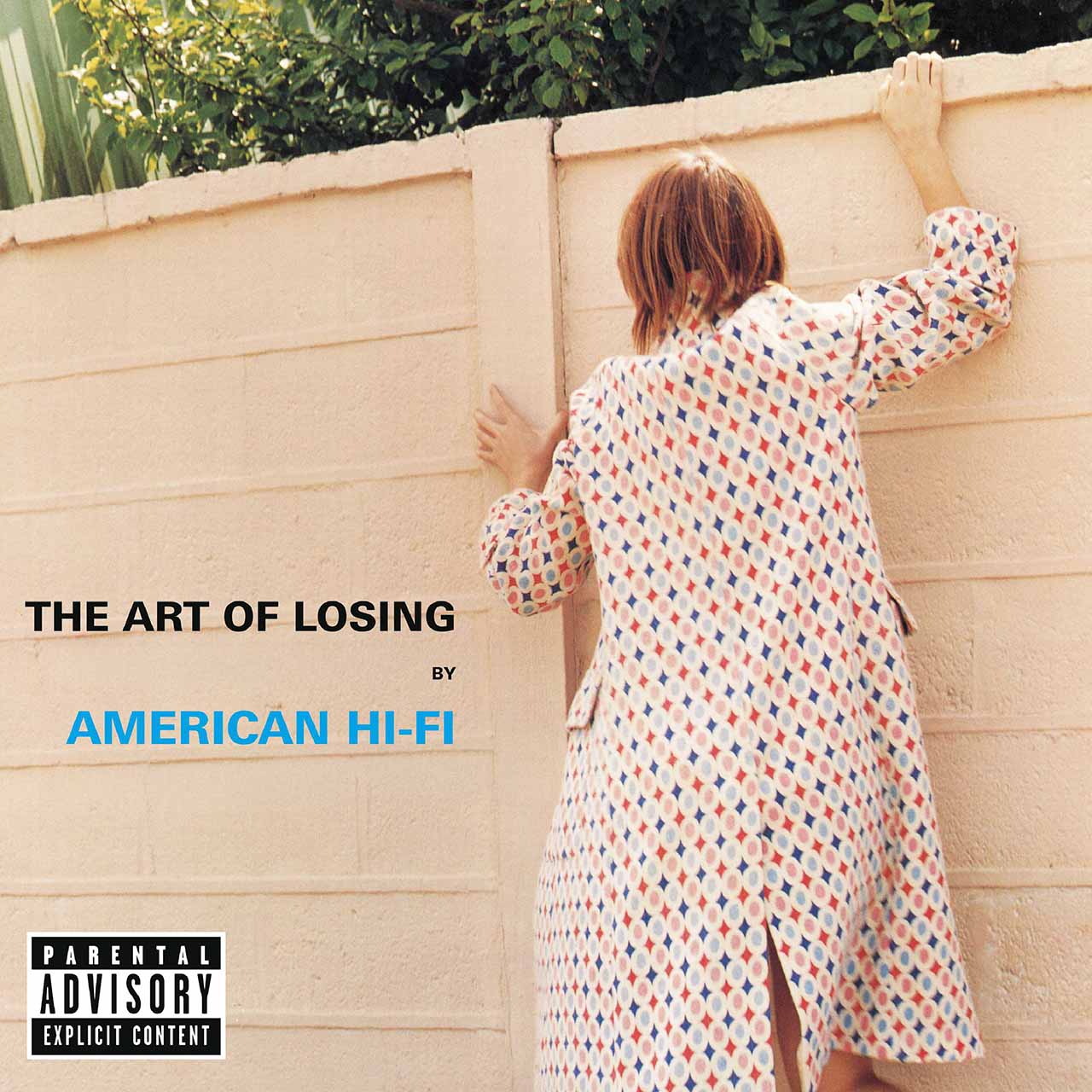
American Hi-Fi could easily have repeated themselves after 2001. Their self-titled debut cleared 750,000 copies on the strength of "Flavor Of The Weak," a runaway radio hit that immediately put the Boston four-piece on the map. The months of heavy touring that followed solidified their status as a formidable live band, but that momentum brought practical complications. When the time arrived to assemble their second album, The Art Of Losing, the luxury of writing comfortably in a dedicated studio was gone. Instead, the quartet spent life on the road piecing together a fresh batch of songs between tour stops, turning the wear and tear of travel into creative fuel.
The sharper detour came with their choice of collaborator. Frontman Stacy Jones had forged a close relationship with Bob Rock during the debut, openly viewing the veteran producer as an influential mentor. Working with Rock, however, usually meant that any jagged or angular musical ideas were smoothed away in pursuit of big-room sheen. For their follow-up, the band made the surprising call to enlist Nick Launay, a producer steeped in post-punk history through his work with Talking Heads and Public Image Ltd. In a March 2003 interview with the Boston Phoenix, Jones noted that the move was essential for their natural evolution. Rather than sanding down the arrangements, Launay pushed the group to lean into abrasive, urgent influences like The Clash and the Pixies, coaxing those instincts directly to the surface.
The finished record reflected that shift from the opening bars. While the band maintained their core focus on massive hooks, the delivery carried far more grit and bite than their debut. Fast-paced entries like "Beautiful Disaster" and "Teenage Alien Nation" rode driving tempos and loud, assertive guitars. On "The Breakup Song," Jones treated a split with dry wit. Rather than lamenting lost love, his lyrics sounded far more concerned with reclaiming his physical record collection, name-checking albums and artists including Cheap Trick, the Pixies, My Bloody Valentine, and AC/DC's Back In Black.
That rougher tone did not stop the band from branching out across the tracklist. "Save Me" favored chiming guitar parts reminiscent of R.E.M., while "This Is The Sound" dropped into a slower, semi-acoustic space with distinct echoes of late-period Beatles cuts. Across every stylistic variation, the songs kept their focus on communal, sing-along choruses built specifically to register in a club or theater. Nowhere was that clearer than on the title track, "The Art Of Losing." Driven by a stomping glam-rock drum beat and cutting guitar riffs, the song tapped straight into classic punk tradition, weaving the Ramones' battle cry of "Hey ho, let's go!" directly into the hook. Jones described the song as a defiant anthem about holding your ground as an underdog.
That defiance resonated with listeners. The title track gave the band another Top 40 placement on Billboard's Alternative Chart, while also earning syncs on the soundtrack albums for both Freaky Friday and American Wedding. The LP sold steadily in the United States and climbed into the Top 20 on the UK Rock & Metal Albums Chart, serving as American Hi-Fi's final full-length record for Island Records. More than two decades after its arrival, The Art Of Losing remains a sharp document of a band deliberately stepping away from safety to make something louder, leaner, and distinctly their own.