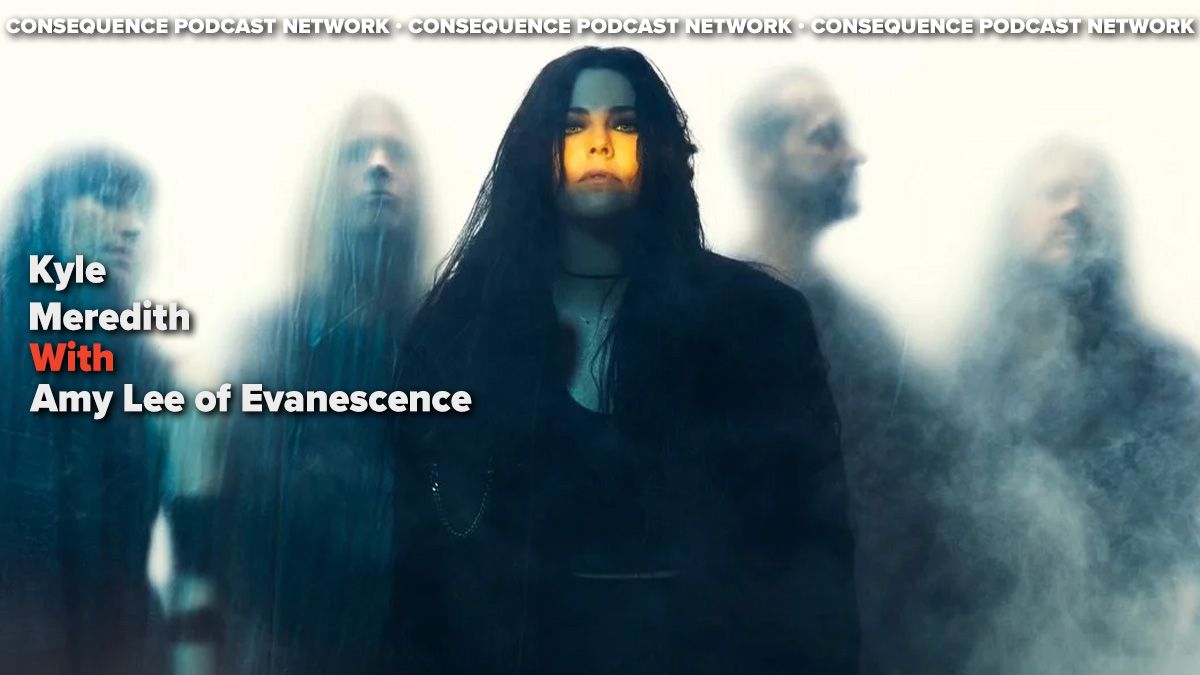
Most people know the specific exhaustion that comes from staring into a phone screen, only to realize their mood has been steered by an automated feed. Amy Lee has clearly spent a great deal of time thinking about that dynamic. In an extended podcast discussion released across Spotify, Apple, and Amazon, the Evanescence singer and songwriter spoke openly about her deep distrust of digital environments. She explained that this pervasive skepticism provides the foundation for the band's latest album, Sanctuary. For Lee, automated feeds shaping daily human thought are not just an annoying modern inconvenience. She treats the way pocket devices influence perception as a central creative problem.
At the core of Sanctuary lies a persistent interrogation of modern communication channels. Lee explained that the project confronts direct questions about influence and power. It asks who actually holds control over public narratives, who stands to profit when audiences remain trapped in ongoing confusion, and what risks emerge when people forfeit the hard work of thinking for themselves. The music examines the real emotional weight of media fatigue, tracing how populations are easily steered into conflict when digital feeds are engineered to trigger engagement rather than tell the truth.
That thematic focus gives the material an edge grounded in genuine psychological strain. When handheld devices deliver a constant stream of curated realities designed to provoke quick, volatile reactions, passive consumption becomes dangerous. Lee frames critical thinking not as an intellectual hobby, but as a basic form of self defense. Sanctuary addresses the psychological toll of absorbing continuous uncertainty, encouraging listeners to step back from the flow, evaluate the motives behind the surrounding noise, and refuse to let outside forces dictate their reactions.
The discussion also touched on an anniversary that puts this songwriting evolution into perspective, noting twenty years since the release of The Open Door. Looking back across two decades illustrates how Lee has shifted her vantage point over time. On The Open Door, her songs dealt closely with immediate personal turmoil, private struggles, and the process of drawing boundaries around her own life. With Sanctuary, that same vocal and emotional intensity turns outward. The struggle is no longer centered only on private relationships, addressing instead the broader social pressures and disorientation caused by modern digital systems.
Taking the time to unpack these concepts in an audio interview makes practical sense for a record built on these ideas. Standard press cycles rarely offer the room required to examine complicated themes, especially when the subject is the very machinery that encourages fragmented attention. Lee showed little interest in offering comfortable illusions about how people interact with their devices. Her reflections demonstrate that holding onto personal agency in a mediated world begins with a simple, deliberate habit of questioning everything that appears on the glass.