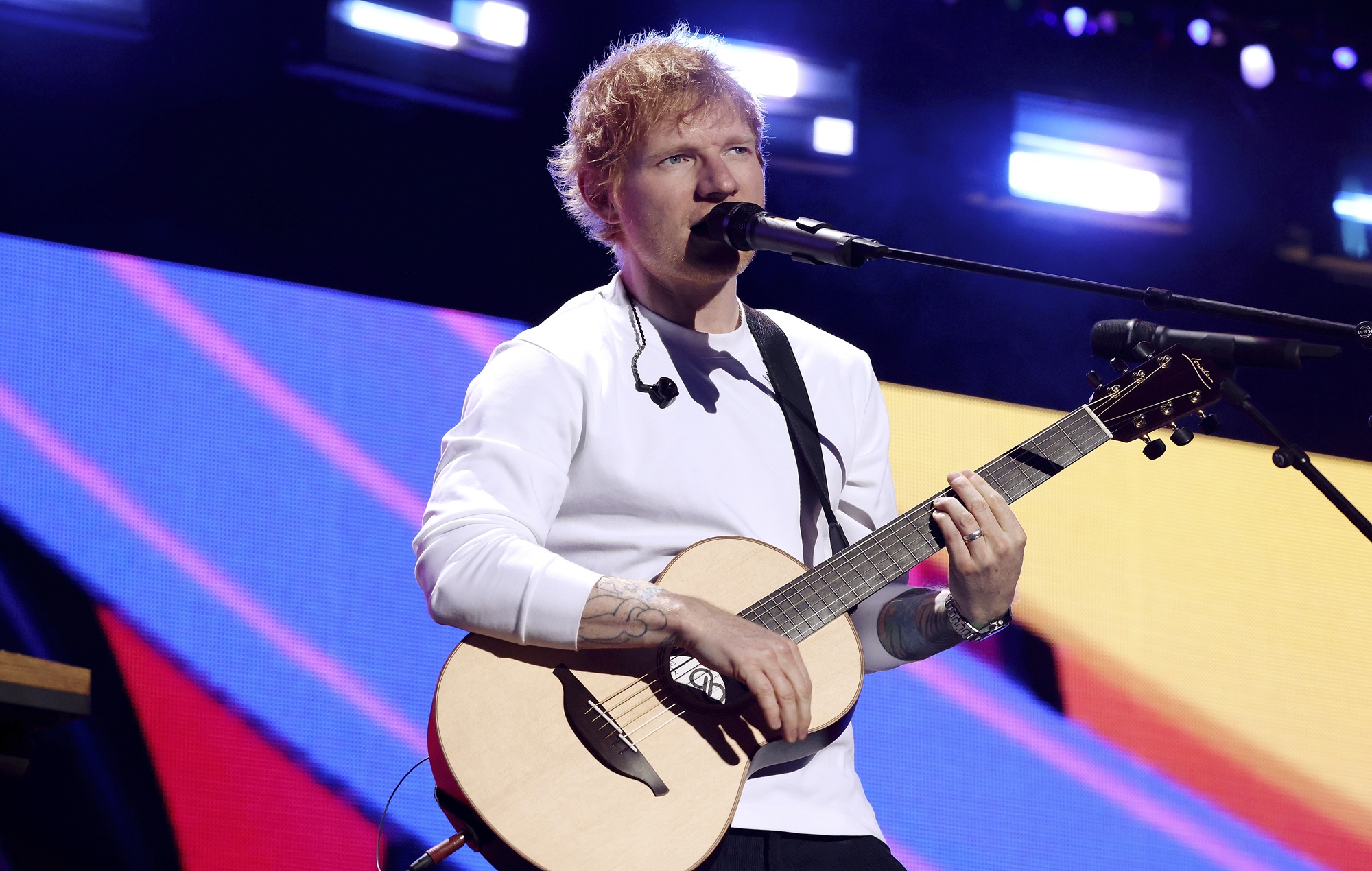
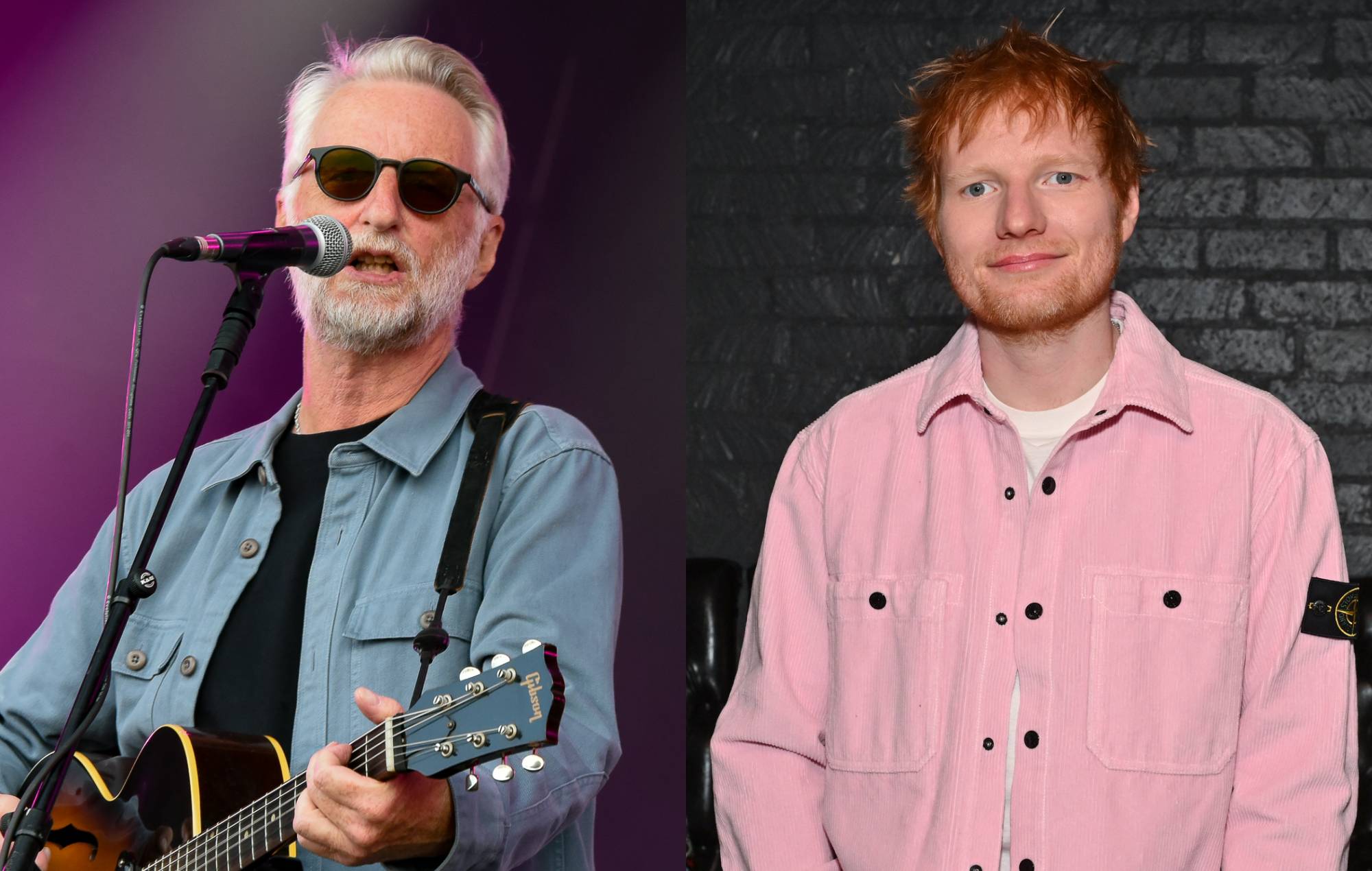
When stadium tours run smoothly, the sheer volume of money and logistical coordination tends to drown out ideological disagreement. When that machinery encounters political dissent, however, the seams burst open quickly. Ed Sheeran is currently finding out how brutal that exposure can be. His Loop tour has unraveled into a high-profile dispute following the decision to eject Macklemore from the lineup after the rapper made pro-Palestine statements, a move that has drawn relentless public scrutiny from Billy Bragg.
Bragg had already cautioned that Sheeran risked trashing his standing and turning himself into an outcast by bowing to venue operators. Just before Sheeran walked out at Lincoln Financial Field in Philadelphia, Bragg took to Instagram to escalate his critique. This time, his focus landed squarely on a newly announced philanthropic venture between Sheeran and Robert Kraft, the owner of Gillette Stadium. Kraft disclosed that Sheeran had phoned him directly to request a matching two million dollar donation earmarked for humanitarian aid in the Middle East. That pledge followed Macklemore's earlier decision to surrender his full one million dollar tour fee to six charities that support Palestinians.
To Bragg, Sheeran's donation did not scan as genuine conviction. He viewed the move as an exercise in damage control, arguing that phrasing the contribution around broad aid in the region was an intentional bid to dodge controversy through ambiguity. In his post, Bragg made it clear that he was unimpressed by the effort to blunt public anger, noting that an artist cannot buy back their lost integrity once the room turns against them.
At the heart of the argument lies a fundamental question about solidarity among touring artists when powerful venue operators start dictating who can take the stage. Bragg maintained that Sheeran possessed enough stature and leverage to stand by his tour mate. Rather than acquiescing, Bragg suggested, Sheeran should have pushed back hard. He could have told Kraft that if Macklemore were dropped, the video for Macklemore's protest track Hind's Hall would be broadcast on the venue screens alongside chants of Free Palestine. Even if Kraft had pulled the plug on the concert, Bragg pointed out, taking that risk would have proven that Sheeran was willing to put principle above a paycheck. Instead, the perception remained that Sheeran gave ground to a billionaire and left another musician stranded.
The fallout greeted Sheeran in plain sight once he arrived in Philadelphia. His regular backing musicians refused to play, and every other opening act on the bill had walked away from the tour in support of Macklemore. Faced with empty slots on stage, Sheeran had to scramble, assembling an emergency group of replacement musicians who were given just three days to learn the entire concert repertoire.
Taking the microphone between songs, Sheeran addressed the crowd in unusually raw terms. He told the audience that he was enduring one of the worst weeks of his life, admitting that longtime acquaintances and friends were distancing themselves from him. He apologized for his missteps, acknowledging that he had made mistakes while attempting to steer through complicated choices.
Sheeran also spoke directly about the conflict itself. He termed the October 7 attack at the Nova music festival horrific, describing it as rooted in centuries of Jewish pain. At the same time, he characterized the ongoing bloodshed in Gaza as catastrophic, unjustifiable, and disproportionate. He condemned the loss of civilian lives, pointed directly to systemic injustice taking place in the West Bank, and explained that he is still listening and speaking to people across opposing political lines because he still has much to learn.
Whether those onstage admissions will placate his critics or mend ties with the musicians who abandoned him remains an open question. Sheeran tried to navigate a severe ethical test with a mix of financial compromises and heartfelt apologies. In doing so, he learned that the good will built across years of stadium success can vanish remarkably fast when a headliner chooses corporate convenience over the colleagues sharing his stage.