Public education has rarely known quite what to do with hip-hop. For decades, the culture lived on the periphery of institutional learning, surfacing as an occasional elective or an after-school workshop. That dynamic took a different turn earlier this month with the opening of the Bronx School of Hip-Hop, a public high school created to place the genre squarely at the center of its curriculum. Situated in the Bronx, the borough recognized as the birthplace of the movement, the school treats the history, technical disciplines, and creative output of hip-hop as serious academic pursuits rather than passing trends.
The launch was spotlighted in a video released by Mayor Zohran Mamdani's office, capturing the early days of the new campus. The footage shows the school building taking shape as staff members organize spaces and begin to establish daily routines. Jason Reyes serves as the founding principal, tasked with charting a completely new course for the institution. In the video, Reyes and his staff can be seen welcoming the inaugural freshman class, a group of roughly one hundred students who have chosen to spend their high school careers testing this specialized academic design.
Keeping the initial cohort to around one hundred students provides the administration with practical advantages. Structuring an entire school around hip-hop means finding a workable balance between mandated educational standards and creative forms that initially developed outside conventional classrooms. With a relatively small student body, Reyes and his faculty can closely evaluate their curriculum, adjusting lesson plans in real time while building a tight school community. For the freshmen, it means working directly with teachers who are shaping the program around their progress, treating their focus as a core discipline.
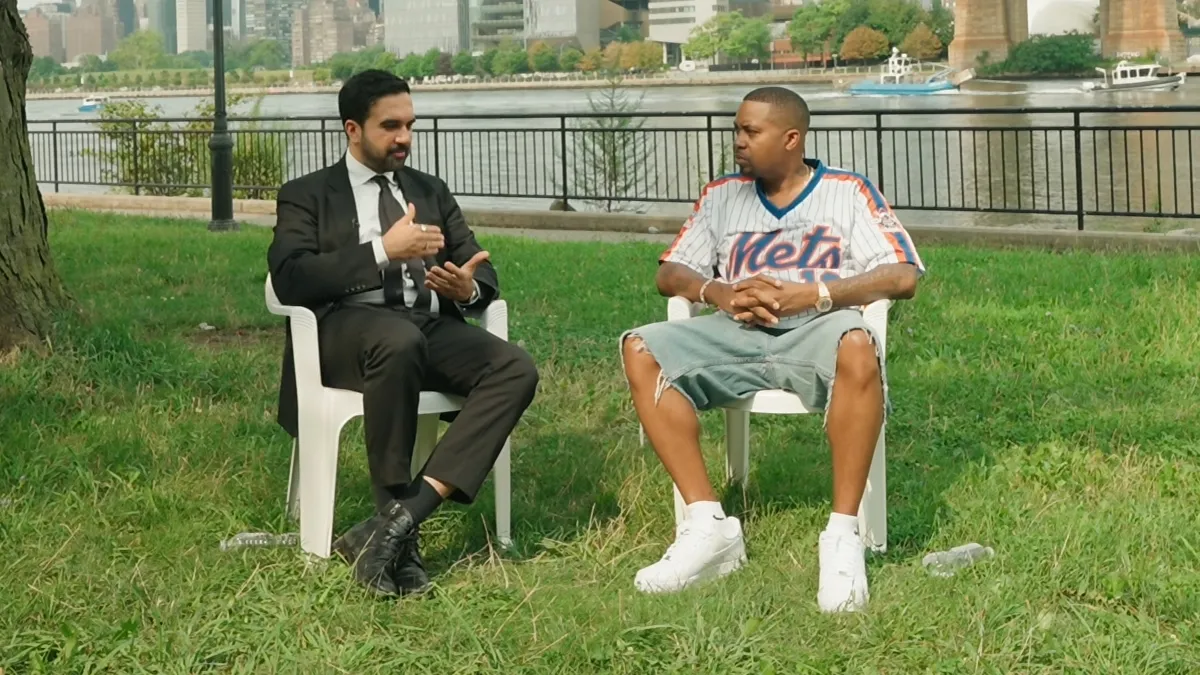
The video from the mayor's office also features prominent figures from the music world who dropped in to show support, including Nas. For freshmen walking into an untested school model, the presence of established artists offers an immediate bridge between their coursework and the broader history of the genre. That endorsement reinforces the idea that what happens in these classrooms connects directly to creative, social, and professional realities outside. It serves as validation from artists who helped define the culture, demonstrating to these teenagers that their studies carry tangible weight beyond school walls.
Specialized arts high schools have existed in major cities for generations, though they have historically centered on classical music, theater, and visual arts. Creating a public high school dedicated to hip-hop formally recognizes that the genre has built an extensive canon and technical lineage of its own. It asserts that hip-hop carries a historical weight worthy of dedicated study, giving it the same institutional space that public school systems have granted to traditional art forms for decades.
As the first one hundred freshmen settle into their desks, the real work for the Bronx School of Hip-Hop begins. The initial fanfare and video release will soon give way to the ordinary routine of assignments, instruction, and day-to-day administration. Whether the model succeeds will depend on how effectively Reyes and his faculty can translate cultural heritage into an active, lasting educational foundation.