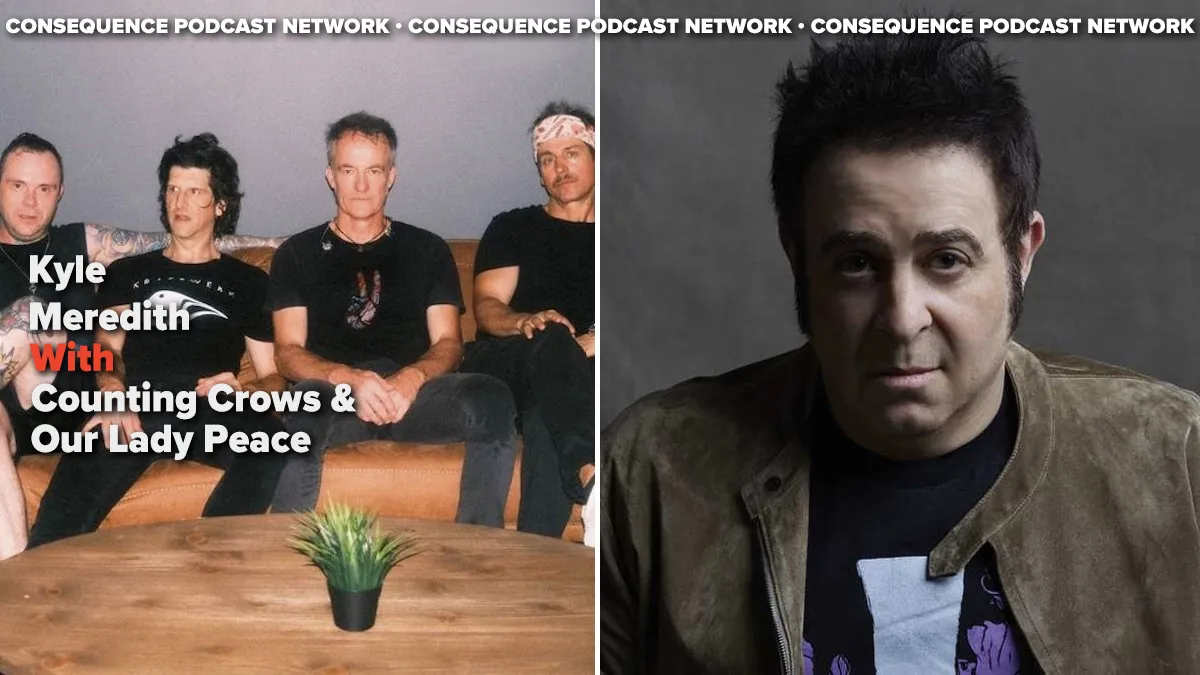
Festivals with sprawling, multi-day rosters have a way of throwing old tourmates together in the same backstage hallways. At Bourbon and Beyond 2026 in Louisville, that familiar festival environment sparked an extended conversation between two veteran rock acts that came up in the nineties. Counting Crows and Our Lady Peace crossed paths between appearances, sitting down together to tape a podcast episode centered on the realities of sustaining decades-long careers on the road.
Representing Counting Crows were singer Adam Duritz, multi-instrumentalist David Immergluck, and drummer Jim Bogios. Alongside their peers in Our Lady Peace, the discussion centered on the daily mechanics of touring and the practical problems that surface after decades of live performance.
A major focus of the exchange was the specific challenge of assembling a festival setlist. The demands of an outdoor festival stage differ sharply from an evening on a solo theater or arena tour, where audiences buy tickets with the expectation of hearing obscure album tracks and deep catalog cuts. Festival stages condense playing time and present broad afternoon and evening crowds who may only know a band by its most recognizable songs. Duritz, Immergluck, Bogios, and Our Lady Peace compared notes on how they navigate that squeeze, debating how to strike a functional balance between obligatory hits and the personal favorites the musicians still want to play.
The bands also discussed the weight of milestone anniversaries. Crossing major temporal markers with a catalog forces veteran groups to evaluate how much energy to devote to retrospective celebration versus looking ahead. For bands that established their national footprints in the same era, comparing perspectives provides a candid view of what keeps a touring unit functional, motivated, and artistically engaged over such a long timeline.
The full backstage recording has been released across major directories, including Spotify, Apple Podcasts, and Amazon Podcasts. Beyond the usual high-volume festival sets, the episode captures musicians talking openly to their direct contemporaries about the work required to keep these operations moving forward.