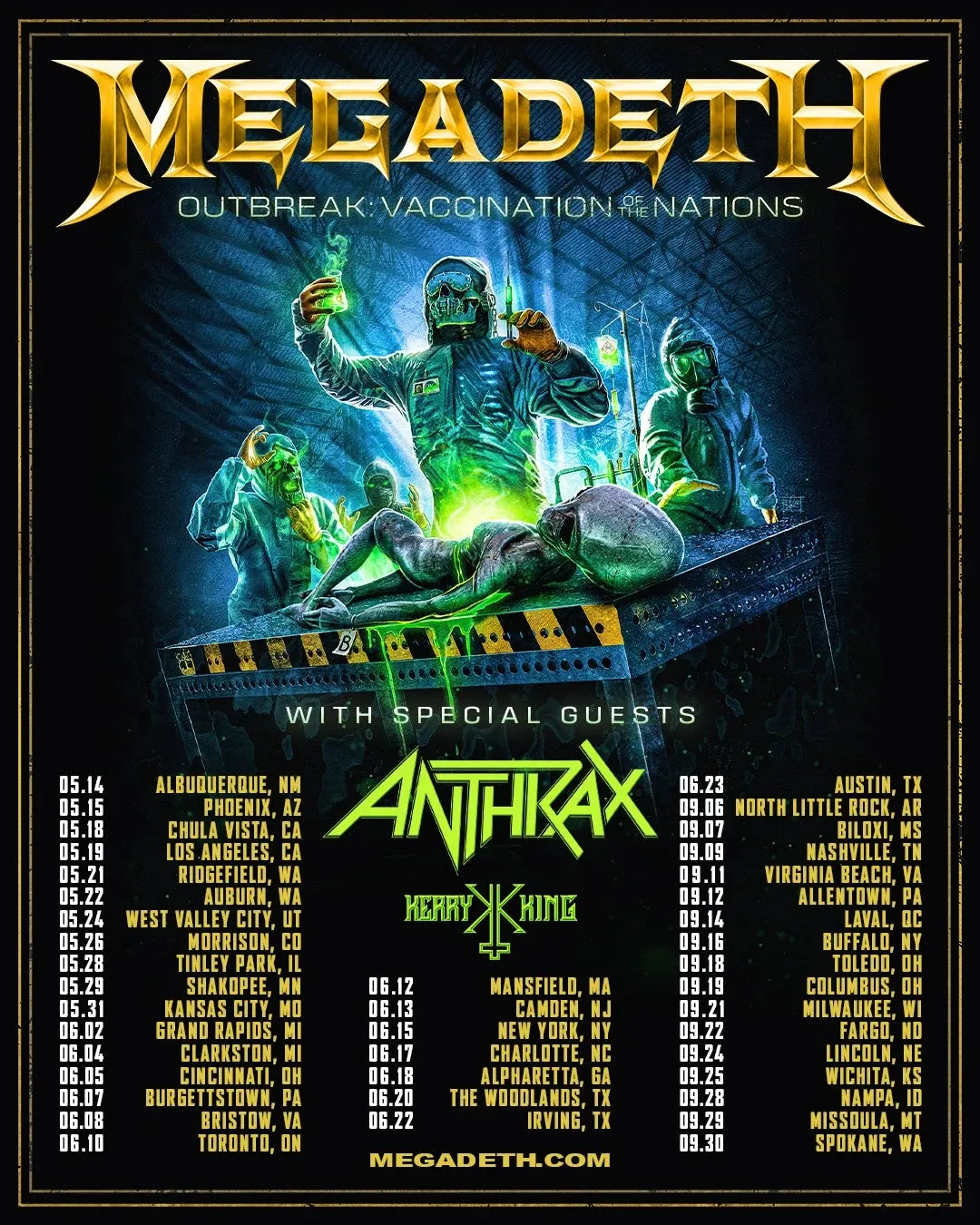
Megadeth have set the clock ticking on their live touring career in North America, announcing plans for a farewell trek in 2027 that leans squarely into the shared history of thrash metal. Billed under the title Outbreak: Vaccination of the Nations, the campaign will take in 40 dates across the continent, organized into two separate legs. It is a substantial goodbye from one of the most durable names in heavy music, and the company they are keeping on the road turns the run into something much broader than a standard solo victory lap.
Sharing the stage will be Anthrax and a solo band fronted by Slayer guitarist Kerry King. The combination carries immediate historical weight. Fans and chroniclers have spent decades viewing the rise of thrash metal through the prism of the Big Four, the foundational groups that defined the speed, technical discipline, and cultural footprint of the style. While this tour stops short of assembling the full quartet of headlining acts, putting Megadeth, Anthrax, and King together under one arena roof brings three quarters of that original lineage into the same room night after night.
Carrying that sound across 40 dates requires real physical preparation. Thrash was engineered from the beginning as a demanding, high-velocity counterweight to mainstream rock and traditional metal, requiring rapid rhythm work, pinpoint instrumental coordination, and tremendous endurance. Splitting such an extensive North American schedule into two distinct stages serves a clear logistical purpose. It offers touring crews, production teams, and the musicians the necessary breathing room to sustain that high-tempo intensity, while ensuring that crowds in different parts of the continent get an opportunity to see the production before Megadeth retire from touring.
The supporting acts also provide a clear reminder of how much variety existed within the early thrash movement. Anthrax brought their own distinctive bounce, stage momentum, and rhythmic energy to the scene, demonstrating that thrash could groove and project high spirits without sacrificing bite or tempo. King offers the opposite pole of that legacy. Fronting his own group, he delivers the bleak, unrelenting guitar attack that formed the backbone of Slayer for decades, ensuring that the evening covers both the technical dexterity and the darker extremes that shaped the genre during its formative years.
For listeners who tracked this music from its early days of underground tape trading to global arena stages, tours like this operate as communal markers. A 40-date run gives Megadeth ample territory to revisit the music that built their career, accompanied by peers who helped map out the territory with them. When the 2027 tour begins, it will offer North American metal audiences a final, concentrated look at this particular circle of thrash pioneers standing together on stage.