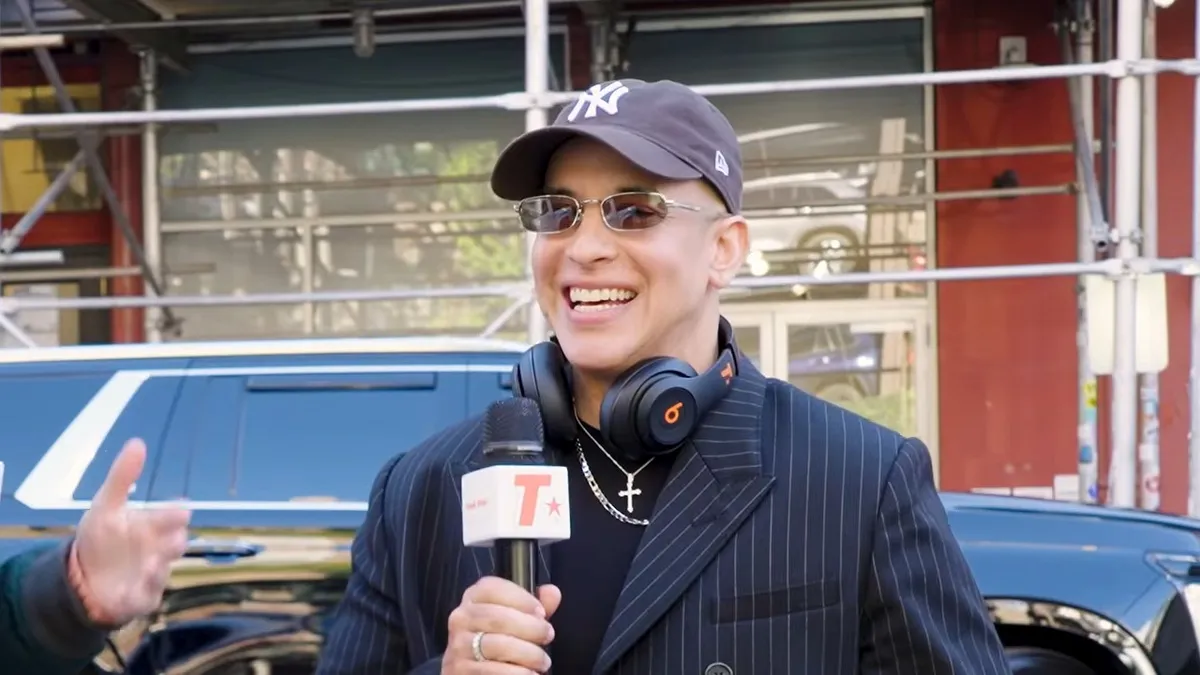
A sudden music trivia test has a way of showing what an artist carries around in their head. During an appearance on Track Star with host Jack Coyne, Daddy Yankee took on the show's signature blind listening test, naming records on the spot while unpacking the musical ingredients that originally came together to form reggaeton.
The format of the show is simple and quick, giving guests only a few seconds to recognize a track. Daddy Yankee did not hesitate, immediately calling out songs by The Notorious B.I.G. and Shabba Ranks. Naming Biggie and Shabba within moments of hearing them speaks to how central those sounds were to his early listening. In the neighborhoods of Puerto Rico, New York rap and Jamaican dancehall were not distant novelties studied through imports. They were everyday fixtures on local sound systems, providing an immediate soundtrack for the artists who would soon reshape them.
While working through the cues, Daddy Yankee mapped out the three main traditions that underpinned the genre from the beginning. American hip hop, Jamaican dancehall, and Puerto Rican salsa each contributed something essential. The cadence of nineties rap provided the blueprint for vocal phrasing, showing performers how to structure their rhymes and carry attitude across a verse. Underneath those vocals, dancehall brought the syncopated push, supplying a driving pulse that differentiated the tracks from traditional boom bap.
Salsa gave the formula its local footing. By bringing salsa into the mix, early creators introduced complex Caribbean melodic phrasing, layered percussion, and a regional storytelling style. That homegrown tradition anchored the music directly in Puerto Rican life, transforming outside rhythms into something distinctly domestic.
The conversation also looked back at coining the term reggaeton itself. Giving the movement its own name marked a decisive shift, capturing the transition from loose musical experimentation to a confident, self-contained culture. As Daddy Yankee explained through the exercise, the genre was never assembled in isolation. It grew out of an active appreciation for neighboring sounds across the Caribbean and the Americas, forged by records an originator can still identify in a fraction of a second.