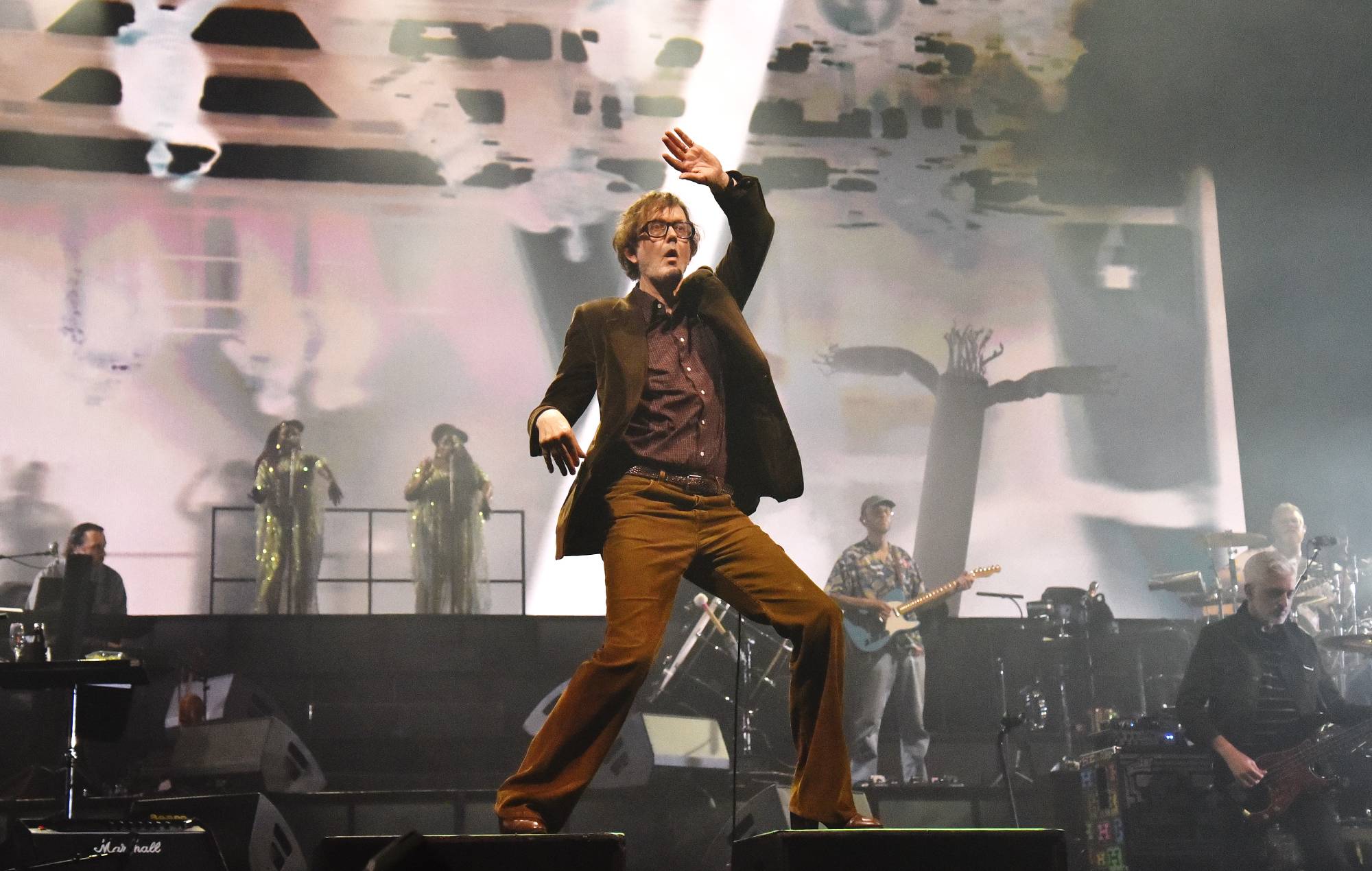
When a band steps away from recording for over two decades, mounting a full scale return is rarely a simple calculation. For Pulp, putting out their first studio collection in twenty-four years brought an immediate practical dilemma to the stage. Jarvis Cocker spent the run-up wondering whether an audience primed for beloved catalog tracks would tolerate an influx of untried compositions, or if the juxtaposition would fracture the momentum of a live set. That specific tension runs right through What Do You Do For An Encore, a ninety-minute documentary directed by Garth Jennings that follows the Sheffield musicians as they test their latest chapter before thousands of people.
The film is anchored by two sold-out performances at London's O2 arena last summer, recorded during the very week More arrived in shops. Cocker later noted that this simultaneous arrival of the record and the cameras was entirely accidental, yet it provided Jennings with an unusually sharp snapshot of a group caught between their storied past and an active present. Jennings had previously worked with the band decades earlier, having directed the music videos for Help The Aged and A Little Soul. Here, he stitches live concert footage together with member narrations, backstage interactions, and unseen archive material to trace an improbable path from years of stubborn, ignored work to genuine cultural stature. The film also takes time to remember the group's late bassist, Steve Mackey, while observing how the crowd at the O2 has expanded to include an entirely new generation of listeners.
Around the time of the London premiere, an evening that eventually carried over into Cocker marking his sixty-third birthday at Bar Italia in Soho, the singer spoke candidly about the relief of testing those songs in front of an audience. Having spent twenty-four years without releasing a Pulp studio album, he had harbored real doubts about how the setlist would hold together. In practice, alternating between classic material and pieces from More did not produce an awkward split. Instead, Cocker found that introducing the newer songs gave the performances a noticeable lift, transforming the concerts from an exercise in pure nostalgia into something that felt like a fresh beginning.
Re-establishing that dynamic required far less effort than anyone might have assumed. Even though Cocker had spent the intervening years raising a son and putting out his own solo records, resuming work with his old bandmates felt as natural as stepping into an empty room to track an album. That ease speaks to the peculiar way Pulp has always functioned, relying on shared personal understanding rather than conventional technical discipline.
As Cocker sees it, the group never operated on musical virtuosity. Keyboard player Candida Doyle, who copes with arthritis that restricts her hands, built her distinct approach to the keyboard directly around those physical boundaries. Formal training across the group has always been sparse. Doyle holds the highest traditional qualification among them with a grade four piano certificate, while Cocker tried to learn sheet music and failed completely. In Cocker's estimation, creating within personal limitations tends to generate an identifiable musical character, far more distinctive than anything flawless technique can provide.
That sensibility dates back to Pulp's earliest days. Over their forty-eight-year history, twenty-four different players have moved through the lineup, a long turnover documented in Jennings's picture. When Cocker originally put the group together as a shy teenager with neither the interest nor the talent for athletics, he was searching for a loyal gang rather than accomplished musicians. Compatibility was the sole prerequisite for joining. As for what lies ahead for the Sheffield group, the itinerary remains open. Cocker has chosen to embrace the uncertainty, content simply to see where the road leads, so long as the destination proves worthwhile.