Collectors of physical music formats often find the mid-1990s to be an awkward historical stretch. Compact discs had established near-total control over retail shelves, cassette tapes were still holding on in smaller numbers, and major record labels were routinely treating vinyl as an afterthought or discarding it altogether. Motion picture soundtracks released during that window were particularly vulnerable to being bypassed on vinyl. When the film adaptation of Evita arrived in 1996, Madonna's high-profile screen vehicle met that exact outcome. The studio recordings from the movie spent the next three decades limited to optical discs and later digital channels, without a single vinyl pressing entering circulation.
That decades-long omission will be addressed later this year. On November 13th, the Evita soundtrack will receive its first vinyl release. The edition arrives as part of the celebrations marking the thirtieth anniversary of the film's premiere, giving listeners their initial opportunity to experience the soundtrack on an analog turntable format. Major calendar milestones often provide record labels with a practical incentive to look back through their vaults. A thirty-year anniversary serves as an obvious occasion to return to a soundtrack that missed out on an analog pressing during its original retail run.
The music contained on the soundtrack has a history that goes back much further than the 1996 movie release. Andrew Lloyd Webber and Tim Rice originally created Evita as a stage musical in 1978. In the years that followed, the theatrical score spent close to twenty years established in the broader cultural consciousness before Hollywood finally committed the story to film. Adapting those familiar theatrical arrangements to serve a motion picture resulted in a distinct musical interpretation. That work laid the groundwork for the studio sessions that yielded the finished soundtrack album.
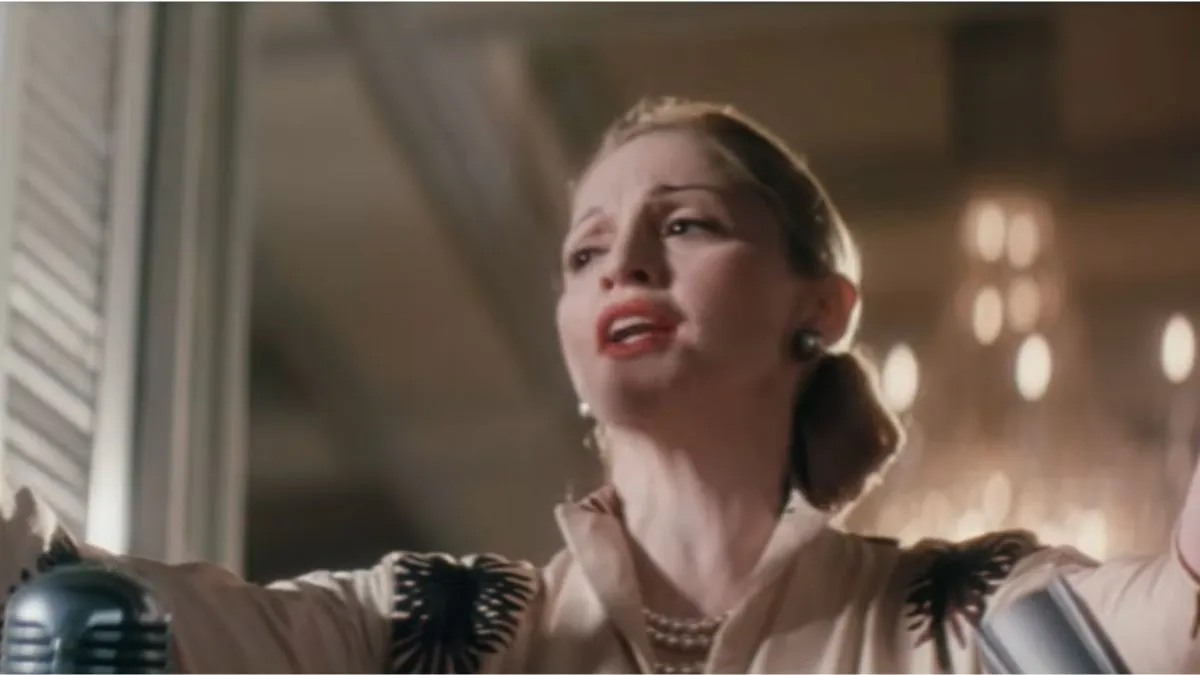
Within Madonna's larger body of work, the project functions quite differently from her standard solo output. In a cinematic musical, the score acts as the central engine driving the narrative, requiring the performers to handle character interaction, dramatic dialogue, and the progression of the plot directly through singing. Playing the title role of Eva Perón, Madonna performed in tandem with a cast that featured Antonio Banderas and Jonathan Pryce. That cooperative vocal arrangement across the ensemble distinguishes the soundtrack from her customary solo albums, which were not built around dramatic stage dialogue or shared cast performances.
Moving an album that emerged at the peak of the compact disc era onto vinyl after thirty years changes the physical relationship listeners have with the recording. For physical media enthusiasts, placing the project onto a turntable offers a tangible presentation that simply was not an option when the film and its music first reached the public in 1996.