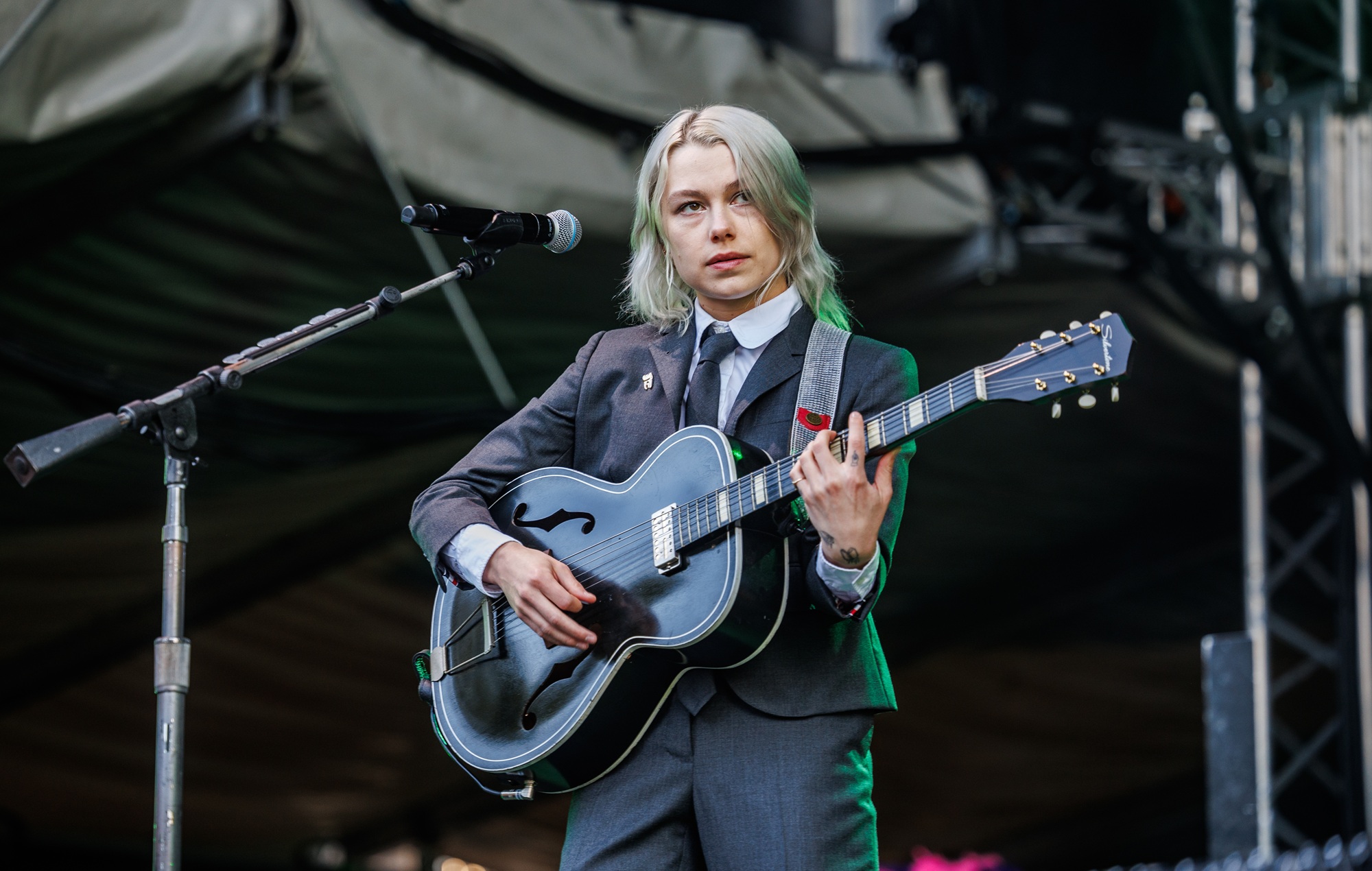
Anyone who has set foot inside an arena over the past decade knows the view. Thousands of people stare past the stage and straight into tiny, illuminated screens, recording songs they will probably never rewatch. When Phoebe Bridgers made the call earlier this summer to ban mobile devices and filming across her Lost Tour, she eliminated that reflex entirely. Audiences across the United States found themselves without the option to pull up a camera app, scroll through social feeds, or file away thirty-second clips. Cut off from their digital habits, concertgoers began documenting the nights by hand, bringing sketchbooks into the venues and reconstructing their favorite moments in pencil, ink, and paint.
The singer noticed the drawings circulating online and began sharing several fan submissions through her own channels. Among those featured was Olivia MacDonald, a Massachusetts resident who attended the tour stop in Boston last month. Faced with a phone-free arena, MacDonald turned to drawing after the show to document the visual details that lingered in her memory. Her illustration zeroed in on Bridgers wearing smudged, dripping electric blue eye makeup, standing beside the guitar that once belonged to Elliott Smith. Reflecting on her decision to sketch rather than snap a picture, MacDonald noted that a camera does little more than freeze a fraction of a second. A drawing, in her view, captures something emotional that other people can connect with, opening up a dialogue among fans who were in the room and felt the same atmosphere.
A similar impulse took hold of Anna Meyer at the New York concert. Meyer drew Bridgers sitting at the piano, illuminated by a tight pool of spotlight, and later posted a time-lapse recording showing how the artwork came together. For Meyer, sitting down to illustrate the performance right after leaving the arena offered a sense of catharsis. It also made her wonder whether the urge to create something physical would have evaporated if she had spent the evening clutching a smartphone. In an environment increasingly dominated by computer programs and artificial intelligence, Meyer felt the exercise proved the enduring value of genuine human imagination. An algorithm or a digital camera lens might produce an exact record, but the work of hands and mind yields something far richer and more personal.
The phone policy will stay in place as the Lost Tour heads overseas. Bridgers is scheduled to bring her arena production to the United Kingdom and mainland Europe, with former Black Country, New Road frontman Isaac Wood joining the bill as the support act. In addition to the large rooms, she is making time for three intimate album launch gigs in Kingston, Brighton, and Bristol. Those dates, planned around her third solo record, Lost Weekend, had to be put on hold back in August when Bridgers was hospitalized with appendicitis.
The European dates also incorporate a charitable component through a partnership with PLUS1. One pound or one euro from every ticket sold on the leg will be donated to local groups that assist survivors of sexual violence and assault. Looking further ahead, the Boygenius member is already lining up major appearances, having been announced last month as the first headliner booked for London festival All Points East in 2027.
Taking away cameras changes the dynamic of an arena. It forces an audience to rely on their own recall instead of offloading the memory to a hard drive. For Bridgers and her fans, that friction has turned what could have been an inconvenience into an exercise in observation. When people are told they cannot simply record what they see, they find other ways to process it, proving that live performance still has the power to leave an imprint that does not need a screen to survive.