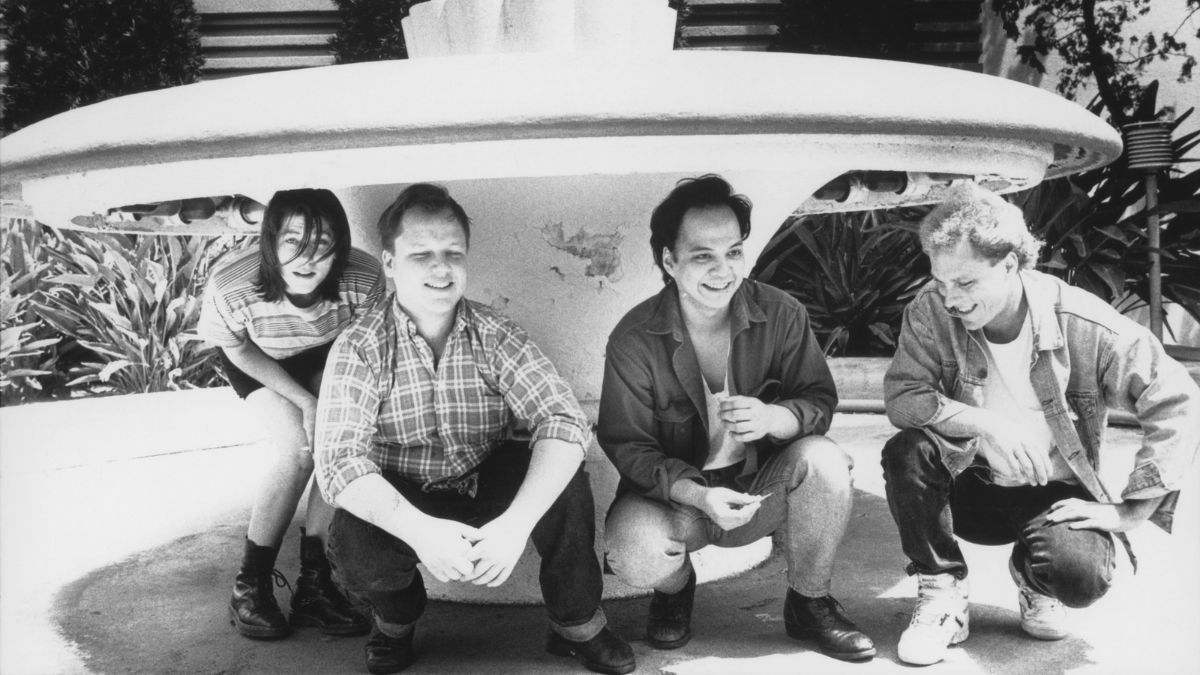
Finding old studio outtakes on standard streaming services still carries an element of surprise. For decades, the alternate paths taken during recording sessions remained tucked away on private cassette trade networks or sequestered on physical collector discs. Pixies have now opened that vault, putting four previously unreleased tracks from the turn of the nineties onto digital platforms for the first time. The batch draws directly from sessions cut between the late 1980s and early 1990s, giving listeners immediate access to material that sat unissued on studio reels for years.
The focal point of this archival drop is an alternate, early reading of “Dig for Fire,” recorded in the studio with Steve Albini. Long before songs settled into their final album versions, bands worked through arrangements in rooms shaped by the engineer behind the mixing board. Albini was celebrated for a documentary approach to recording, one that prioritized roomy drum dynamics, unvarnished guitar tones, and the tension of a live performance over studio gloss. Hearing his alternate pass at “Dig for Fire” shows just how much an engineer's instincts and an early performance can alter the feel and energy of a familiar song before final production choices take over.
The remaining three selections, titled “Go Man Go,” “Brackish Boy,” and “Punk Loop,” lean toward brisk, abrasive studio sketches. These are the kinds of quick, punchy creative bursts that bands committed to tape during testing sessions and trial runs. Across the underground guitar scene that bridged the late eighties and early nineties, these spontaneous studio ideas surfaced regularly, yet they rarely made it onto primary release schedules. Instead of polished, finished records, these pieces preserve the unvarnished creative detours that occurred while the band was working things out in real time.
Moving these particular tracks onto modern streaming platforms fundamentally changes how audiences engage with vintage studio leftovers. When outtakes were confined to tape trading circles and bonus discs, only dedicated collectors ever heard them. Arriving on mainstream digital services levels the ground entirely. What once existed as forgotten studio ephemera now sits side by side with the band's official catalog, accessible to anyone with an app and curiosity about how these songs came together.
There is an enduring appeal in hearing a group outside the rigid framing of a finished, sequenced record. Unreleased fragments often tell a different story than pristine album masters. Between the Albini-engineered take of “Dig for Fire” and the rough-edged vitality of “Go Man Go,” “Brackish Boy,” and “Punk Loop,” this digital release offers a candid window into the band's creative process, spotlighting the unpolished experiments that unfolded behind closed studio doors.