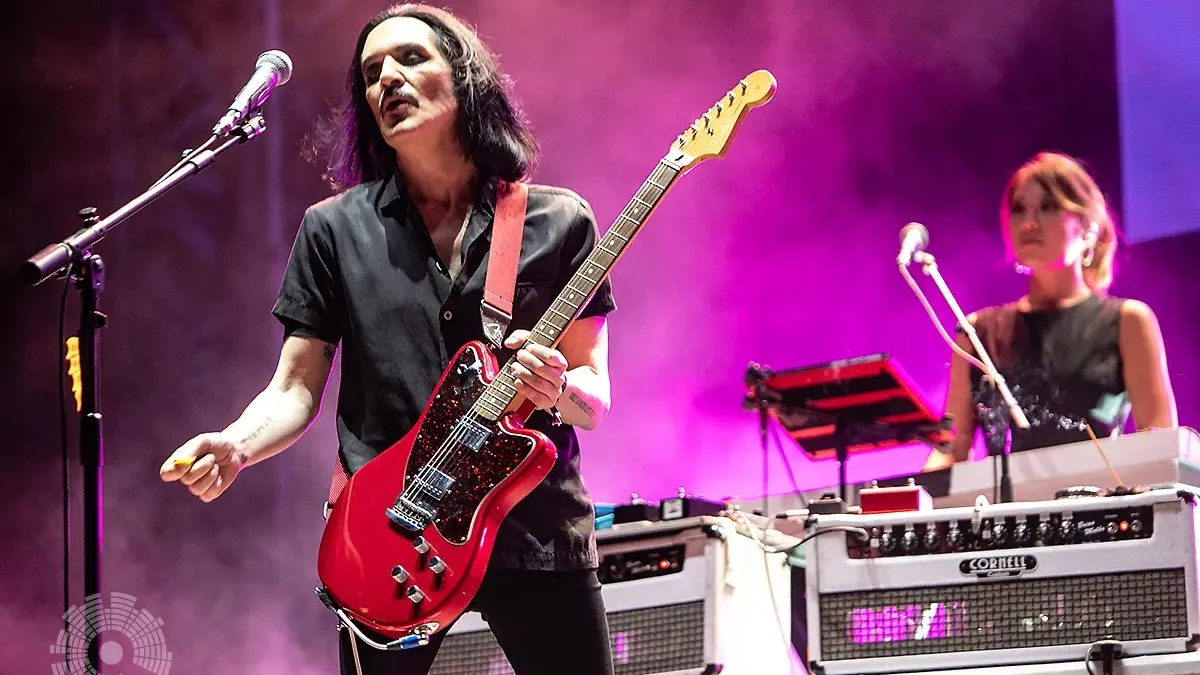
Thirty years into a career, most bands that came up during the alternative rock boom of the mid-1990s settle for an all-encompassing retrospective. They put together setlists that touch every record, play the expected singles, and smooth out the transitions with modern arena production. Placebo are taking a noticeably different route for their upcoming milestone. Rather than attempting to fit three decades of music into a single night, Brian Molko and Stefan Olsdal are stripping their focus back to where the project began.
The band has mapped out a ten-date run through Latin America scheduled for February and March 2027. Across those performances, Molko and Olsdal will travel through six countries, with concerts lined up in Brazil, Argentina, Chile, Peru, Colombia, and Mexico. What defines the itinerary is not simply the geographical spread, but the deliberate restriction placed on what the duo plans to play. The shows will draw entirely from Placebo's first two full-length studio albums, beginning with the self-titled debut they issued in 1996.
Confining a concert program to a band's earliest chapter changes the nature of the performance. Opening records document musicians at an unvarnished stage, writing with raw urgency before decades of studio experimentation, expanding budgets, and lineup shifts alter the working process. In 1996, Molko and Olsdal were still carving out their musical identity in real time. Revisiting those initial arrangements after thirty years requires the musicians to step back into songs conceived when their daily lives and professional circumstances were completely different.
Bringing this specific concept to Latin America also takes advantage of a well-established live connection. Crowds across Brazil, Argentina, Chile, Peru, Colombia, and Mexico have built a reputation among international touring acts for intense vocal energy and sustained commitment. A compact ten-date schedule across six nations keeps the routing tight, offering long-term followers in the region an uncommon, highly targeted look at the catalog rather than a generic stadium package.
Announcing the schedule years ahead of early 2027 gives both the band and their listeners extensive time to prepare. That lead time allows Molko and Olsdal to reassemble and rehearse early pieces they may have left behind long ago. For a duo that has spent thirty years moving forward, looking back entirely at their foundation offers an honest, unvarnished portrait of how their career started.