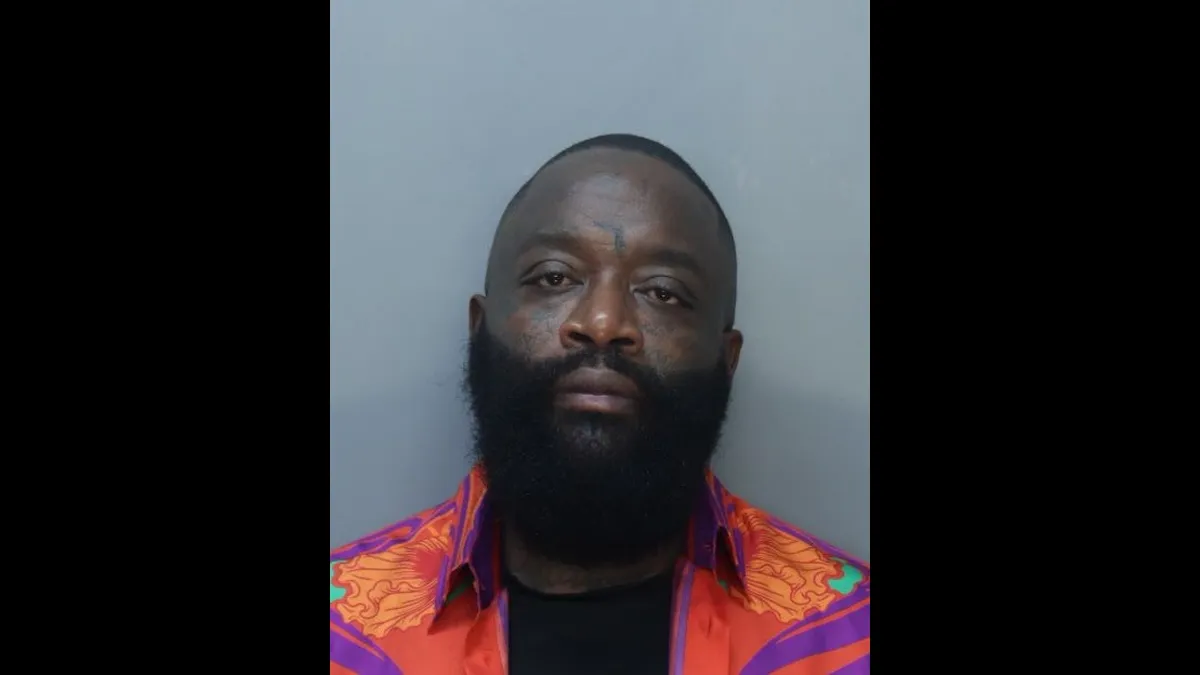
Miami-Dade County corrections records confirmed an early morning arrest on Thursday, October 1st, involving William Leonard Roberts II, the South Florida rapper known on stage as Rick Ross. Officers took Roberts into custody in Miami Beach before transporting him to the Turner Guilford Knight Correctional Center, where intake logs registered his booking at exactly 6:10 a.m.
The official docket outlines multiple accusations connected to domestic violence. At the center of the arrest is a charge of felony battery by strangulation, alongside a separate count of misdemeanor battery. The legal gap between those two classifications carries immense weight in criminal court. While a misdemeanor battery count addresses less severe physical altercations, statutes treat strangulation as a serious felony due to the direct physical danger involved in the act. That distinction alters the judicial posture from the start, opening the door to far stiffer statutory penalties and ensuring that early court reviews proceed under heightened scrutiny.
The booking at the Turner Guilford Knight facility triggers an established sequence of preliminary steps within the local judicial system. An initial hearing before a judge serves to address whether the defendant qualifies for bail and, if so, what financial amount fits the seriousness of the allegations. In matters involving domestic violence, financial bail is rarely the only hurdle. Judges routinely impose mandatory release conditions aimed at managing the conduct of the accused while the case works its way toward resolution.
For an active artist, those conditions can disrupt an entire working calendar. Courts in these cases frequently issue strict no-contact orders alongside travel limitations that prevent an individual from leaving the local jurisdiction. In an industry where performance dates, remote studio sessions, and promotional appearances demand constant mobility across state borders, being confined to one county brings professional operations to an abrupt halt. An individual subject to formal supervision cannot freely depart the area while an open criminal docket requires adherence to strict geographical boundaries.
Roberts now faces those procedural hurdles as the case moves past the intake desk and into the county court system. With the arrest documented in Miami-Dade records, the formal process will unfold as prosecutors evaluate the initial paperwork and determine how the state will pursue both the felony and misdemeanor charges.