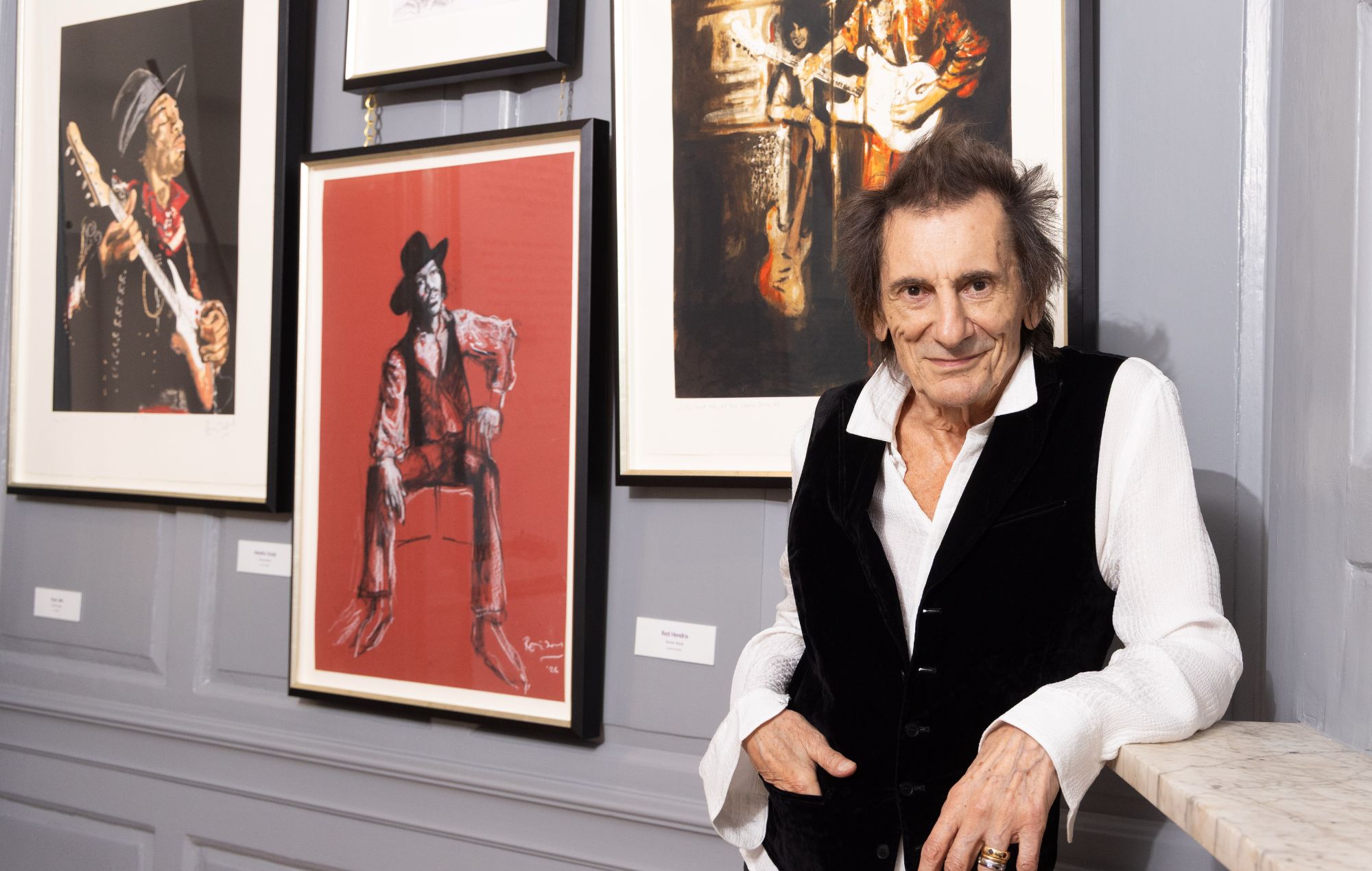
Twenty-five Brook Street carries a rare double footprint in London music lore, combining the top-floor rooms Jimi Hendrix rented in the late sixties with the property where George Frideric Handel composed two centuries earlier. For Ronnie Wood, bringing a collection of his own visual art into that specific Mayfair flat was an invitation he felt he simply could not pass up. The exhibition at Handel Hendrix House focuses entirely on Wood's personal impressions of his late friend, bringing together a series of working sketches and completed paintings. At the centre of the show are two previously unseen portraits, created specifically after the venue approached him. Having painted Hendrix several times over the decades, Wood went back to his brushes to craft new images that would complete the domestic setting.
The relationship between the two players stretches back to the autumn of 1966. Wood was holding down bass duties in The Jeff Beck Group, watching the London scene tilt on its axis as word spread about the newly landed American guitarist. Peers like Eric Clapton were already talking up the astonishing talent making the rounds in local clubs. Wood and Hendrix finally crossed paths and had their first real conversation inside Soho's Speakeasy Club, when Hendrix dropped into Wood's booth. A genuine rapport formed almost immediately, quickly leading to a period where the two musicians shared a home together in Holland Park.
That shared living arrangement offered Wood a vantage point few others had. To the broader world, Hendrix was an explosive, incendiary presence who dominated the stage, but behind closed doors he was deeply reserved, private to the point of being nearly reclusive. Wood also came to know the vulnerabilities that plagued his flatmate, notably a profound lack of confidence when it came to his own singing. Whenever Hendrix voiced doubts about his vocals, Wood stepped in with straight encouragement. His advice was simple, telling Hendrix that his revolutionary mastery of the guitar carried all the necessary weight, and that his unusual vocal style sat naturally beside his playing.
Translating those personal memories into visual art came with clear technical challenges. According to Wood, Hendrix had a remarkably expressive face that proved elusive to capture on canvas. Getting the likeness right, particularly around the eyes, involved considerable struggle. For Wood, the goal across the exhibition was never pure photographic duplication. He was after something more intuitive, attempting to register the quiet, inward character he knew at home alongside the volcanic presence the public remembered.
The Brook Street exhibition forms part of an exceptionally busy visual arts run for Wood. Come November, he is scheduled to open an extensive six-month exhibition in Tübingen, south of Stuttgart, showcasing more than one hundred original works. Yet the heavy hours at the easel have done nothing to dull his appetite for the stage. Wood remains openly eager to tour again with the Rolling Stones, ready to head out the moment his bandmates agree to go, even with Keith Richards showing a degree of hesitation. Add the persistent background talk of a potential Faces reunion, and it is plain that Wood has no intention of setting aside either his brushes or his guitar.