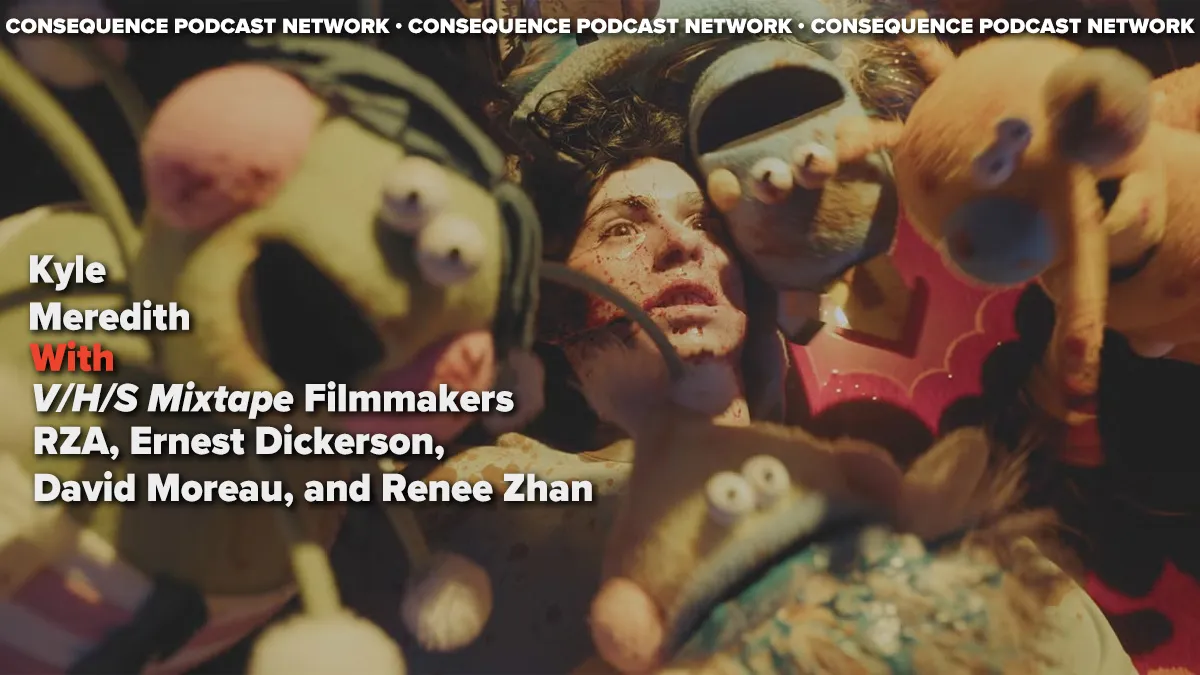
Found footage horror has spent well over a decade fixating on degraded home video, lost camera reels, and corrupted broadcast signals. With V/H/S Mixtape, the long running anthology series alters that formula by making audio the primary source of terror. Instead of treating music as a supportive background element, the project, which is currently streaming on Shudder, centers on a premise where the tracks recorded onto a tape pose an active, physical threat to anyone listening.
A newly released podcast discussion pulls together several of the creative minds behind the anthology to break down how that concept was executed. The panel features RZA, Ernest Dickerson, David Moreau, and Renee Zhan, each discussing their respective contributions to the project. The episode is available to stream across Apple Podcasts, Spotify, and Amazon Podcasts, offering an extended look at the practical and conceptual choices required to make audio itself feel dangerous.
The conversation touches on the specific technical hurdles of building cinematic dread entirely around sound. The contributors discuss the logistical choices involved in crafting stories where audio operates as a weapon, while also touching on other narrative elements from the anthology, such as killer puppets. One of the more unusual creative dilemmas raised by the panel is the artistic challenge of attempting to sample death itself, a notion that fits neatly within the tactile, media focused traditions of the wider V/H/S catalog.
By reframing the cassette as a vehicle for harm, the anthology plays against the cultural history of the mixtape. The format has long functioned as a deeply personal exchange between the creator and the listener, representing careful curation, shared taste, and emotional intimacy. Inverting that dynamic turns a comforting ritual into something hazardous, transforming the simple choice to hit play into an immediate risk.
The podcast conversation provides an unusual look at what happens when musicians and filmmakers must align their workflows to let sound design do the heavy lifting of a narrative. Rather than relying entirely on visual jump scares, the collaborators focus on how engineered noise and dark production choices can generate dread on their own terms. The full discussion is available now across the major podcast directories.