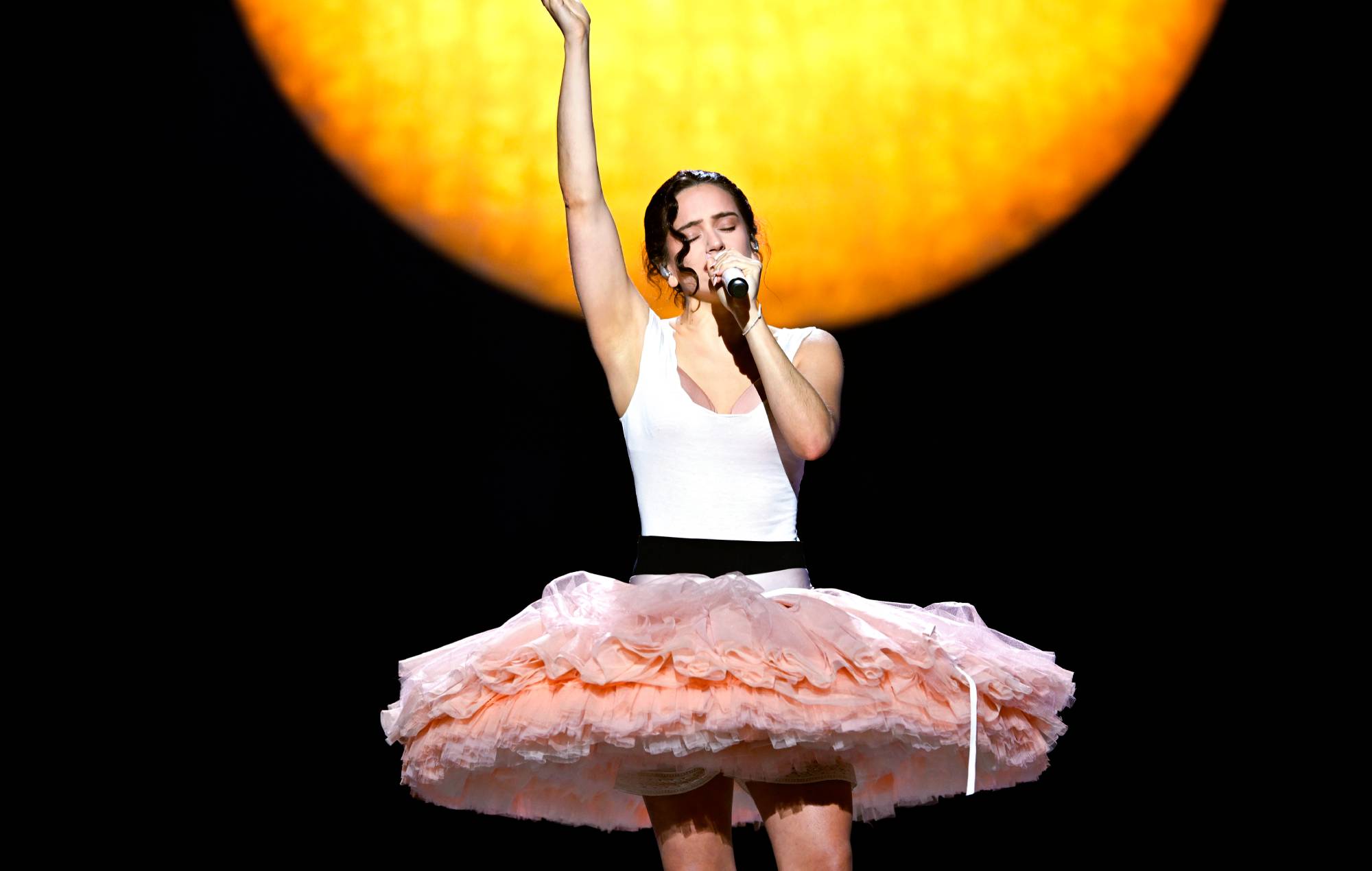

Instead of moving equipment from town to town every night, Shakira has parked her touring operation in one place. The Colombian singer launched her Madrid residency on Friday, September 18th, drawing roughly 165,000 fans across just the first three evenings. Over those opening dates, attendance averaged around 55,000 people per show. The attendance figures alone indicate the scale of the run, but the physical environment makes it stand apart from ordinary tour stops. The entire engagement takes place at Estadio Shakira, a purpose-built venue designed specifically for this 12-date series.
Opting to construct or repurpose an entire stadium for a single concert residency is an unusual move. Standard tours are built around municipal arenas or football stadiums, which forces crew members and musicians to wedge complex stage setups into whatever dates appear between local sporting fixtures and other touring acts. Under those conditions, stage design and technical schedules must continually bend to the demands of the existing building. By operating out of Estadio Shakira, the production establishes an exclusive home base in the Spanish capital. That setup gives the team total control over stage layout, sound engineering, and production timing throughout the run, all while accommodating massive crowd flow each evening.
The physical infrastructure is only part of the strategy, as an extended stay in one city brings its own artistic hazards. Long concert residencies often lapse into a predictable routine, operating like rigid theatrical productions where every lighting cue, song choice, and stage transition remains identical from one performance to the next. Shakira moved in the opposite direction over the opening three nights. Rather than adhering to a fixed script, she varied the set selections, introduced setlist surprises, and brought Italian singer Laura Pausini onto the stage.
Signaling this early that the running order remains fluid has a direct impact on the audience. It keeps the room attentive, rewards ticket holders who return for repeat attendance, and gives fans tracking the residency online a reason to follow every show. Incorporating guest moments and rotating songs turns the residency into something far more engaging than a static touring show, shaping it instead into a serialized live event.
Managing an average of 55,000 attendees across three straight nights creates enormous logistical demands for both the city and the staging crew. Absorbing that volume of people during the opening weekend, with nine performances still to come, underlines the substantial demand surrounding the residency. Instead of treating Madrid as an overnight stop on a hurried itinerary, the 12-night framework allows the artist to anchor production in one place and command the local cultural conversation for weeks at a time.
With three dates down and nine remaining on the schedule, the framework for the Madrid residency is now firmly established. The combination of an exclusive custom venue, shifting setlists, and collaborative appearances like the spot with Pausini has reshaped a standard stadium tour stop into a distinct live event.