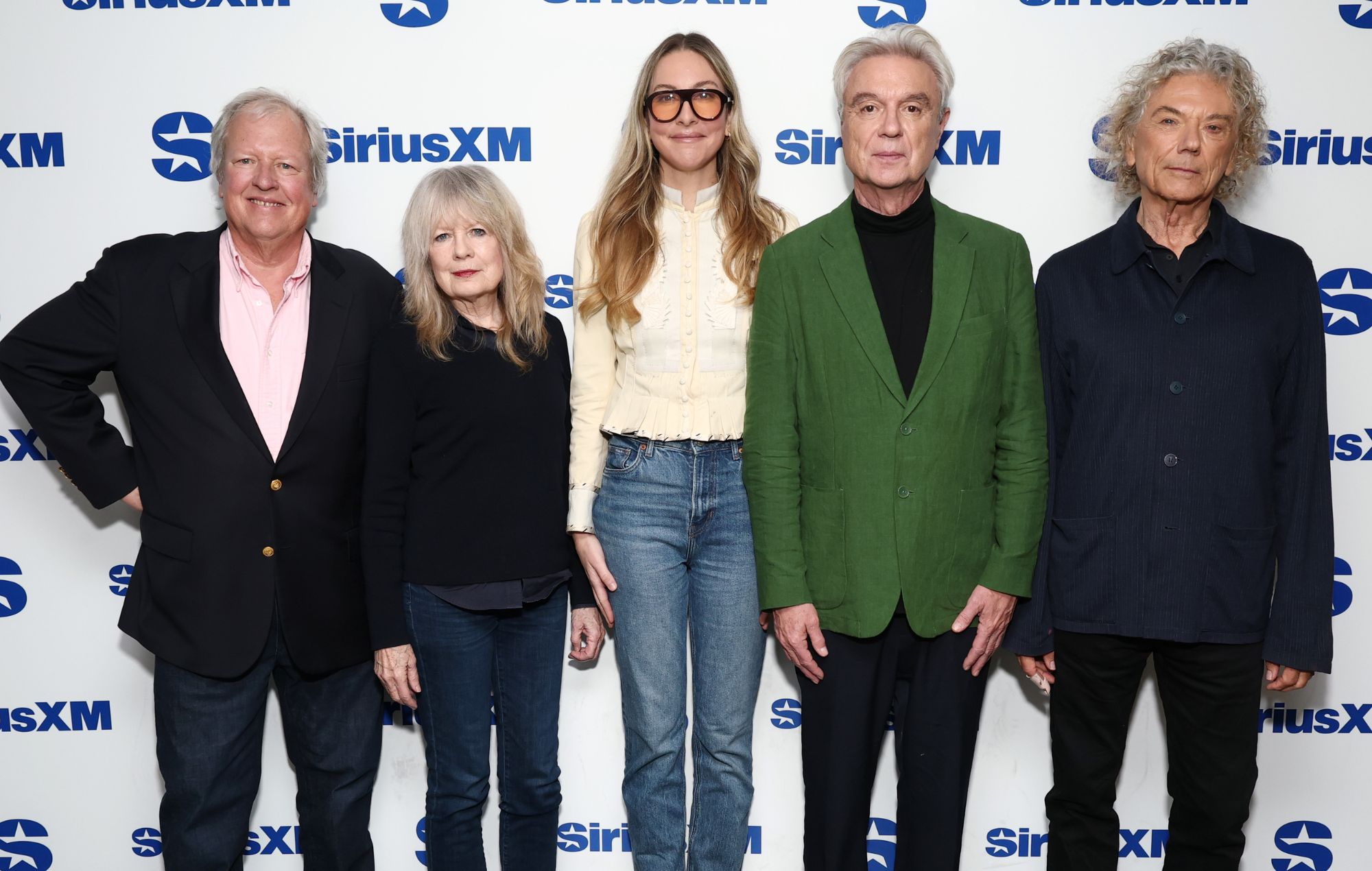
Getting David Byrne, Tina Weymouth, Chris Frantz, and Jerry Harrison into the same room has long felt like an impossible proposition. Yet the four founding members of Talking Heads have assembled once more, sitting for a joint discussion with Este Haim. The occasion is the debut of Talking Heads Radio, a full-time SiriusXM channel dedicated to their catalog. Arriving more than half a century after the quartet first came together, the exchange offers an unhurried look back at their formative years, focusing specifically on how their earliest studio sessions established a blueprint unlike anything else in New York at the time.
Much of the conversation centers on the distinct philosophies that defined those opening records. Looking back across the decades, Harrison noted that the band operated under a mandate of persistent reinvention. Every new recording effort, in his telling, had to be approached as a deliberate move away from whatever had just worked. To illustrate the point, he highlighted how their first four albums each relied on radically different working methods. It was a strategy borrowed directly from the fine art world, where artists purposely abandon established formulas rather than repeat past successes.
Byrne approached the retrospective conversation with his customary reserve, noting that he rarely spends his days dwelling on past achievements, even if he remains genuinely proud of the music they left behind. What surprises him most, he remarked, is the longevity of those recordings, which continue to find an audience among listeners who were not even born when the band folded. The conversation turned naturally to the internal alchemy that made that durability possible. Weymouth credited their collective sense of humour for carving out such a distinct voice, while Frantz leaned into the value of creative friction. While Byrne acted as the principal songwriter and lyricist, Frantz pointed out that every member of the quartet contributed to the final arrangements, consistently putting strange artistic instincts ahead of standard rock band expectations.
The new broadcast channel aims to document that exact trajectory. Launching on Thursday, October 1, Talking Heads Radio will air the full conversation with Haim alongside an expansive cross section of the band catalog. In addition to familiar album tracks, the schedule includes obscure cuts, rarities, and personal selections chosen directly by the four musicians. Listeners will also hear contributions from notable admirers, including U2 bassist Adam Clayton, Foo Fighters bassist Nate Mendel, TV on the Radio frontman Tunde Adebimpe, Phish guitarist Trey Anastasio, and the members of The Linda Lindas, alongside regular updates on ongoing archival projects.
Any gathering of the full lineup carries substantial weight simply because it happens so infrequently. Before this radio special, the group had gone more than twenty years without making a joint public appearance. That silence finally broke in September 2023, when all four walked onto a stage together at the Toronto International Film Festival to celebrate an anniversary milestone for their 1984 concert feature, Stop Making Sense. Their appearance immediately ignited hopes that the band might consider playing live again, though Weymouth framed that reunion with a quiet pragmatism, explaining that they were simply enjoying the pleasure of sharing the moment together.
Anyone still holding out hope for a formal concert return will have to make peace with disappointment. Decades ago, Frantz brought up the subject of playing together again, only for Byrne to shut down the topic and ask that it never be mentioned in his presence again. Byrne recently confirmed that his view on the matter has not softened in the slightest. Trying to recapture the precise feelings that an audience experienced during their early twenties is, in his eyes, a fool's errand, particularly when his present creative life remains thoroughly fulfilling. Even if a concert stage remains out of reach, this radio project offers a sharp reminder of how an uncompromising four-piece managed to dismantle and rebuild contemporary rock music.