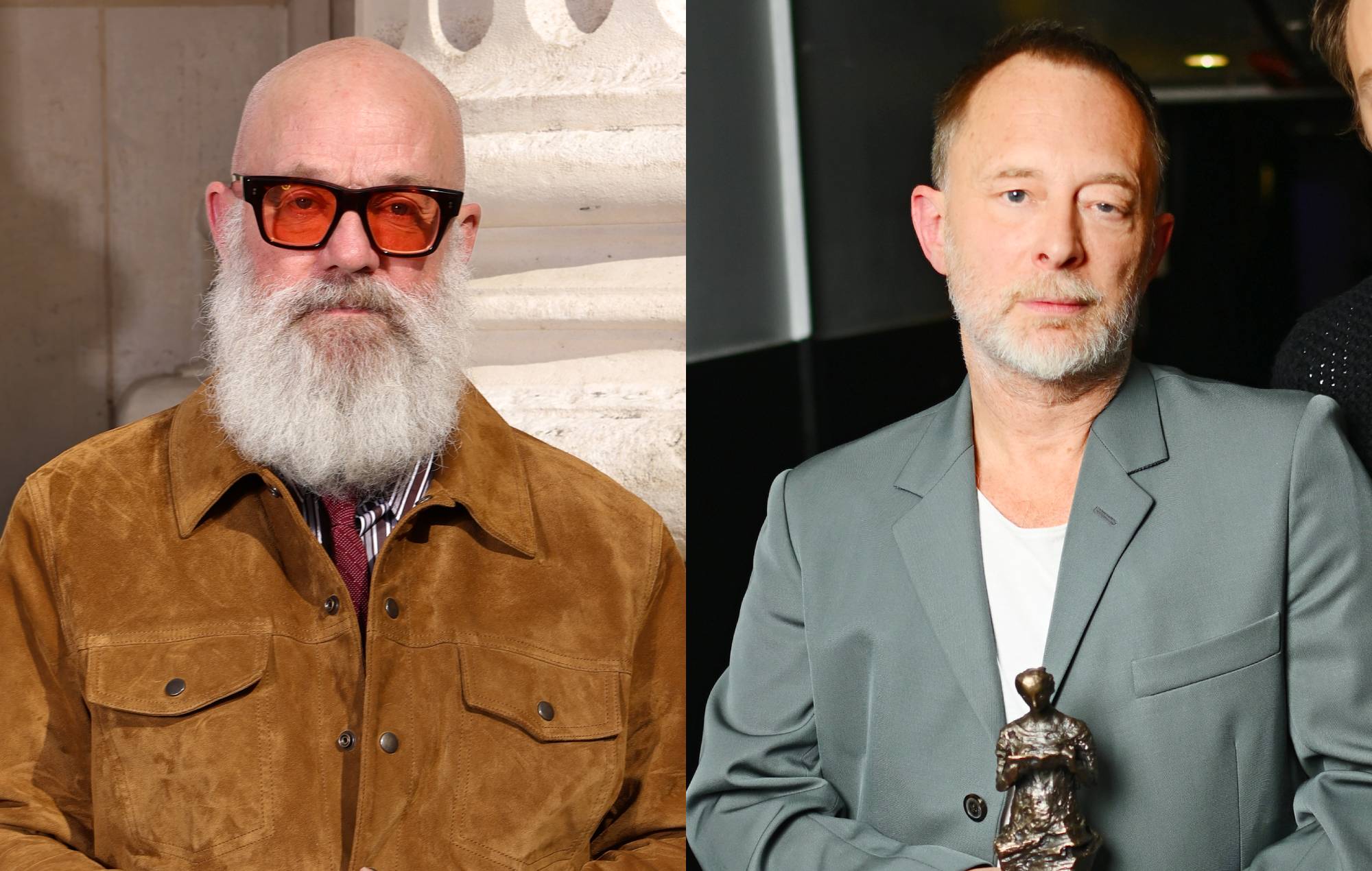
When touring acts jump from cramped clubs to arena corridors, hotel rooms tend to turn into bunkers. Thom Yorke found himself retreating in exactly that manner during the mid nineties, shrinking away from public spaces as Radiohead gained traction. The singer recalled that period in a recent conversation with Harry Styles, who had brought up his own early memories of feeling marooned in hotel rooms. For Yorke, the antidote to that claustrophobia was simple, step outside, take a walk, and observe the regular world moving around you. It was a habit he picked up from R.E.M. frontman Michael Stipe when Radiohead opened for the American band on their 1995 Monster tour.
Back then, Yorke spent his offstage hours hiding in the dressing rooms, reluctant to face anyone past the venue doors. Stipe noticed the younger musician pulling away from reality and decided to intervene. He dragged Yorke out onto the street and shared a remarkably pragmatic rule for moving through crowds. Stipe told him that if you do not care, the people around you will not care, and if you avoid looking around for attention, nobody will look back at you.
To test the concept, Stipe brought Yorke along to a busy nightclub in Stockholm. He instructed Yorke to put the advice into action, and the two walked straight into the crowd. Nobody stopped them, nobody stared, and the experiment worked cleanly. While Yorke admits that stepping into the open always leaves a famous person feeling vulnerable, he has argued that staying locked behind closed doors is far more destructive. Given the choice between exposure and total isolation, hiding in a bedroom is the darker path.
That 1995 arena run kicked off a mutual respect that has endured across three decades. Stipe has resisted the mentor tag, pointing out that he was merely older and had navigated the pressures of mass exposure a few years earlier. As time went on, the relationship grew into a genuine two way exchange. Outside of his bandmates Peter Buck and Mike Mills, Stipe frequently reached out to Yorke for input, texting him whenever he needed an honest perspective on creative or industry decisions.
Yorke leaned just as heavily on Stipe during the turbulent aftermath of OK Computer. The sudden intensity of the touring cycle left the Radiohead singer unsettled, particularly when strangers on the street started approaching him with religious reverence, treating him like Jesus. Desperate for grounding, Yorke contacted Stipe, who offered another practical coping mechanism: repeat the phrase that you are not here and that this is not happening. The line stayed with Yorke, eventually becoming the focal point of How To Disappear Completely on Radiohead's 2000 album Kid A, a lineage Stipe later verified.
That private understanding frequently showed up onstage. Yorke repeatedly took on the guest vocal part originally sung by Patti Smith on E-Bow The Letter, performing it with R.E.M. at the 1998 Tibetan Freedom Concert and again during a 2004 church gig in London that saw an official release in 2018. Over two nights in Vancouver in 2003, Yorke stepped up with R.E.M. for E-Bow The Letter and It's The End Of The World As We Know It, with Stipe returning the favour the following evening by singing Karma Police with Radiohead. When R.E.M. decided to call it quits in 2011, Stipe sent Yorke an advance message before the announcement became public.
Rock mythology loves grand gestures, but the connection between the two vocalists survived on something far more modest. Rather than offering abstract career philosophies, Stipe offered small, functional tools for staying sane under pressure, demonstrating how to cross a crowded floor without being bothered and reminding a peer that the world outside does not need to swallow you whole.