Disputes over venue merchandise percentages have simmered across the touring circuit for years. When Tim Burgess first went public with his objections in 2021, he called for a total rethink of how venues treat visiting artists. His argument was not an exercise in self-interest. Burgess pointed out that Charlatans shows consistently set record sales figures across venue bars, yet touring bands were still asked to give up chunks of their souvenir takings. The response was characteristically practical. Instead of waiting for venue operators to adjust their policies, he created the Merch Market, an open gathering where independent musicians can set up tables without paying stall fees and leave with all of their earnings.
The project is set to hit the road again in early 2027 with a run through three cities, including an initial crossing over the border into Scotland. Activities start in London at Troxy on Sunday, January 24, where retail tables sit alongside live acoustic sets and spoken stage discussions. One week later, on January 31, the event moves to Freight Island in Manchester. The tour wraps up on February 28 at the Barrowland Ballroom in Glasgow. Taking the format to the Barrowland fulfills a longtime target for Burgess, who has repeatedly spoken about his deep fondness for the Glasgow institution.
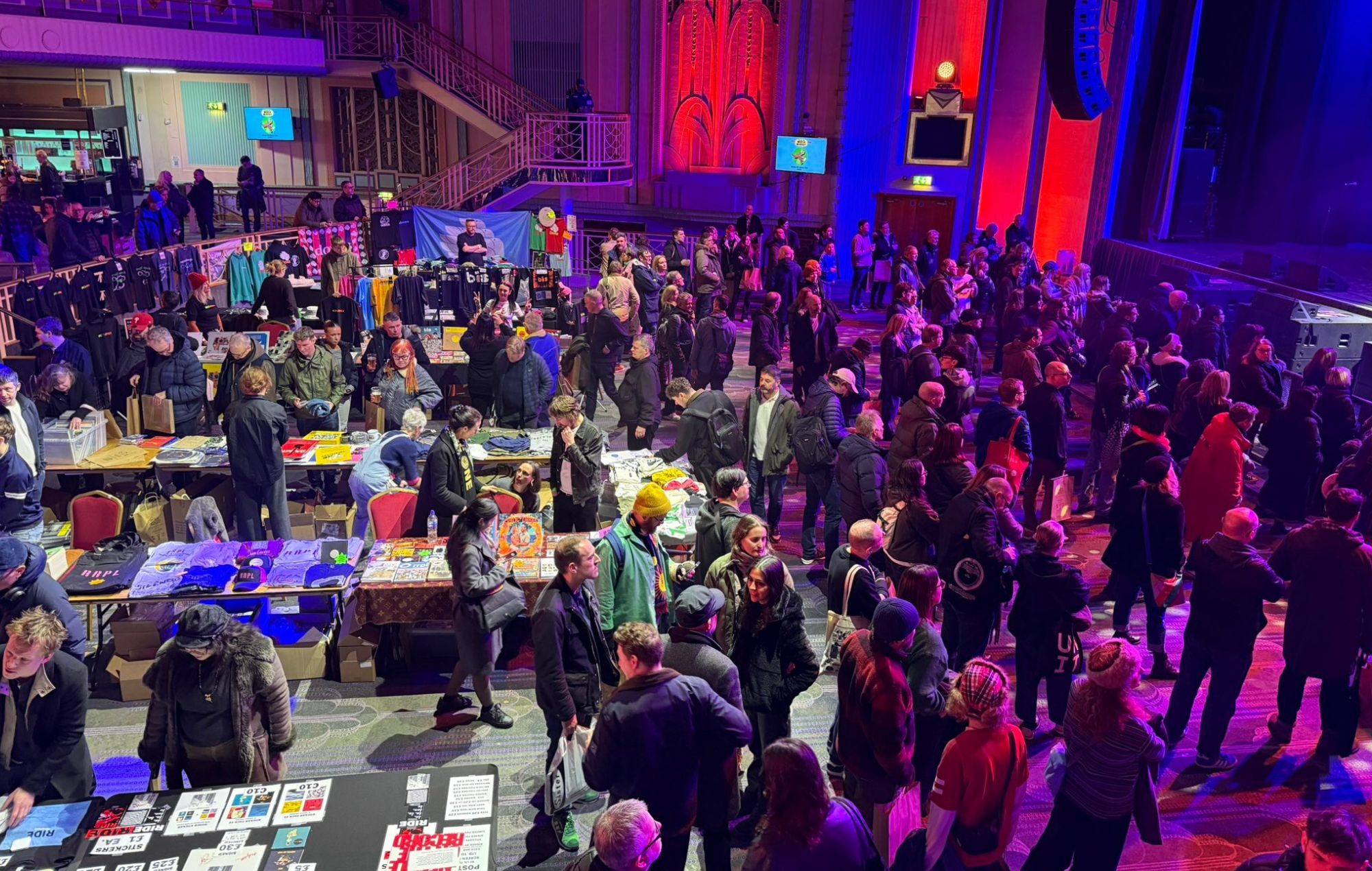
The setup has grown considerably since its earliest days. When the inaugural market launched in Manchester, the stallholders were the musicians themselves, with members of New Order, Inspiral Carpets, Everything Everything, Penfriend, and Cabbage pitching in behind the registers. That collaborative spirit carried over into the second gathering at Troxy, where the roster expanded into a much wider community gathering. Attendees at the London edition found artist operated tables alongside performances and appearances from acts like Dry Cleaning, Gurriers, Sprints, Honeyglaze, and Doves, along with Blur drummer Dave Rowntree and Public Service Broadcasting member J Willgoose.
That second London date also served as an outlet for tangible music culture. Burgess brought along Tim's Vinyl Adventures, an offshoot of his book by the same name, unloading roughly 300 records plucked straight from his personal crates. Visitors could also print physical keepsakes from a vintage souvenir ticket dispenser. Burgess devised the machine after hosting a poll on X, where more than 2,000 gig goers made it clear that they still value holding paper tickets in their hands instead of merely pointing a phone screen at a turnstile scanner.
Operations for the 2027 run will receive support from atVenu, a company specializing in live transaction technology. Burgess described the partnership as an easy fit, noting that The Charlatans have long trusted the firm on their own tours to handle payment terminals and count stock. Crucially, the platform was built by people with firsthand experience of playing in bands and handling tour merchandise in venue corridors, so they understand the practical headaches of stall operations.
Full rosters and programming details for London, Manchester, and Glasgow will arrive in due course, but the blueprint remains centered around acoustic sets, interviews, and tables run directly by artists. What started out as an informal measure to help groups pocket some cash has turned into something broader, occasionally even leading to festival slots and unexpected connections between bands and listeners. By stripping venue cuts entirely out of the equation, the event continues to show that live culture can work on different, fairer terms.