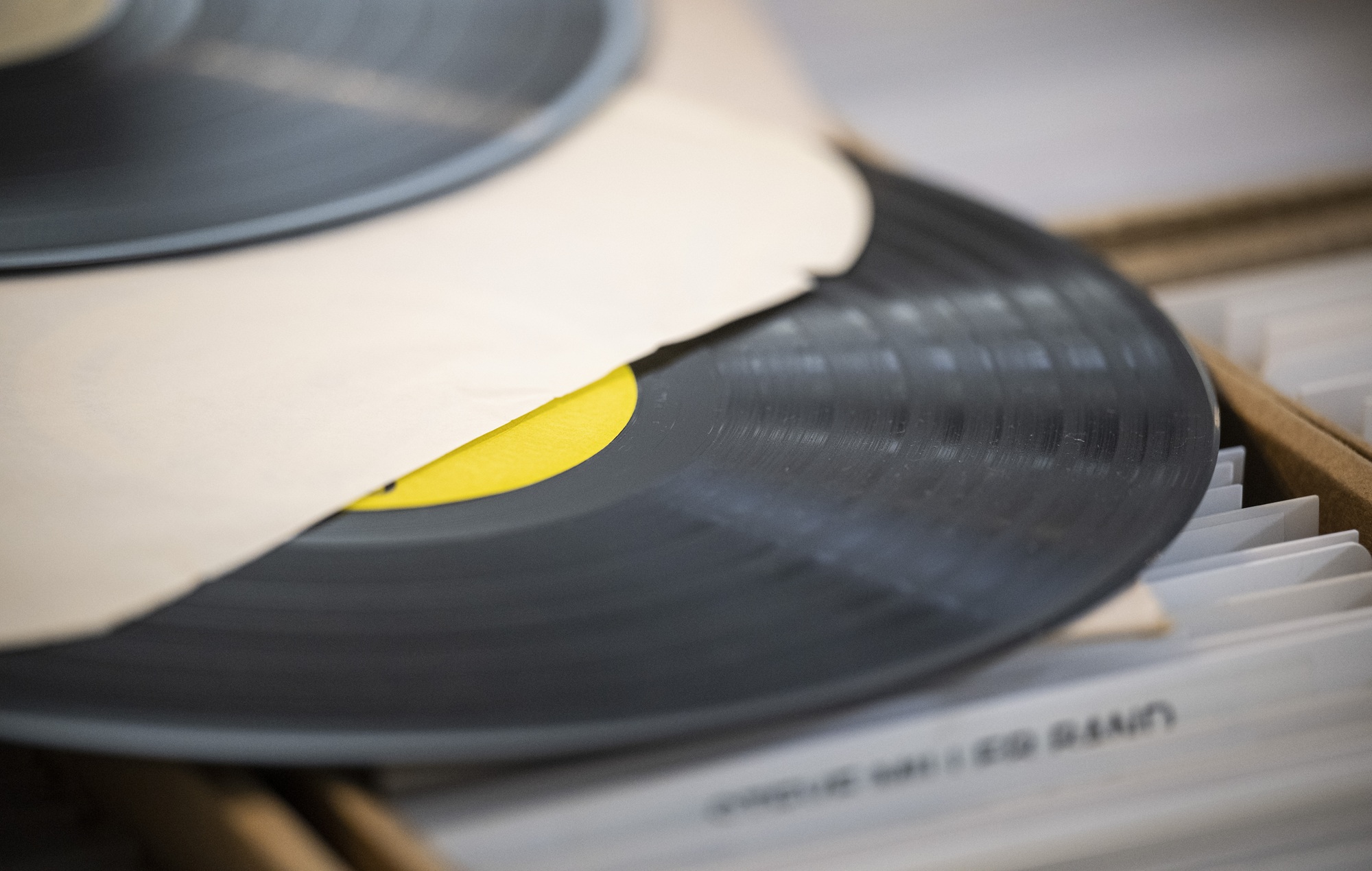
The resurgence of vinyl has brought plenty of antique machinery back into service, but one clandestine plant in west London was not pressing records for legitimate reissues or independent labels. Over the course of seven years, Rehan Ahmed used four vintage machines to build an industrial counterfeiting business, generating an estimated £2.7 million by manufacturing and distributing unauthorized vinyl.
Ahmed has now been jailed following a hearing at Inner London Crown Court. He entered guilty pleas to two charges, admitting to breach of copyright alongside the acquisition and use of criminal property. Judge Darren Reed sentenced Ahmed to two years and eight months for the copyright infringement, accompanied by three and a half years on the criminal property charge. With the two sentences ordered to run concurrently, Ahmed will serve three and a half years in prison.
What investigators found went far beyond the scale of an isolated bootlegger running off a handful of records. Police characterized the operation as a prolonged, highly organized, and entirely unlicensed manufacturing plant. Ahmed built the enterprise around four pressing machines, each roughly seventy years old, which he kept running across a seven-year span. By the time law enforcement closed the plant down, officers recovered 2,791 counterfeit records representing 108 different artists, making it the largest seizure of fake vinyl in UK history.
The plant concentrated on massive commercial releases rather than rare oddities, churning out pirated pressings of records by The Beatles, Taylor Swift, Ed Sheeran, Adele, Beyoncé, and Rihanna. Ahmed conducted business through two trading names, Phoenix of Vinyl and Paragon Music. From there, the unlicensed records entered the market through direct consumer sales on eBay and Discogs, while also being sold at wholesale volume directly to brick and mortar record shops.
The operation began to unravel in February 2024, when the British Phonographic Industry carried out an undercover test purchase from the site. A forensic analysis of the acquired record confirmed that it was an unauthorized pressing, supplying police with the technical evidence required to stage a raid and halt production entirely.
The financial damage caused by the enterprise was extensive. Peter Ratcliffe, director of content protection at the BPI, noted that Ahmed's plant diverted tens of millions of pounds away from recording artists, record labels, and honest retailers. Ratcliffe observed that the recent renaissance of physical formats has opened up a larger customer base for counterfeiters seeking to cash in at the expense of musicians and music fans, while also cautioning that revenue raised by operations of this kind routinely helps fund wider criminal enterprises.
For vinyl buyers and shop owners, the case illustrates how deeply counterfeit stock can infiltrate everyday supply chains. Ahmed managed to funnel pirated copies of mainstream chart records into genuine retail spaces and online marketplaces using machinery from the middle of the last century, showing that the commercial revival of vinyl carries real risks for collectors trying to keep fake pressings out of their crates.