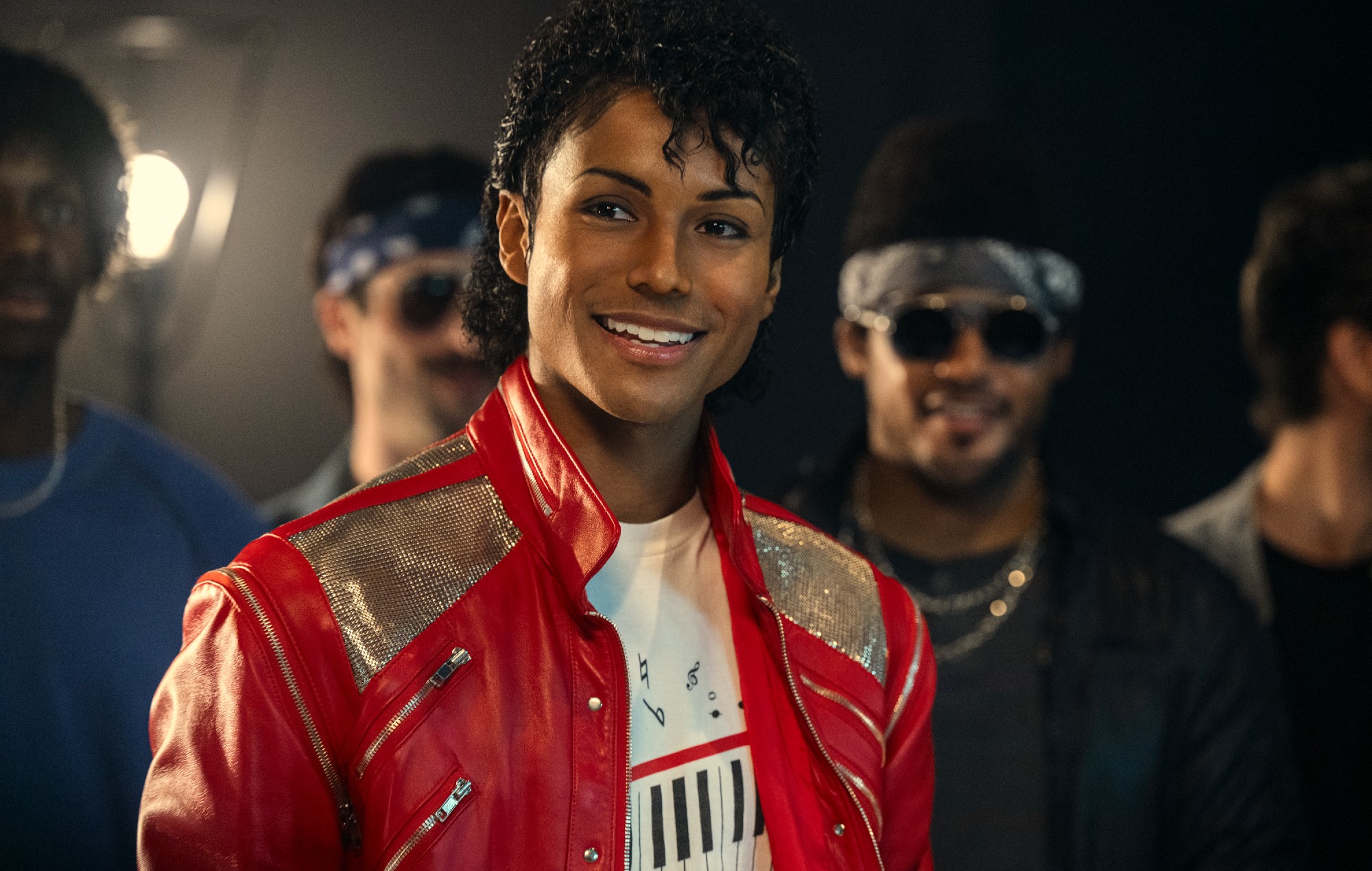
The box office run of Michael this past April reshaped what Hollywood expects from a musical biopic. Earning over a billion dollars worldwide and logging the biggest opening weekend the genre has ever seen, the production was an undeniable commercial giant. Yet almost as soon as audiences filled theaters, the conversation shifted toward what the film decided not to show. While the story walked viewers through Michael Jackson's rise, starting with his childhood days in the Jackson 5 and following him straight through to the highest heights of pop fame, it made a deliberate stop in 1988 at London's Wembley Stadium during the Bad World Tour.
Ending the movie at Wembley meant cutting off the narrative right before the child sexual abuse allegations that defined much of Jackson's later public life. Those events were not absent from the project from the start. Screenwriters had originally mapped out a final act that included the subsequent decades, but that draft collided with an unexpected legal roadblock during filming. The production team discovered a clause in an older settlement agreement that barred the Jackson estate from making any reference to Jordan Chandler, one of Jackson's accusers.
To navigate that legal barrier, the studio spent fifteen million dollars on reshoots. The entire final portion of the movie had to be dismantled and restructured. Instead of exploring the later controversies, the revised third act refocused the emotional core of the finale on Michael's relationship with his father, Joe Jackson, played by Colman Domingo. It was an expensive pivot, shifting the film from a sprawling retrospective into a story that concentrated on the unresolved tensions between a pop icon and the man who shaped his early life.
For lead actor Jaafar Jackson, who played his real-life uncle, seeing an entire chunk of filmed material discarded was simply an education in how major studio features operate. Jackson noted that cuts of this magnitude happen regularly on massive productions. Editors and filmmakers are constantly sorting through takes and trying to maintain tonal balance, which inevitably means significant amounts of work end up on the cutting room floor. Jackson admitted that while watching his own scenes get cut can be tough, he did not treat the lost footage as wasted energy. Instead, he treated the filming of those discarded sequences as an intensive technical exercise that sharpened his acting craft for future projects.
Stepping into the role also brought the challenge of presenting intimate family history on a global stage. Jackson pointed out that family biopics are inherently tricky for relatives, each of whom carries their own personal memories of events that must be compressed into a two-hour window. Despite the room for disagreement, he mentioned that his family responded with strong support once they saw the finished feature.
Outside of filming, Jackson's personal memories of his uncle look very different from the controversies that followed the pop star. He recalled childhood visits that centered around simple, ordinary games. Michael kept candy dispensers in his home theater, where Jackson remembered asking for pink and red Starbursts. They spent afternoons playing hide-and-seek or trying out the latest video game consoles, games where his uncle proved remarkably competitive and skilled, showing a clear love for unrestricted, lighthearted play.
The omitted parts of Jackson's life will not stay untouched for long. A sequel received an official green light in August, and that upcoming film is slated to address the later allegations head-on, framing the events from Michael's perspective. Jackson noted that his family has long believed outside narratives were shaped by personal agendas that effectively muted Michael's voice in his later years. Jackson has not yet received production schedules or read scripts for the follow-up, but he confirmed that he is ready to take on the character again as soon as the project begins.