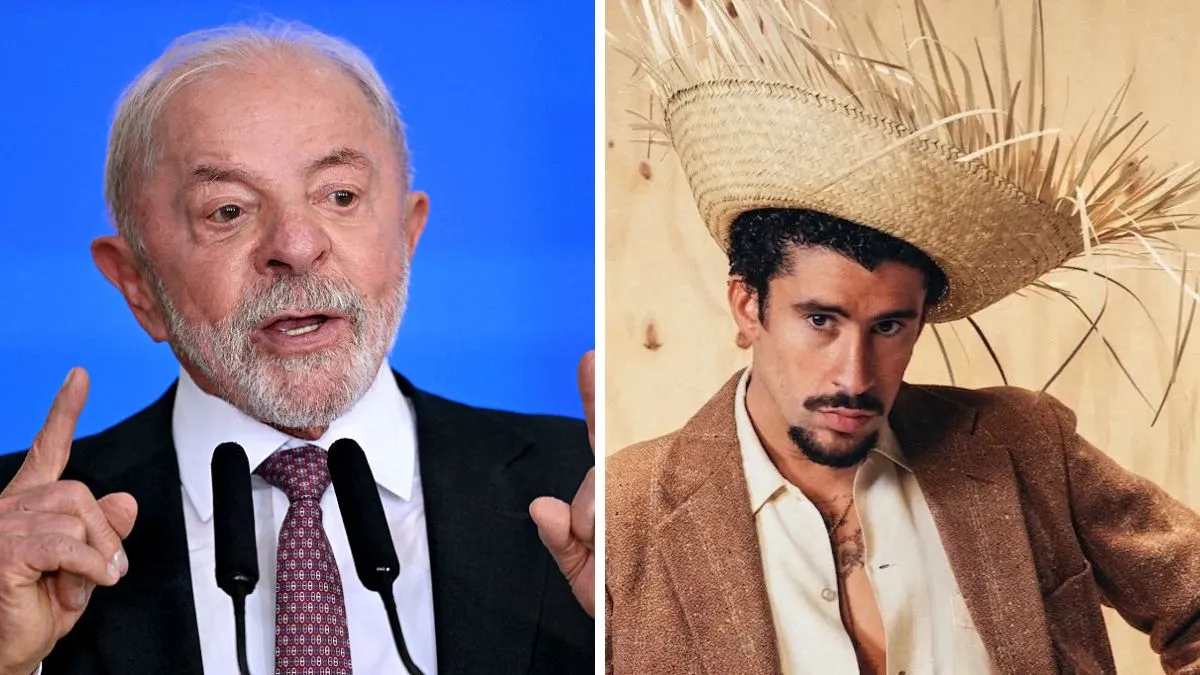
Political campaigns typically rely on recognizable hits to warm up a crowd, but taking a foreign protest song, rewriting it in another tongue, and deploying it from the highest office in the country is an entirely different maneuver. Brazilian President Luiz Inácio Lula da Silva did precisely that, turning to the catalog of Bad Bunny for his reelection bid. In a video shared directly to X, the campaign unveiled a Portuguese version of a track originally designed to speak to Caribbean defiance, pulling an anthem of regional resistance directly into South American electoral politics.
The foundation for the campaign video is LO QUE LE PASÓ A HAWAii, a song taken from Bad Bunny's project DeBÍ TiRAR MáS FOToS. In its original Spanish release, the track is explicitly built around Puerto Rican life, examining territorial history and the realities of local opposition. By referencing what occurred in Hawaii, the song invokes historical American expansion to talk about self-determination and cultural preservation. It is a work conceived from the vantage point of those outside political authority, pushing back against outside dominance and asserting community identity through historical parallels.
Transporting that sentiment to Brazil required a wholesale linguistic overhaul. Because Spanish is not the primary language of Brazilian voters, simply playing the original recording in the background would have blunted the sharp political argument at its core. By rewriting the lyrics into Portuguese, the campaign ensured that the track retained its familiar instrumental framework while delivering an argument tailored directly to a domestic electorate. Translating the assertions of the song makes the message immediately legible to everyday citizens, allowing them to engage with the core ideas of autonomy without losing the broader cultural weight that an artist of this stature brings.
The selection of this specific composition carries obvious weight against the backdrop of geopolitical strain between Brazil and the United States. Rather than opting for an uncontroversial pop cut, the campaign aligned itself with a song whose historical references touch directly on American territorial influence. By leaning on the anti-imperialist framework embedded in the original recording, the administration attempts to channel that resistance into its own reelection narrative, signaling strength and regional defiance in the face of international tensions.
Yet there is an unmistakable tension whenever an incumbent leader adopts the language of rebellion. Protest music draws its energy from challenging systems of power, not reinforcing them. When an active head of state distributes a reworked protest anthem through official channels, the dynamic between artist and government becomes fundamentally altered. The campaign asks the public to see a government in office as an extension of grassroots defiance, inviting voters to identify an established administration with the struggles of regional survival and identity.
Whether voters view the clip on X as an act of genuine Latin solidarity or a calculated campaign maneuver, the release highlights the changing ways pop music travels through modern political contests. The boundary separating international music culture from domestic election strategy continues to blur, with online platforms serving as a live testing ground for cross-cultural political messaging.