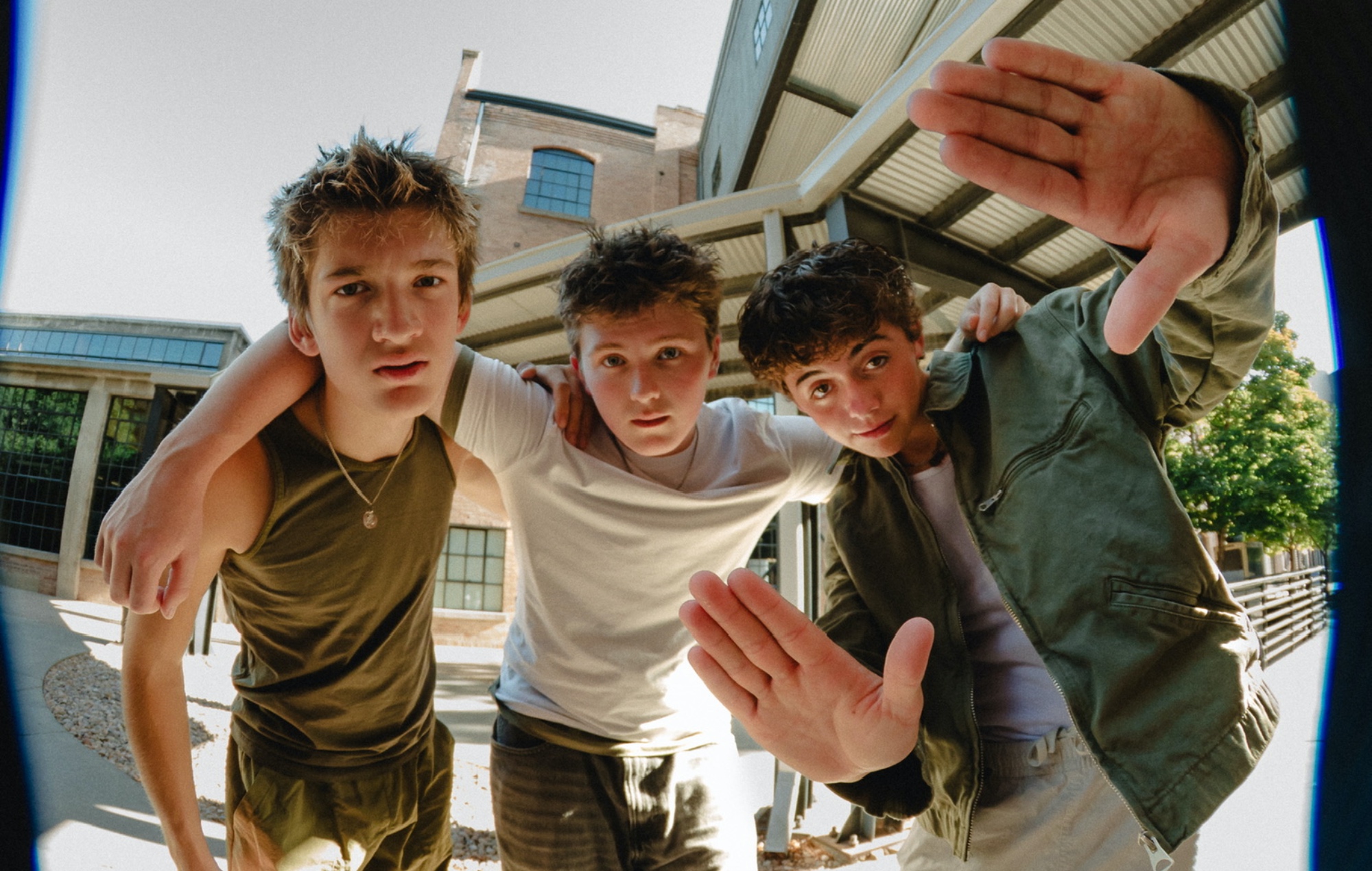
Davis County, Utah, is not traditionally known as a breeding ground for loud, snotty guitar bands, and Riff Wood took an unusual route to get there. When Carson Groves, Hyrum Russon, and bandmate Shredder first started talking about playing music together six years ago, the initial spark came from an unlikely source: the Netflix musical comedy drama Julie And The Phantoms. At the time, the three teenagers were listening primarily to rap and pop, with no clear blueprint for the kind of band they might become. That indecision vanished the moment they heard Dookie, Green Day's 1994 major-label breakthrough.
For novice musicians still learning how to navigate basic fretboards, the punch of Basket Case was a revelation. It offered an immediate alternative to technical, intimidating guitar acrobatics. The chords were simple, the tempo was fast, and the delivery was loud and direct. Green Day and Blink-182 quickly became the template for their early basement sessions, shaping the raucous, three-chord approach that defined their debut record, Tough Luck. That first album was an unfiltered love letter to classic pop-punk, full of energetic attitude and high-volume simplicity.
Now, on their sophomore full-length, Butterfly In Black And White, the trio is consciously widening its scope. As Shredder has pointed out, the goal was not to duplicate what worked on the debut, but to take deliberate steps toward musical maturity. While the record keeps the snarl and rapid tempos of their early work, the songwriting explores new ground. To capture that shift, Riff Wood enlisted producer Rob Cavallo, the veteran studio hand who helmed Dookie and spent decades refining guitar tones and hard-hitting rhythm sections for modern rock acts. Working alongside the producer behind the very record that changed their musical lives gave the sessions a full circle significance, while helping them tighten their arrangements.
The thematic direction of Butterfly In Black And White developed almost by chance. Before a rehearsal, Russon accidentally knocked over a carton of milk, and Groves noticed that the puddle on the floor formed the distinct outline of a butterfly. After Groves snapped a photograph, the trio started digging into cultural mythology surrounding black and white butterflies. They discovered that across various traditions, the creature is viewed either as a sign of good fortune or as an omen of misfortune and death. That sharp duality between optimism and darkness resonated with the group, eventually serving as the central framework for the album's tracklist.
Their ambitions were also reshaped by what they saw from the crowd side of the barrier. Attending massive arena and stadium dates by Green Day and Paul McCartney on his Get Back tour gave the band a fresh understanding of what live rock music can accomplish. Groves was especially struck by McCartney's audience, watching young kids and eighty-year-olds singing along to material written in the 1960s with the exact same passion. That demonstration of enduring, multi-generational songwriting, coupled with their growing interest in British rock groups such as Oasis, encouraged the trio to push past the predictable boundaries of standard verse-chorus pop-punk.
The results of that broadened outlook are already apparent on the road. After spending their initial years playing local clubs around Davis County, Riff Wood broke out of their home state with their first tour outside Utah in 2025. Earlier this year, they took another major step by booking and playing their first concerts outside the United States. Rather than measuring success through fleeting online metrics or short-lived social media trends, Groves says the band remains dedicated to the physical energy of the room. For Riff Wood, playing larger stages is simply an opportunity to connect directly with people and provide a hopeful, uplifting release.